You’re scrolling through your messages, half-awake, coffee in hand, when someone replies with, “IMO, that movie was overrated.”
You pause. You know it sounds casual, but what exactly does IMO mean in text?
You’re not alone. Short forms and slang pop up constantly in chats, comments, and social media posts. Some feel obvious, others confusing. Understanding them isn’t just about keeping up—it’s about connecting better with people and avoiding awkward misunderstandings.
The phrase imo meaning in text is searched thousands of times because people want clarity, not textbook definitions. They want real explanations, real examples, and real-life context.
In simple terms, IMO helps people share opinions without sounding too aggressive or absolute. It softens statements and keeps conversations friendly.
Whether you’re texting friends, commenting online, or reading posts, knowing what IMO means gives you confidence and clarity in digital communication.
What Does IMO Mean in Text?
IMO stands for “In My Opinion.”
It’s a casual way people signal that what they’re saying is a personal viewpoint, not a hard fact. Think of it as a conversational cushion—it makes statements feel softer and more respectful.
Instead of saying:
“This restaurant is bad.”
“IMO, this restaurant isn’t worth the hype.”
Same thought, but the second feels less confrontational.
Real-life examples:
- “IMO, mornings are better than nights.”
- “That game update was unnecessary, IMO.”
- “IMO, you handled that situation really well.”
In texting, IMO is about tone control. It shows humility, openness, and awareness that others may feel differently.
Origin and Background of the Term
IMO didn’t appear overnight. Its roots go back to early internet forums and chat rooms in the 1990s.
Back then, people communicated mainly through text, without facial expressions or tone of voice. Arguments could escalate quickly. To prevent misunderstandings, users began adding small phrases to soften their opinions.
“In my opinion” was commonly used—but typing it repeatedly was slow. So it naturally shortened to IMO.
Over time, IMO migrated from forums to:
- Email chains
- SMS texting
- Social media platforms
- Comment sections
- Gaming chats
What started as a practical shortcut turned into a cultural marker of online politeness. It quietly says, “I’m sharing, not declaring.”
How IMO Is Used in Daily Life
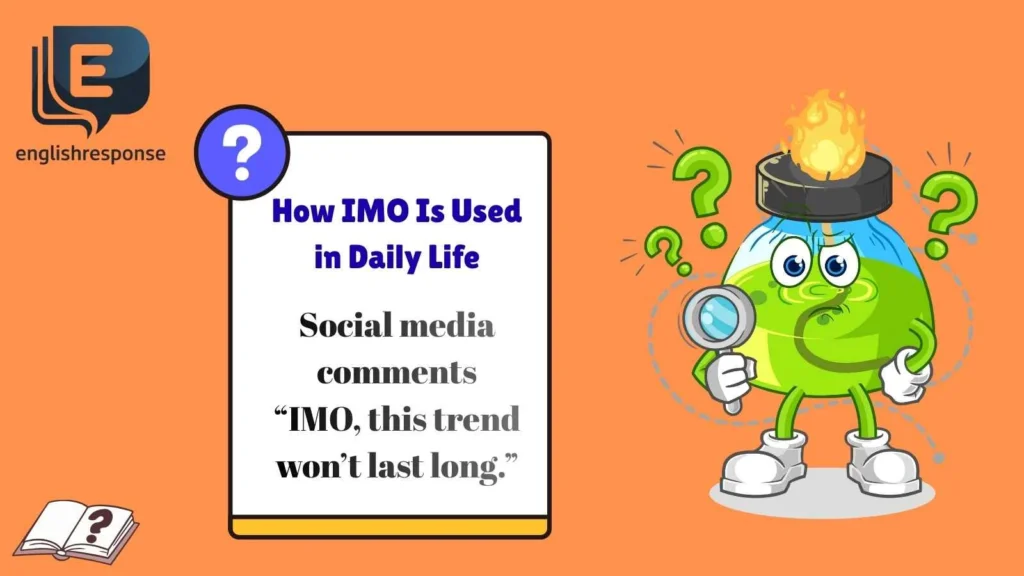
IMO shows up everywhere, often without us even noticing. Here’s how people actually use it day to day:
- Casual texting with friends
“IMO, pineapple on pizza isn’t that bad.” - Online discussions
“IMO, the book was better than the movie.” - Work chats (informal teams)
“IMO, we should push the deadline by a week.” - Social media comments
“IMO, this trend won’t last long.” - Gaming and fandom spaces
“That character is underrated, IMO.” - Advice-sharing moments
“IMO, honesty works better than silence.”
Short. Friendly. Non-threatening. That’s the magic.
Emotional or Practical Meaning of IMO
Beyond its literal definition, IMO carries emotional weight.
Emotionally, it says:
- I respect other opinions
- I’m open to discussion
- I’m not trying to dominate the conversation
Practically, it helps people:
- Avoid sounding rude
- Reduce conflict
- Encourage dialogue
In today’s online world—where debates get heated fast—IMO acts like a verbal seatbelt. It doesn’t stop disagreement, but it makes the ride smoother.
Culturally, it reflects how modern communication values empathy and flexibility, especially in diverse digital spaces.
Similar or Related Terms
Here are terms you’ll often see alongside IMO, and how they differ:
- IMHO – In My Humble Opinion
Even softer than IMO, adds humility. - TBH – To Be Honest
Signals honesty, sometimes blunt. - FWIW – For What It’s Worth
Suggests the opinion may or may not matter. - AFAIK – As Far As I Know
Indicates limited knowledge. - Personally – Full-word alternative, more formal.
Each one shades the message slightly differently, but IMO remains the most neutral and versatile.
Common Misunderstandings About IMO
Despite being simple, IMO is often misunderstood. Let’s clear things up.
- It doesn’t mean uncertainty
People can be confident and still say IMO. - It’s not sarcasm by default
Tone depends on context, not the acronym. - It doesn’t weaken your argument
It can actually make it more persuasive. - It’s not rude
In most cases, it’s the opposite. - It’s not only for online slang
It’s widely accepted in casual writing. - It’s not outdated
IMO is still very much alive and relevant.
Examples of IMO in Sentences
Here are natural, everyday examples you might hear or read:
- “IMO, that café has the best coffee in town.”
- “It’s risky, IMO, but it might pay off.”
- “IMO, you did the right thing.”
- “That outfit looks great on you, IMO.”
- “IMO, taking breaks actually boosts productivity.”
- “The ending was rushed, IMO.”
- “IMO, learning communication skills is underrated.”
- “That decision felt necessary, IMO.”
Notice how smooth and human it feels.
Why Understanding IMO Meaning in Text Matters Today
Digital communication moves fast. Misunderstandings happen faster.
Knowing the imo meaning in text helps you:
- Read messages more accurately
- Respond with the right tone
- Avoid unnecessary arguments
- Communicate more thoughtfully
In a world where texts replace conversations, small details carry big weight. Understanding IMO makes you a better digital communicator, whether you’re chatting casually or engaging in meaningful discussions.
It’s not just slang—it’s a social tool.
FAQs:
What does IMO mean in simple words?
IMO means “in my opinion.” It shows that someone is sharing a personal viewpoint, not a fact.
Is IMO positive or negative?
Neither. IMO is neutral. The tone depends on the sentence and context.
Where is IMO commonly used?
It’s commonly used in texts, social media, online forums, and casual chats.
Is IMO formal or informal?
IMO is informal. It’s best for casual communication, not formal writing.
Why do people search for IMO meaning in text?
Language evolves. People want to understand modern communication, avoid confusion, and stay connected as meanings shift with time.
Conclusion:
Language changes, but the need to be understood never does.
IMO may look like just three letters, but it carries respect, openness, and emotional awareness. It helps people share ideas without building walls—and that matters more than ever in today’s digital world.
Understanding small things like this makes conversations smoother, friendships stronger, and communication more human. And sometimes, clarity is the kindest thing we can offer each other.

Rana Sawalha is a passionate language enthusiast and author at EnglishResponse, dedicated to helping readers improve their English communication skills. With a focus on practical tips, engaging examples, and real-world conversation strategies, Rana Sawalha empowers learners to speak confidently and respond like a pro in any situation.