You’re scrolling through a chat, reading comments on social media, or texting a friend when suddenly you see “ASL?” pop up. For a second, you pause. Is it about sign language? Is someone asking a personal question?
If you’ve ever felt confused by this tiny three-letter term, you’re not alone.
The ASL meaning in text has evolved over time, and today it carries different meanings depending on context, platform, and even generation. What once felt normal and casual can now feel outdated or even awkward if misunderstood.
In digital conversations, small words can carry big meaning. Understanding abbreviations like ASL helps you communicate clearly, avoid misunderstandings, and feel more confident online.
Whether you’re chatting on social media, dating apps, forums, or gaming platforms, knowing what ASL really means can save you from confusion — or embarrassment.
What Does ASL Mean in Text?
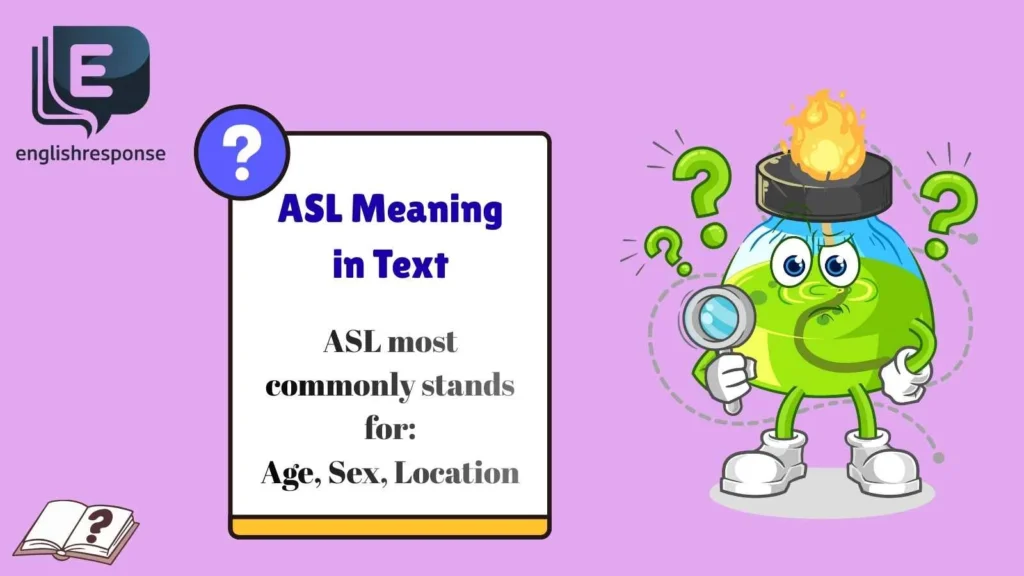
In texting and online chats, ASL most commonly stands for:
Age, Sex, Location
It’s a quick way for someone to ask basic personal details during a conversation, especially when meeting someone new online.
Instead of typing a full sentence like:
“Hey, how old are you, what’s your gender, and where are you from?”
People shorten it to:
“ASL?”
Real-life examples
- Someone joins a chatroom and says:
“Hey everyone, ASL?” - A person on an old-school forum messages:
“ASL before we continue?” - In casual online conversations:
“ASL? Just curious.”
It’s short, direct, and meant to speed up conversation — though today, it’s not always received the same way it once was.
Origin and Background of the Term
The term ASL didn’t come from modern social media. It actually dates back to the early internet era, long before Instagram, WhatsApp, or TikTok existed.
In the late 1990s and early 2000s, people spent time in:
- Chatrooms
- IRC (Internet Relay Chat)
- Yahoo Messenger
- AOL Instant Messenger
Back then, profiles were limited or nonexistent. You didn’t instantly know who you were talking to. So people needed a fast way to establish identity.
That’s where ASL came in.
It became a cultural norm — almost an opening line. Asking ASL helped users understand who was on the other side of the screen and decide how to continue the conversation.
Over time, as social platforms evolved and profiles became more detailed, ASL started to fade — but it never fully disappeared.
How ASL Is Used in Daily Life
Even today, you’ll still see ASL pop up in different digital spaces. Here’s how people use it now:
- In online gaming chats, to know who teammates are
- On anonymous forums, where profiles aren’t visible
- In casual group chats, sometimes jokingly
- On older chat platforms, where slang hasn’t changed much
- As a nostalgic or ironic phrase, especially by millennials
Sometimes ASL is used seriously. Other times, it’s playful or sarcastic.
For example:
- “ASL? Or are we keeping it mysterious today?”
- “ASL — classic internet vibes.”
The meaning stays the same, but the tone changes with context.
Emotional or Practical Meaning of ASL
At its core, ASL is about connection.
People ask ASL because they want to:
- Understand who they’re talking to
- Feel more comfortable continuing a conversation
- Decide how personal or casual the chat should be
However, in modern times, ASL can feel too personal or even intrusive if asked too quickly. Many people prefer to share details naturally rather than being asked directly.
Emotionally, ASL represents an earlier internet culture — one that was more open, curious, and unfiltered. Practically, it shows how humans adapt language to fit fast-moving digital spaces.
Understanding ASL helps you read between the lines and respond appropriately, instead of feeling awkward or confused.
Similar or Related Terms
Here are some related terms you might see online, along with how they differ:
- DM – Direct message; private conversation
- PM – Personal message; similar to DM
- BRB – Be right back
- ICYMI – In case you missed it
- IRL – In real life
- TMI – Too much information
Unlike ASL, these terms don’t ask for personal identity details. That’s what makes ASL unique — and sometimes sensitive.
Common Misunderstandings About ASL
ASL is often misunderstood. Let’s clear things up.
- ASL doesn’t always mean sign language
In text chats, it usually means Age, Sex, Location. - It’s not always flirting
Sometimes it’s just curiosity or habit. - It’s not a modern trend
ASL is actually old-school internet slang. - It’s not always appropriate
Asking ASL too soon can feel invasive. - Not everyone likes being asked ASL
Many prefer organic conversation. - Context changes everything
Platform, tone, and timing matter.
Knowing these helps you respond more thoughtfully.
Examples of ASL in Sentences
Here are some natural, everyday examples:
- “We’ve been chatting for a while — ASL?”
- “ASL? I feel like I just time-traveled to 2005.”
- “Someone asked me ASL in the comments today.”
- “ASL isn’t really my thing, but thanks for asking.”
- “He opened the chat with ASL, which felt a bit fast.”
- “Do people still say ASL online?”
- “ASL used to be everywhere back in the day.”
Each sentence shows a slightly different tone and use.
Why Understanding ASL Matters Today
Language evolves, but old terms don’t always disappear.
Understanding the ASL meaning in text helps you:
- Navigate online conversations confidently
- Avoid awkward or uncomfortable replies
- Recognize generational language differences
- Communicate with clarity and awareness
In a world where digital communication dominates, knowing what words really mean is a powerful skill. It’s not just about slang — it’s about connection, respect, and understanding context.
When you understand ASL, you’re not just decoding letters. You’re reading social cues.
FAQs:
What does ASL mean in simple words?
ASL means Age, Sex, Location. It’s a quick way to ask basic personal details in online chats.
Is ASL positive or negative?
It’s neutral. The tone depends on how and when it’s used.
Where is ASL commonly used?
You’ll mostly see it in chatrooms, forums, gaming chats, and casual online conversations.
Is ASL formal or informal?
ASL is informal and casual. It’s not used in professional settings.
Why do people search for ASL meaning in text?
Because the meaning has changed with time, and many people see it online without knowing what it stands for today.
Conclusion:
The internet has its own language, and ASL is a small but meaningful part of it.
While it may seem outdated to some, it still pops up in conversations, bringing curiosity, nostalgia, or confusion along with it.
Understanding the ASL meaning in text allows you to respond with confidence, awareness, and emotional intelligence.

Rana Sawalha is a passionate language enthusiast and author at EnglishResponse, dedicated to helping readers improve their English communication skills. With a focus on practical tips, engaging examples, and real-world conversation strategies, Rana Sawalha empowers learners to speak confidently and respond like a pro in any situation.