You’re scrolling through your messages, minding your business, and suddenly a short text pops up: “WSG?”
No emojis. No explanation. Just three letters.
You pause.
Is it a greeting? A question? An attitude?
Welcome to modern texting 😄
If you’ve ever wondered about the wsg meaning in text, you’re not alone. This tiny abbreviation shows up everywhere — Snapchat, Instagram DMs, WhatsApp, even casual SMS. And while it looks simple, its meaning depends heavily on context, tone, and relationship.
Understanding slang like this isn’t just about staying trendy. It helps you connect better, avoid awkward replies, and read between the lines of digital conversations. In a world where texts replace face-to-face chats, knowing what people really mean matters more than ever.
In this guide, we’ll break down what WSG means, where it came from, how people use it daily, and why it carries more emotional weight than you might expect.
What Does WSG Mean in Text?
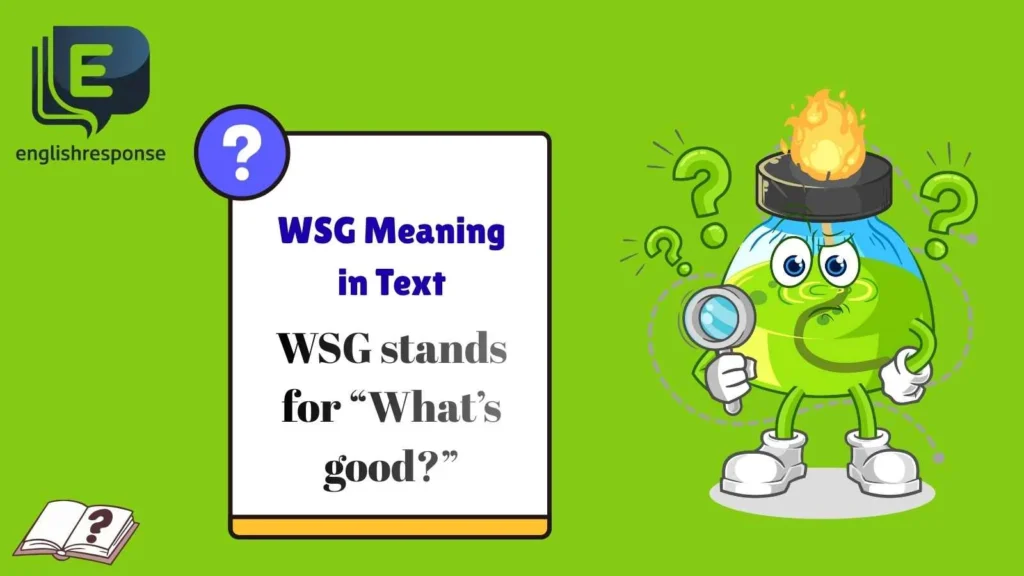
At its core, WSG stands for “What’s good?”
But here’s the thing — it’s not just a literal question.
When someone texts “wsg”, they’re usually saying:
- What’s up?
- How are things?
- What are you doing right now?
- Anything interesting going on?
It’s casual, relaxed, and friendly.
Real-life examples:
- A friend texts: “wsg tonight?” → They’re asking about plans.
- Someone slides into your DMs with “wsg” → They’re starting a conversation.
- A close friend sends “wsg bro” → Just checking in.
Unlike formal greetings, WSG feels effortless. It’s a digital nod — simple, quick, and socially warm.
Origin and Background of the Term
To really understand wsg meaning in text, we need to rewind a bit.
The phrase “What’s good?” has been part of spoken English for decades, especially in African American Vernacular English (AAVE). It was commonly used as a friendly greeting in urban communities long before smartphones existed.
As texting culture exploded:
- Words became shorter
- Typing speed mattered
- Slang adapted to screens
“What’s good?” naturally evolved into WSG.
Social media platforms like Snapchat, Instagram, and Twitter (X) accelerated its popularity. Short messages, fast replies, and informal vibes made abbreviations like WSG feel perfectly at home.
Today, WSG isn’t tied to one group — it’s global, casual, and deeply embedded in online communication.
How WSG Is Used in Daily Life
WSG shows up in more situations than you might expect. Here’s how people actually use it day to day:
- Conversation starter
“wsg” = Hey, let’s talk. - Checking availability
“wsg later?” = Are you free? - Casual greeting
Replaces “hi” or “hey” among friends. - Flirty opener
Short, confident, low-pressure. - Group chats
Used to revive dead conversations. - Social media replies
Commenting “wsg” under a story = I see you.
It’s fast. It’s flexible. And it fits perfectly into modern digital rhythm.
Emotional or Practical Meaning of WSG
On the surface, WSG looks simple. Emotionally? It can mean a lot.
When someone sends “wsg”, they’re often saying:
- I’m thinking about you
- I want your attention
- I’m open to talking
- I’m curious about your vibe
It’s intentionally open-ended. That’s its power.
In today’s fast-paced world, people don’t always have time for long messages. WSG allows connection without pressure. You can reply with one word or a full conversation — both are acceptable.
Socially, it signals approachability. Practically, it keeps communication flowing without effort.
Similar or Related Terms
Here are some common terms related to WSG, with quick explanations:
- WYD – What are you doing right now?
- Sup – Short for “What’s up?”
- HMU – Hit me up
- Yo – Casual greeting
- Heyy – Often flirty or friendly
- What’s popping – More energetic version
Each has a slightly different tone, but WSG sits right in the middle — relaxed, neutral, and versatile.
Common Misunderstandings About WSG
Let’s clear up some confusion 👇
- It’s not rude
WSG is casual, not dismissive. - It’s not lazy texting
It’s intentional and culturally normal. - It’s not always flirty
Context matters — friends use it too. - It’s not formal
Don’t use it in work emails 😅 - It’s not demanding a reply
It invites conversation, not forces it.
Understanding these nuances helps you respond without overthinking.
Examples of WSG in Sentences
Here’s how WSG looks in real conversations:
- “wsg? you been quiet today”
- “wsg tonight, we linking or nah?”
- “Just saw your story — wsg 👀”
- “wsg bro, how you holding up?”
- “wsg after work?”
- “She texted me ‘wsg’ out of nowhere”
- “wsg with you lately?”
- “I replied ‘not much, you?’ and it flowed naturally”
Simple. Natural. Human.
Why Understanding WSG Matters Today
Language evolves — fast.
Slang like WSG reflects:
- Digital culture
- Social connection
- Modern communication habits
When you understand terms like this, you:
- Communicate more confidently
- Avoid awkward replies
- Build stronger social bonds
- Stay culturally aware
In professional spaces, knowing slang helps you understand tone, even if you don’t use it yourself. In personal life, it helps you connect authentically.
Understanding language isn’t about sounding cool — it’s about being understood.
FAQs:
What does WSG mean in simple words?
WSG means “What’s good?”, a casual way of saying hello or asking what’s going on.
Is WSG positive or negative?
It’s usually neutral to positive. Tone depends on context, but it’s rarely negative.
Where is WSG commonly used?
Mostly in text messages, social media DMs, and chat apps like Snapchat and Instagram.
Is WSG formal or informal?
Completely informal. Best used with friends, not professional contacts.
Why do people search for WSG meaning in text?
Because slang changes fast, and people want to understand messages without guessing as language evolves over time.
Conclusion:
The next time you see “WSG?” on your screen, you won’t hesitate.
You’ll know it’s not just three letters — it’s an invitation, a check-in, a small digital bridge between two people. Language like this reminds us that communication doesn’t have to be complicated to be meaningful.
In a world moving faster every day, even short words can carry real connection. Stay curious, keep learning, and remember — understanding language is one of the simplest ways to understand people.

Rana Sawalha is a passionate language enthusiast and author at EnglishResponse, dedicated to helping readers improve their English communication skills. With a focus on practical tips, engaging examples, and real-world conversation strategies, Rana Sawalha empowers learners to speak confidently and respond like a pro in any situation.