You’re scrolling through messages, minding your business, when suddenly you see someone reply with “fw”. No emojis. No explanation. Just two letters.
And you pause.
Is it slang? Is it a typo? Or does it secretly mean something deeper?
Welcome to the modern world of texting, where tiny abbreviations carry big meanings. “FW” is one of those short forms that looks simple but can change the tone of an entire conversation depending on context.
In today’s fast-paced digital chats, understanding terms like fw meaning in text isn’t just helpful — it’s necessary.
Misreading it can lead to awkward moments, confusion, or even misunderstandings with friends, coworkers, or someone you’re flirting with.
This guide breaks everything down in plain, human language. No robotic definitions. No confusing jargon. Just real explanations, relatable examples, and practical insight you can actually use.
What Does FW Meaning in Text?
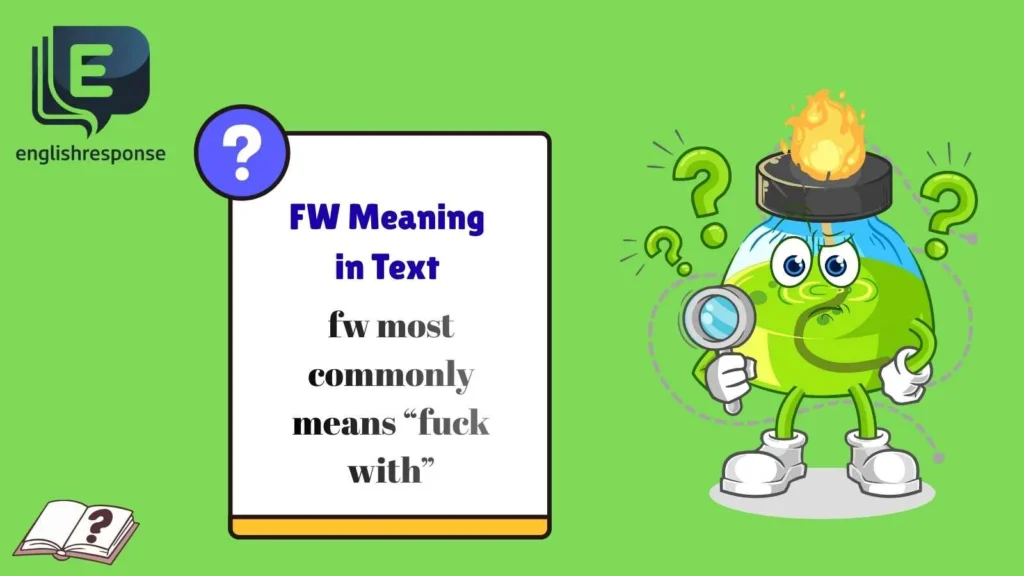
At its core, fw most commonly means “fuck with” in texting slang.
But don’t panic — it’s not always offensive.
In modern conversations, fw usually means “to like,” “to support,” or “to vibe with” something or someone.
Simple examples:
- “I fw that song” → I really like that song
- “She fw you heavy” → She really likes or supports you
- “I don’t fw drama” → I don’t like or tolerate drama
The tone depends heavily on context, relationship, and platform. Among friends, it’s casual and expressive. In professional settings, though, it’s best avoided.
Think of “fw” as emotional shorthand — fast, direct, and loaded with meaning.
Origin and Background of the Term
The term “fuck with” has been around for decades in spoken English, especially in African American Vernacular English (AAVE). Long before texting existed, people used it verbally to express liking, trust, or engagement.
As texting culture grew in the early 2000s, phrases started shrinking. Long expressions became abbreviations to save time and keystrokes. “Fuck with” naturally turned into fw.
Hip-hop culture, social media platforms, and meme language helped popularize it. Artists used it in lyrics. Fans repeated it online. Eventually, it crossed into everyday texting.
What’s interesting is how its meaning softened over time. While the original phrase sounds aggressive, modern usage is often positive, relaxed, and friendly.
Language evolves — and “fw” is a perfect example of that evolution in action.
How FW Is Used in Daily Life

You’ll mostly see fw in casual, informal conversations. Here’s how people use it day to day:
- Expressing liking or approval
“I fw that hoodie.” - Showing support for someone
“He fw you, trust me.” - Setting boundaries
“I don’t fw negativity.” - Reacting to music or art
“This beat? I fw it heavy.” - Casual flirting
“I fw your vibe.” - Rejecting something politely (but firmly)
“Nah, I don’t fw that.”
Short. Direct. Emotionally loaded. That’s why people love it.
Emotional or Practical Meaning of FW
Beyond the literal meaning, fw carries emotional weight.
When someone says they “fw” you, it implies:
- Comfort
- Trust
- Acceptance
- Respect
In a world where people rarely say how they feel directly, fw becomes a low-pressure way to express connection.
Socially, it signals belonging. Culturally, it reflects how language adapts to digital life. Practically, it helps people communicate fast without sounding overly serious.
It’s casual honesty — modern-day style.
Similar or Related Terms
Here are some related expressions you might see instead of “fw”:
- Mess with – Similar meaning, slightly softer
- Vibe with – Focuses on emotional connection
- Rock with – Shows loyalty or support
- Like / enjoy – More neutral and formal
- Mess around with – Different meaning; can imply lack of seriousness
Each term has its own tone and social setting, so context matters.
Common Misunderstandings About FW
Let’s clear up the confusion.
- It’s always rude
❌ Not true. Context determines tone. - It only means something sexual
❌ Modern usage is usually about liking or support. - It’s appropriate everywhere
❌ Definitely not for professional settings. - Everyone uses it the same way
❌ Meaning shifts by culture and age group. - It’s negative slang
❌ Often positive and affirming. - It’s lazy language
❌ It’s efficient, expressive communication.
Understanding nuance makes all the difference.
Examples of FW in Sentences
Here’s how it looks in real conversations:
- “I fw your energy today.”
- “I don’t fw fake people.”
- “That movie was weird, but I fw it.”
- “She fw you, just shy about it.”
- “If you fw honesty, we’ll get along.”
- “I fw that idea — let’s do it.”
- “He doesn’t fw crowds.”
- “Low-key fw this playlist.”
Natural. Relatable. Human.
Why Understanding FW Meaning in Text Matters Today
Texting is the primary language of modern relationships. Friends, dating, networking — it all happens through screens.
Misunderstanding slang like fw can:
- Change the tone of a conversation
- Create awkward replies
- Make you seem out of touch
Understanding it, on the other hand, helps you:
- Respond confidently
- Read emotional intent correctly
- Communicate naturally with younger or online-savvy audiences
Language literacy isn’t just grammar anymore — it’s cultural awareness.
FAQs:
What does fw mean in simple words?
It means to like, support, or be okay with something or someone.
Is fw positive or negative?
Usually positive, but context can make it neutral or negative.
Where is fw commonly used?
Mostly in text messages, social media, and casual online chats.
Is fw formal or informal?
It’s very informal and shouldn’t be used professionally.
Why do people search for fw meaning in text?
Because slang changes fast, and people want to avoid misunderstandings as meanings evolve with time.
Conclusion:
Language keeps moving, and slang like fw proves just how creative human communication can be.
What started as a rough-sounding phrase has turned into a casual, expressive way to show liking, support, or boundaries.
Understanding the fw meaning in text isn’t about sounding cool — it’s about connecting better, responding smarter, and staying in sync with modern conversations.

Rana Sawalha is a passionate language enthusiast and author at EnglishResponse, dedicated to helping readers improve their English communication skills. With a focus on practical tips, engaging examples, and real-world conversation strategies, Rana Sawalha empowers learners to speak confidently and respond like a pro in any situation.