You’re scrolling through your messages, laughing at memes, chatting with friends, and suddenly someone replies with “STFU.”
Your brain pauses for a second.
Is that a joke? An insult? A playful roast? Or did you just step on someone’s last nerve?
In today’s fast-moving digital world, short text slang carries big emotional weight. A four-letter acronym can change the entire tone of a conversation. That’s exactly why understanding the stfu meaning in text is more important than it looks.
This phrase shows up everywhere — texts, DMs, gaming chats, TikTok comments, even group chats with friends. Some people use it playfully, others use it harshly, and a few don’t fully understand how strong it sounds.
In this article, we’ll break it all down in simple, human words. You’ll learn what STFU really means, where it came from, how people use it today, and why context changes everything. By the end, you’ll know when it’s a joke… and when it’s a red flag.
What Does STFU Meaning in Text?
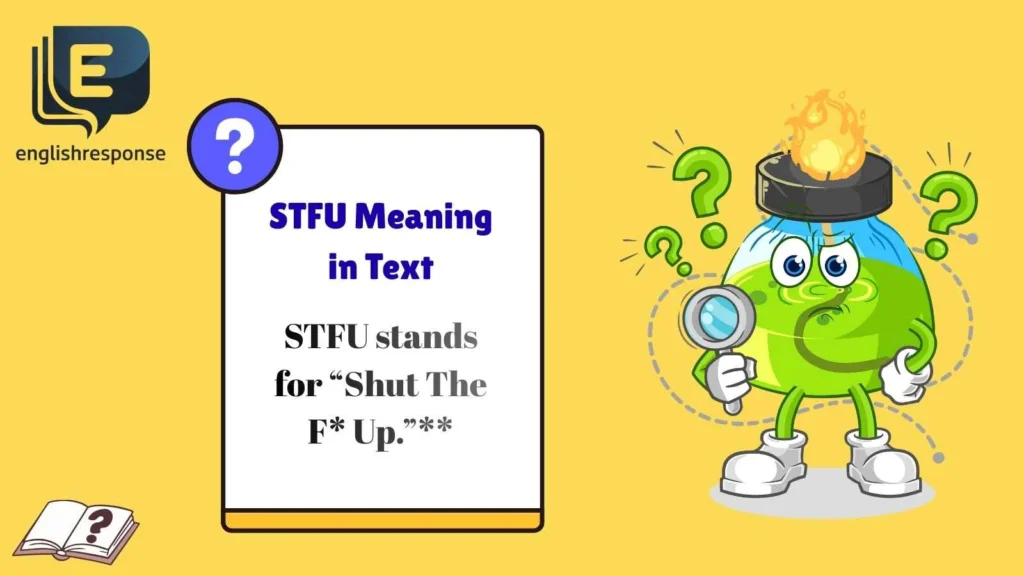
STFU stands for “Shut The F* Up.”**
Yes — it’s blunt. And yes — it includes profanity.
In text conversations, STFU usually means “stop talking” or “be quiet,” but the tone depends completely on who’s saying it and how.
Here’s how it can show up in real life:
- A friend joking during a funny argument:
“STFU 😂 you did not just say that.” - Someone annoyed or angry:
“STFU, I’m tired of hearing this.” - Playful flirting or teasing (common online):
“STFU, you’re actually adorable.”
So while the words themselves are aggressive, the meaning shifts with context, emojis, and relationship dynamics. That’s why understanding it matters before reacting.
Origin and Background of the Term
STFU didn’t start with texting — it existed long before smartphones.
The phrase “shut up” has been part of English for centuries, often used as a command. When profanity became more normalized in casual speech, “shut the f*** up” emerged as a stronger, more emotional version.
STFU as an acronym gained popularity in:
- Early internet forums
- Gaming communities
- Chat rooms and message boards in the 1990s and early 2000s
Typing the full phrase felt too aggressive — shortening it made it faster, sharper, and easier to throw into a conversation. Over time, people started using it sarcastically, humorously, and even affectionately.
Language evolves, and STFU is a perfect example of how tone can override literal meaning in modern communication.
How STFU Is Used in Daily Life
You’ll see STFU used differently depending on the situation. Here are some common real-world uses:
- Playful teasing
“STFU, you’re lying 😭” - Friendly roasting
“STFU, no way you won again.” - Expressing shock
“STFU… that actually happened?” - Anger or frustration
“STFU and let me finish.” - Online gaming chats
“STFU and focus on the match.” - Group chats with close friends
Used casually when everyone understands the vibe
The same letters can feel funny or offensive, depending on tone, timing, and trust.
Emotional or Practical Meaning of STFU
At its core, STFU is about control and boundaries.
Emotionally, it can signal:
- Frustration
- Overstimulation
- Shock or disbelief
- Playful affection (yes, really)
Practically, it’s often used to:
- End a conversation quickly
- React strongly to surprising news
- Match someone’s sarcastic energy
In modern digital culture, people often use harsh words softly, especially with emojis or laughter. Still, STFU can sting if used carelessly.
That’s why emotional intelligence matters more than vocabulary.
Similar or Related Terms
Here are related phrases you might see, with key differences:
- Shut up – Direct but less intense
- Be quiet – Polite or formal
- Stop talking – Neutral, clear
- Zip it – Playful or sarcastic
- Hush – Gentle, calming
- Silence – Cold or authoritative
STFU stands out because it’s raw, emotional, and informal.
Common Misunderstandings About STFU
Many people misunderstand this term. Let’s clear things up:
- “It’s always rude.”
Not always. With close friends, it can be playful. - “It means the sender hates you.”
Context matters more than words. - “It’s okay in professional chats.”
Absolutely not. It’s never professional. - “Everyone uses it the same way.”
Cultural and personal differences apply. - “Emojis don’t change the meaning.”
They often soften the tone significantly.
Understanding these nuances helps avoid unnecessary conflict.
Examples of STFU in Sentences
Here are natural, everyday examples you might actually see:
- “STFU 😂 that plot twist was nonsensical.”
- “Bro, STFU, you’re too funny.”
- “STFU and listen for a second.”
- “STFU… no way you met him.”
- “She told him to STFU during the argument.”
- “STFU, you did not buy that.”
- “He said STFU, but clearly joking.”
- “STFU made the chat go silent.”
Notice how tone changes everything.
Why Understanding STFU Meaning in Text Matters Today
Digital communication lacks facial expressions and tone of voice. That’s why misunderstandings happen so easily.
Knowing the stfu meaning in text helps you:
- Avoid emotional overreactions
- Read conversations more accurately
- Respond appropriately instead of defensively
- Communicate more clearly online
In a world driven by texts and DMs, language awareness is power. The better you understand slang, the better your relationships become.
FAQs:
What does STFU mean in simple words?
It means “shut the f*** up,” often used to tell someone to stop talking, sometimes jokingly, sometimes seriously.
Is STFU positive or negative?
It’s usually negative, but among close friends it can be playful or sarcastic.
Where is STFU commonly used?
Mostly in texts, social media, gaming chats, and informal online conversations.
Is STFU formal or informal?
Completely informal. Never appropriate in professional or respectful settings.
Why do people search for STFU meaning in text?
Because tone is confusing online, and people want to know whether it’s an insult or a joke — especially as language changes with time.
Conclusion:
Language isn’t just about words — it’s about connection, timing, and intent. STFU may look simple, but its meaning shifts with emotion, context, and relationship dynamics.
Understanding the stfu meaning in text helps you pause before reacting, read between the lines, and respond with clarity instead of confusion.
Words can hurt, heal, or humor — sometimes all at once.
Choose awareness, not assumptions. How you understand language shapes how you experience the world.

Rana Sawalha is a passionate language enthusiast and author at EnglishResponse, dedicated to helping readers improve their English communication skills. With a focus on practical tips, engaging examples, and real-world conversation strategies, Rana Sawalha empowers learners to speak confidently and respond like a pro in any situation.