You’re scrolling through your messages, half-awake, when someone ends a text with “ml ❤️”.
Suddenly, you pause. Do they mean machine learning? My love? Much love? Or something else entirely?
That tiny two-letter phrase—ml—has sparked a surprising amount of confusion in modern texting. In a world where messages are shorter, faster, and more emotional than ever, understanding text slang isn’t just helpful—it’s essential. Misreading one abbreviation can change the entire tone of a conversation.
The ml meaning in text isn’t complicated, but it is context-dependent. And that’s where people often get tripped up. Whether you’re texting a friend, a crush, or scrolling through social media captions, knowing what ml means can save you from awkward misunderstandings.
In this guide, we’ll break it down in simple, human words, share real-life examples, explore emotional undertones, and explain why this small abbreviation carries big meaning in digital communication today.
What Does ML Mean in Text?
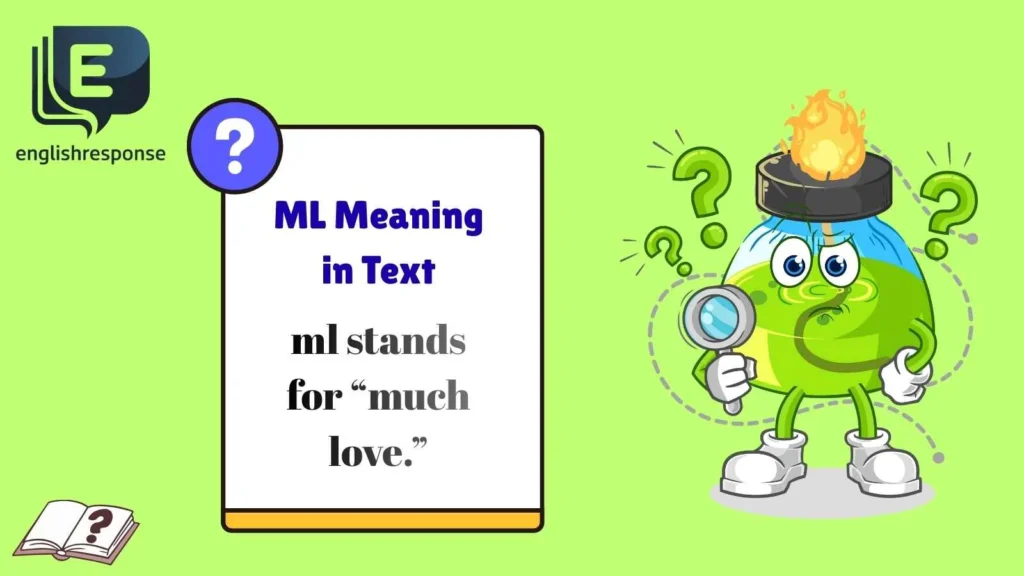
In most texting and social media conversations, ml stands for “much love.”
It’s a casual, friendly way to show appreciation, affection, or goodwill—without sounding overly emotional or formal.
People use ml to:
- Send warmth without writing a long message
- End conversations on a positive note
- Show care, support, or respect
Real-life examples:
- “Thanks for checking on me, ml.”
- “Proud of you always. ml ❤️”
- “Catch up soon, ml!”
Sometimes, ml can also mean “my love,” but that usage is usually more intimate and depends heavily on the relationship and tone of the conversation.
Origin and Background of the Term
The rise of ml is closely tied to the evolution of texting culture. As messaging apps replaced long phone calls, people began shortening phrases to save time while keeping emotional meaning intact.
“Much love” itself has roots in spoken English, especially in:
- Music culture
- Letters and sign-offs
- Casual spoken goodbyes
Over time, as platforms like WhatsApp, Instagram, and Snapchat encouraged faster communication, “much love” naturally became ml.
It wasn’t created by tech experts or dictionaries—it grew organically, shaped by how real people communicate. That’s why it feels natural, warm, and human rather than stiff or technical.
How ML Is Used in Daily Life
You’ll see ml everywhere once you start noticing it. Here’s how people commonly use it:
- Ending a conversation kindly
“Talk later, ml.” - Showing emotional support
“You’ve got this. ml 💪” - Friendly appreciation
“Thanks for the help, ml!” - Social media captions
“Grateful for today. ml ✨” - Casual affection between friends
“Miss you already, ml.”
Short. Simple. Warm. That’s the beauty of it.
Emotional or Practical Meaning of ML
At its core, ml is about connection.
It’s not dramatic love.
It’s more like emotional shorthand for “I care.”
In today’s fast-paced digital world, people crave authenticity without effort overload. ml delivers that. It says:
- “I appreciate you”
- “No bad vibes”
- “Sending good energy your way”
That emotional flexibility is why ml works across friendships, family chats, and even professional-casual spaces.
Similar or Related Terms
Here are some commonly confused or related text abbreviations:
- xoxo – Hugs and kisses, more affectionate
- luv / luv ya – Casual love, often playful
- ily – “I love you,” much stronger emotionally
- tysm – Thank you so much (gratitude-focused)
- xo – Friendly affection, often flirty
ML sits comfortably in the middle—warm but not overwhelming.
Common Misunderstandings About ML
Despite its simplicity, people often misinterpret ml. Let’s clear things up.
- It always means machine learning
❌ Not in texting. Context matters. - It’s romantic by default
❌ Usually friendly, not romantic. - It’s unprofessional
❌ Depends on the relationship and tone. - Only young people use it
❌ All age groups use it now. - It means the same as “I love you”
❌ “Much love” is softer and broader.
Examples of ML in Sentences
Here are natural, everyday uses you might actually see:
- “Thanks for listening earlier, ml.”
- “Safe travels, ml ✈️”
- “Always here for you, ml.”
- “Appreciate you big time, ml.”
- “That meant a lot to me, ml.”
- “Good vibes only, ml 🌈”
- “You’re doing amazing, ml.”
- “Catch you later, ml ❤️”
Each one feels warm without being heavy.
Why Understanding ML Matters Today
Texting is now the primary language of connection. A single word—or abbreviation—can shift tone, emotion, and meaning.
Understanding the ml meaning in text helps you:
- Read emotional cues accurately
- Respond appropriately
- Avoid awkward misunderstandings
- Communicate with empathy
In a world where messages replace moments, knowing what someone really means matters more than ever.
FAQs:
What does ML mean in simple words?
It usually means “much love,” a friendly way to show care or appreciation.
Is ML positive or negative?
Almost always positive. It’s meant to spread good feelings.
Where is ML commonly used?
Text messages, social media captions, DMs, and casual chats.
Is ML formal or informal?
It’s informal and best used in relaxed conversations.
Why do people search for ML meaning in text?
Because it can mean different things depending on context, and people don’t want to misread the message as texting evolves over time.
Conclusion:
Language changes. Texting evolves. But the human need to connect never goes away.
The ml meaning in text proves that even two small letters can carry warmth, kindness, and emotional intent. Whether it’s a quiet sign-off or a subtle show of support, ml reminds us that communication doesn’t have to be long to be meaningful.
So next time you see ml, don’t overthink it.
Sometimes, it’s just someone saying, “I care—without making a big deal about it.”
And honestly, that kind of love matters more than we realize.

Rana Sawalha is a passionate language enthusiast and author at EnglishResponse, dedicated to helping readers improve their English communication skills. With a focus on practical tips, engaging examples, and real-world conversation strategies, Rana Sawalha empowers learners to speak confidently and respond like a pro in any situation.