You’re scrolling through your phone late at night.
Someone’s at a party. Another friend is traveling. A group chat is blowing up without you. Suddenly, there’s this tight feeling in your chest, and you think, “Why wasn’t I invited?”
That feeling? That’s FOMO.
If you’ve ever felt anxious, left out, or restless after seeing something online, you’ve already experienced the fomo meaning in text, even if you didn’t know the word for it.
In today’s hyper-connected world, FOMO shows up everywhere—texts, social media, group chats, and even work conversations.
Understanding this term isn’t just about slang. It’s about recognizing modern emotions, digital pressure, and how online communication affects real feelings.
Once you understand what FOMO really means, you’ll start noticing it in your daily life—and maybe even learn how to manage it better.
What Does FOMO Meaning in Text?
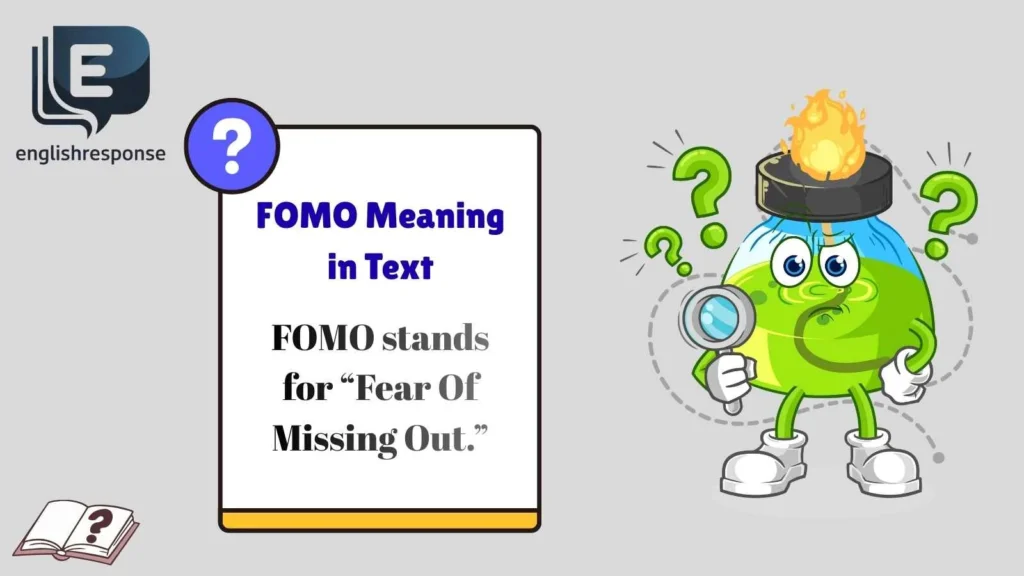
FOMO stands for “Fear Of Missing Out.”
In text messages or online conversations, FOMO describes the anxious feeling that others are enjoying experiences, opportunities, or moments without you.
It’s not just jealousy. It’s the fear that:
- You’re being left behind
- You’re missing something important
- Everyone else is living better, fuller lives
Real-life examples:
- You see friends posting stories from an event you didn’t attend
- A group chat plans something without tagging you
- Someone says, “You should’ve been there!”
In texting, people might say:
- “I’ve got major FOMO right now 😩”
- “Stop posting, you’re giving me FOMO”
The fomo meaning in text is emotional, relatable, and deeply human.
Origin and Background of the Term
The idea behind FOMO isn’t new. Humans have always feared being excluded. But the term itself gained popularity in the early 2000s.
It was first used by marketing experts to describe consumer anxiety—people buying things because they didn’t want to miss a deal. Over time, social media amplified the feeling.
Before smartphones:
- You didn’t see everything you missed
- You found out later, if at all
Now?
- Every moment is documented
- Every experience is shared instantly
Platforms like Instagram, Snapchat, and WhatsApp turned FOMO into a daily emotion, not a rare one. What started as a marketing term became a cultural reality.
How FOMO Is Used in Daily Life
You’ll see FOMO everywhere once you recognize it.
Here’s how people use it casually:
- “I didn’t go, but now I’ve got FOMO.”
- “Those vacation pics are giving me serious FOMO.”
- “I said no, and now I regret it—classic FOMO.”
- “I keep checking my phone because of FOMO.”
- “I joined just because I didn’t want FOMO later.”
Short sentences. Emotional meaning. Totally relatable.
The fomo meaning in text often appears with emojis, jokes, or exaggeration—but the feeling underneath is real.
Emotional or Practical Meaning of FOMO
At its core, FOMO is about belonging.
Humans are social beings. We want:
- Connection
- Inclusion
- Validation
When FOMO hits, it can cause:
- Anxiety
- Overthinking
- Poor decisions
- Burnout
People say yes when they want to say no.
They scroll endlessly instead of resting.
They compare their behind-the-scenes to someone else’s highlight reel.
But here’s the twist—FOMO isn’t always bad.
It can:
- Push people to try new things
- Encourage social interaction
- Motivate growth
The key is awareness. Once you understand it, you control it—not the other way around.
Similar or Related Terms
Here are some related words people confuse with FOMO:
- JOMO (Joy Of Missing Out) – Feeling happy about choosing peace over pressure
- OMO – Short version of missing out without fear
- Social Anxiety – Fear of social situations, not missing events
- Comparison Trap – Measuring your life against others
- Peer Pressure – Being pushed by others, not internal fear
Each has a different emotional root, even if they overlap.
Common Misunderstandings About FOMO
Let’s clear up some myths.
- FOMO only affects young people
Not true. Adults experience it at work, in relationships, and socially. - It’s just jealousy
Nope. FOMO includes anxiety and fear, not just envy. - Social media causes FOMO
Social media amplifies it—but the emotion already exists. - FOMO means you’re insecure
Wrong. Even confident people feel it. - It’s always negative
Sometimes it leads to growth and new experiences.
Understanding these helps reduce guilt around the feeling.
Examples of FOMO in Sentences
Here are natural, everyday uses:
- “I wasn’t invited, and now I’ve got major FOMO.”
- “Seeing those stories gave me FOMO instantly.”
- “I joined last minute because of FOMO.”
- “My FOMO kept me up all night scrolling.”
- “I said yes even though I was tired—classic FOMO.”
- “Don’t post more, my FOMO can’t handle it.”
- “I’m learning to ignore FOMO and enjoy my peace.”
Simple. Human. Real.
Why Understanding FOMO Matters Today
In today’s digital world, FOMO affects:
- Mental health
- Productivity
- Relationships
- Self-esteem
Recognizing the fomo meaning in text helps you:
- Make better choices
- Set boundaries
- Reduce anxiety
- Stop unhealthy comparisons
It also builds empathy. When someone says they’re feeling FOMO, they’re really saying, “I want to belong.”
And that’s something we all understand.
FAQs:
What does FOMO mean in simple words?
FOMO means feeling worried or anxious that you’re missing something fun or important others are experiencing.
Is FOMO positive or negative?
It can be both. It motivates action but can also cause stress if unmanaged.
Where is FOMO commonly used?
Mostly in texts, social media, online chats, and casual conversations.
Is FOMO formal or informal?
It’s informal and conversational, commonly used in digital communication.
Why do people search for FOMO meaning in text?
Because they see it used online and want to understand the emotion behind it as language evolves with time.
Conclusion:
FOMO isn’t just a trendy word—it’s a mirror of modern life.
We live in a world where everything is visible, shared, and compared. Understanding the fomo meaning in text gives you power—the power to pause, choose intentionally, and protect your peace.
Remember this:
You’re not missing out—you’re choosing your own path.
And sometimes, that’s the most freeing feeling of all.

Rana Sawalha is a passionate language enthusiast and author at EnglishResponse, dedicated to helping readers improve their English communication skills. With a focus on practical tips, engaging examples, and real-world conversation strategies, Rana Sawalha empowers learners to speak confidently and respond like a pro in any situation.