You’re scrolling through your messages, half-awake, when someone replies with just three letters: SNM. No explanation. No emoji. Just that.
And suddenly, you’re wondering… Is that good? Bad? Rude? Friendly?
You’re not alone.
Texting slang moves fast, and meanings change depending on tone, culture, and context. The snm meaning in text is one of those short expressions that looks simple but carries more weight than you’d expect.
At its core, SNM is casual, conversational, and deeply rooted in how people communicate online today. Understanding it helps you avoid awkward misunderstandings and respond with confidence instead of confusion.
In this article, we’ll break down what SNM really means, where it came from, how people use it in daily life, and why it still matters in modern digital conversations.
What Does SNM Mean in Text?
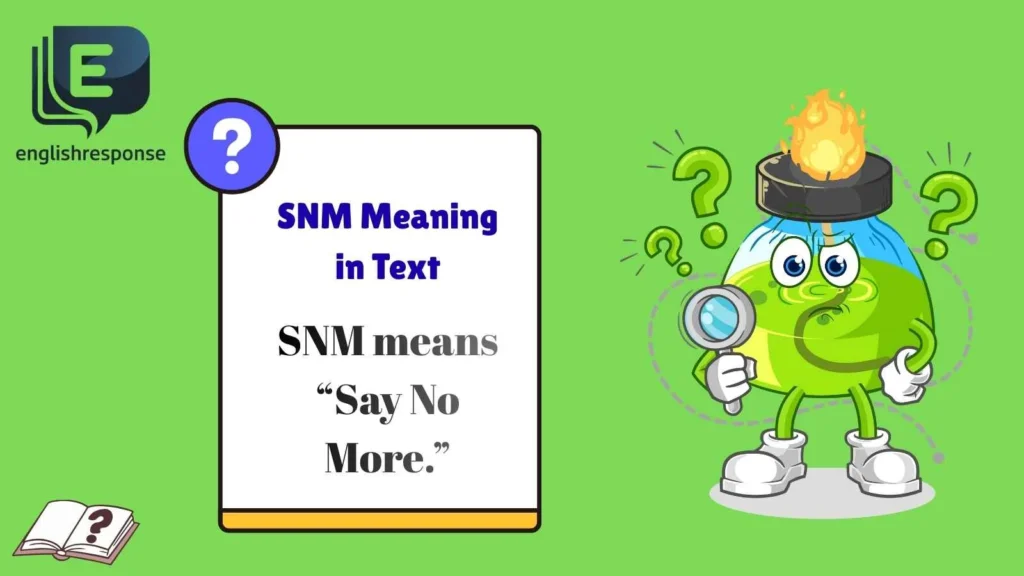
In most texting and social media conversations, SNM means “Say No More.”
It’s a quick, informal way to say:
- “I understand”
- “Got it”
- “You don’t need to explain further”
Think of it as agreement mixed with confidence.
Real-life examples:
- “Meet me at 7, same place as last time.”
“SNM.” - “Don’t tell anyone about this.”
“SNM.” - “Just be yourself tomorrow.”
“SNM.”
In all these cases, SNM shows understanding without needing extra words. It’s efficient, relaxed, and slightly cool — which is exactly why people love using it.
Origin and Background of the Term
Long before texting existed, “say no more” was already part of spoken English. People used it in conversations to signal instant understanding.
Picture this:
Someone starts explaining a situation, and halfway through, the listener smiles and says,
“Say no more. I get it.”
That phrase carried confidence and trust.
As texting and online chats grew, people naturally shortened it. Over time, SNM emerged as a compact, modern version — perfect for fast replies on WhatsApp, Instagram, Snapchat, and Twitter (X).
It gained even more popularity through pop culture, memes, and casual online banter, especially among younger users who value speed, tone, and simplicity in communication.
How SNM Is Used in Daily Life
SNM fits easily into everyday conversations. Here’s how people actually use it.
- When agreeing with plans
“We’ll handle it tomorrow.” — SNM - When showing support
“I’ve got your back on this.” — SNM - When acknowledging instructions
“Don’t be late.” — SNM - When ending a discussion smoothly
“You know what I mean.” — SNM - When keeping things casual
“Wear something simple.” — SNM
It’s not loud or dramatic. It’s calm, confident, and effortless — which is why it works so well in daily digital conversations.
Emotional or Practical Meaning of SNM
Emotionally, SNM communicates trust and understanding.
It tells the other person:
- “I hear you.”
- “I’m on the same page.”
- “You don’t need to explain yourself.”
Practically, it saves time and keeps conversations flowing without awkward pauses or long replies.
In modern culture, where attention spans are short and messages are constant, SNM feels respectful and efficient. It shows you’re engaged without being overbearing.
That’s a big reason it resonates so strongly today.
Similar or Related Terms
Here are a few expressions that feel similar to SNM, with subtle differences:
- Got it — Direct and neutral
- Say less — More playful and trendy
- Bet — Casual agreement (popular slang)
- Okay — Neutral but less expressive
- Understood — More formal and serious
Each one works differently depending on tone, relationship, and platform. SNM sits comfortably in the middle — casual, confident, and friendly.
Common Misunderstandings About SNM
Despite its simplicity, SNM is often misunderstood.
- It’s not rude
Some think it sounds dismissive, but it’s usually respectful. - It’s not sarcastic by default
Tone depends on context, not the word itself. - It doesn’t mean “stop talking”
It means “I already understand.” - It’s not formal language
SNM belongs in casual conversations, not emails or professional writing. - It doesn’t always mean agreement with opinions
Sometimes it just means understanding, not endorsement.
Knowing these nuances helps you use SNM confidently without miscommunication.
Examples of SNM in Sentences
Here are some natural, everyday uses of SNM:
- “Just keep it between us.” — SNM
- “Meet me after work, same spot.” — SNM
- “Don’t overthink it.” — SNM
- “You already know how it is.” — SNM
- “Trust the process.” — SNM
- “No explanations needed.” — SNM
- “Handle it quietly.” — SNM
Each example shows understanding without extra words — that’s the power of SNM.
Why Understanding SNM Matters Today
Language evolves with culture, and texting slang is a big part of how people connect now.
Understanding the snm meaning in text helps you:
- Avoid confusion
- Respond naturally
- Stay socially aware
- Communicate with confidence
In friendships, relationships, and online interactions, small expressions like SNM shape tone more than long messages ever could.
Knowing what they mean — and when to use them — keeps you connected in a fast-moving digital world.
FAQs:
What does SNM mean in simple words?
SNM means “Say No More”, which shows understanding or agreement without needing further explanation.
Is SNM positive or negative?
It’s generally positive or neutral, depending on context and tone.
Where is SNM commonly used?
You’ll see it in text messages, social media, DMs, and casual online chats.
Is SNM formal or informal?
SNM is informal and best suited for relaxed conversations.
Why do people search for SNM meaning in text?
Because slang changes over time, and people want to avoid misunderstandings in modern communication.
Conclusion:
Language doesn’t just evolve — it adapts to how we live, connect, and express ourselves.
The snm meaning in text is a perfect example of that evolution: short, confident, and deeply human.
Once you understand it, SNM stops being confusing and starts feeling natural. It becomes another tool in your communication toolbox — simple, effective, and expressive.

Rana Sawalha is a passionate language enthusiast and author at EnglishResponse, dedicated to helping readers improve their English communication skills. With a focus on practical tips, engaging examples, and real-world conversation strategies, Rana Sawalha empowers learners to speak confidently and respond like a pro in any situation.