You’re scrolling through your messages, everything’s normal, and then you see it—“fs”.
No punctuation. No explanation. Just two letters.
Your brain pauses for a second.
Are they serious? Are they joking? Did you miss some hidden meaning?
You’re not alone. The fs meaning in text is one of those modern abbreviations that feels obvious after someone explains it—but confusing before that. Text slang evolves fast, and if you’re not constantly online, it’s easy to feel a step behind.
In simple terms, fs is a casual way people add emphasis, honesty, or certainty to a message. It’s short, flexible, and very human. That’s why it shows up everywhere—from chats with friends to TikTok comments and late-night DMs.
Understanding what fs means doesn’t just help you decode messages. It helps you read tone, avoid misunderstandings, and communicate more naturally in today’s digital world.
What Does FS Meaning in Text Mean?
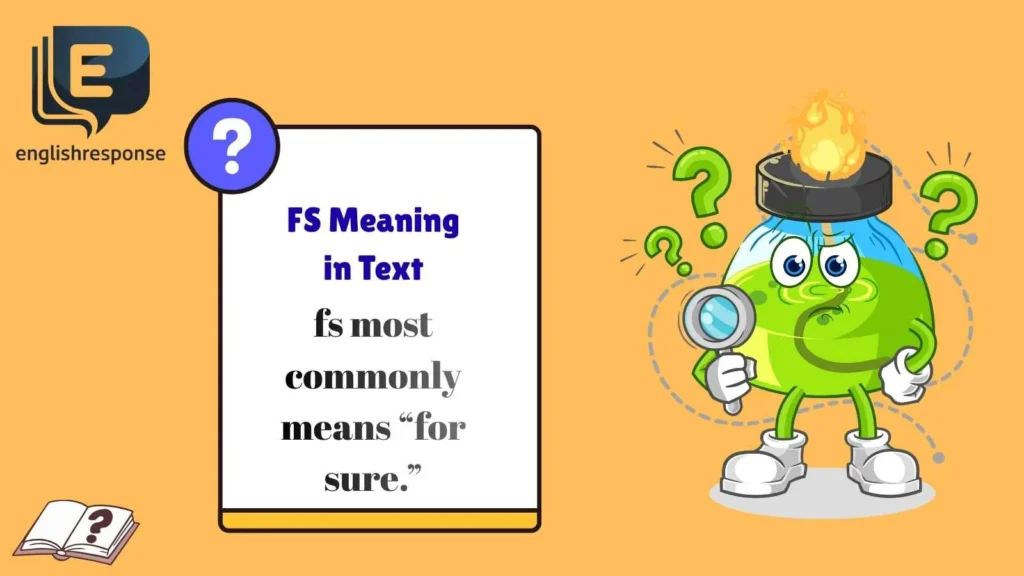
In text messages and online conversations, fs most commonly means “for sure.”
It’s used to show:
- Strong agreement
- Confidence
- Reassurance
- Certainty
Think of it as a relaxed, modern way of saying “definitely” or “absolutely.”
Real-life examples:
- “Are you coming tonight?” → “fs, wouldn’t miss it.”
- “That movie was good.” → “Yeah, fs.”
- “You really think so?” → “fs, 100%.”
There’s no stiff grammar here. fs is informal, friendly, and very conversational—perfect for quick texts where tone matters more than formality.
Origin and Background of the Term
The rise of fs didn’t happen overnight.
It evolved naturally from the phrase “for sure,” which people have been saying for decades in spoken English. As texting became faster and more casual, people started shortening common phrases to save time and effort.
Early chat rooms, SMS limits, and later social media platforms all pushed language toward brevity. “For sure” became “fs,” just like:
- “Laughing out loud” became lol
- “Be right back” became brb
There’s no official inventor of fs. It’s a product of digital culture—organic, crowd-driven, and shaped by how real people talk online.
That’s what makes it feel so natural today.
How FS Is Used in Daily Life
You’ll usually see fs in relaxed, informal situations. Here’s how people actually use it day to day:
- Agreeing quickly
“That test was hard.” → “fs.” - Showing reassurance
“You’ve got my back, right?” → “fs.” - Confirming plans
“8 pm still works?” → “fs, see you then.” - Backing up an opinion
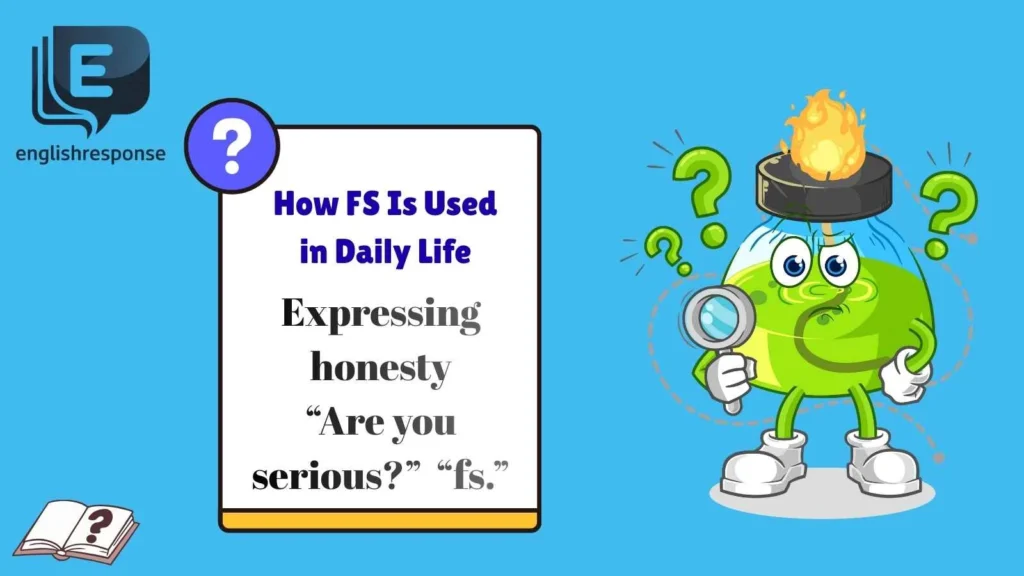
“That song hits different.” → “fs, it’s fire.” - Expressing honesty
“Are you serious?” → “fs.”
Short. Clear. Human.
That’s why it works.
Emotional or Practical Meaning of FS
What makes fs powerful isn’t just its definition—it’s the feeling behind it.
When someone says fs, they’re often signaling:
- Trust
- Confidence
- Emotional alignment
It tells the other person, “I mean this.”
In friendships, it can feel reassuring.
In casual chats, it keeps things light and smooth.
Culturally, fs reflects how modern communication values speed and emotional clarity over perfect grammar. It’s less about rules and more about connection.
Similar or Related Terms
Here are some terms that feel similar—but aren’t exactly the same:
- For sure – Full phrase, slightly more expressive
- Definitely – Strong agreement, more formal
- Facts – Emphasizes truth or agreement
- Bet – Casual confirmation, often playful
- 100% – Strong certainty, numeric emphasis
Each has its own tone, but fs stands out for being simple and emotionally neutral.
Common Misunderstandings About FS
Despite its popularity, fs still causes confusion. Let’s clear that up.
- It doesn’t mean “financial services” in texts
That’s context-specific, not casual chat. - It’s not sarcastic by default
Tone depends on context, not the word itself. - It’s not rude
It’s casual—not dismissive. - It’s not formal language
Avoid it in emails or professional writing. - It doesn’t replace a full response every time
Sometimes it works best paired with context.
Understanding these nuances helps you use fs naturally, not awkwardly.
Examples of FS in Sentences
Here’s how fs looks in everyday conversation:
- “That café is underrated, fs.”
- “You’ll be okay, fs.”
- “I’d go again, fs.”
- “That’s your color, fs.”
- “We’re doing this tomorrow, fs.”
- “You’re right about that, fs.”
- “I trust you, fs.”
Notice how it fits smoothly without stealing attention.
Why Understanding FS Matters Today
Digital communication is more than words—it’s tone, timing, and intent.
Knowing the fs meaning in text helps you:
- Read messages accurately
- Respond naturally
- Avoid awkward misunderstandings
- Sound more socially fluent online
In a world where conversations happen through screens, small abbreviations carry big meaning. Understanding them keeps you connected, confident, and culturally aware.
And honestly? It just makes texting easier.
FAQs:
What does fs meaning in text mean in simple words?
It means “for sure”—a way to show agreement or certainty.
Is fs positive or negative?
Mostly positive or neutral. Context decides tone.
Where is fs commonly used?
In text messages, social media, DMs, and casual online chats.
Is fs formal or informal?
It’s informal. Avoid it in professional writing.
Why do people search for fs meaning in text?
Because slang changes fast, and people want clarity as language evolves over time.
Conclusion:
Language is always changing—and that’s what makes it exciting.
The fs meaning in text may seem small, but it carries confidence, reassurance, and human warmth in just two letters.
Once you understand it, you’ll start noticing it everywhere—and using it naturally without overthinking.
Communication isn’t about sounding perfect.
It’s about being understood.

Rana Sawalha is a passionate language enthusiast and author at EnglishResponse, dedicated to helping readers improve their English communication skills. With a focus on practical tips, engaging examples, and real-world conversation strategies, Rana Sawalha empowers learners to speak confidently and respond like a pro in any situation.