You’re scrolling through Instagram, WhatsApp, or X, and suddenly you see a message like: “DM me.”
Simple, right? But if you’ve ever paused for a second and thought, “Wait… what exactly does DM mean in text?” — you’re not alone.
In today’s digital world, short terms and abbreviations rule our conversations. DM is one of those phrases that feels obvious to some people and confusing to others. Whether you’re new to social media, texting someone professionally, or just trying to avoid awkward misunderstandings, knowing the dm meaning in text actually matters more than you think.
This little two-letter term can signal privacy, interest, or even trust. Sometimes it’s casual. Other times, it’s serious. And yes—context changes everything.
In this article, we’ll break down what DM really means, where it came from, how people use it today, and why understanding it can make your online communication smoother and more confident. No jargon. No robotic explanations. Just clear, human language you can actually use.
What Does DM Meaning in Text?
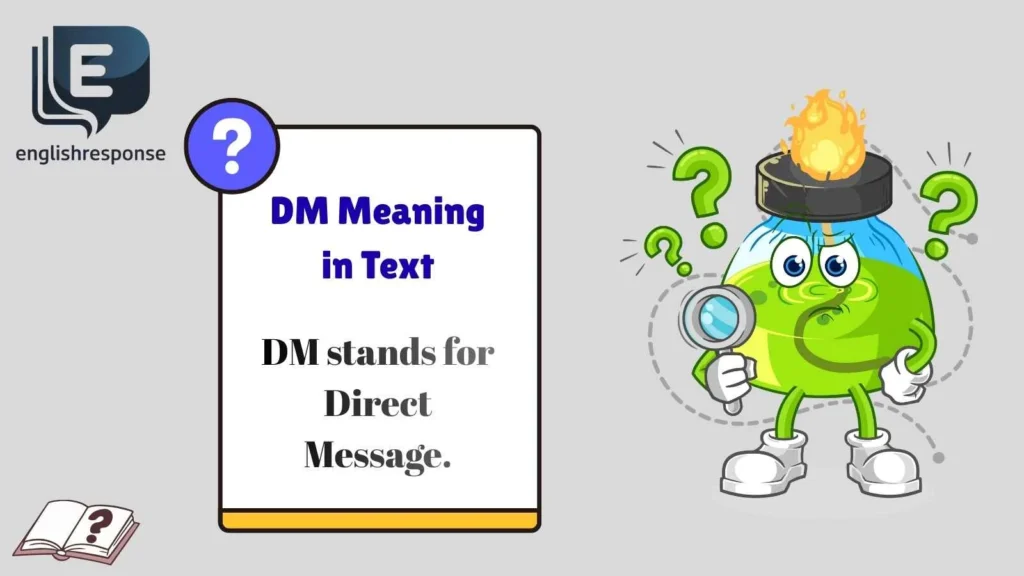
DM stands for Direct Message.
In simple words, it means sending a private message to someone instead of posting publicly. When someone says “DM me,” they’re asking you to move the conversation into a one-on-one, private space.
Think of it like this:
A public comment is talking out loud in a room.
A DM is pulling someone aside and speaking quietly.
Real-Life Examples
- You comment on a post asking about prices, and the seller replies, “DM me for details.”
- A friend texts, “I’ll DM you the address.”
- Someone says, “Let’s talk in DMs.”
In all these cases, DM simply means private communication, away from public eyes.
Origin and Background of the Term
The term Direct Message didn’t come from texting originally. It grew alongside social media platforms.
Back in the early days of Twitter (now X), users could post tweets publicly, but there was also an option to send direct messages privately. Over time, people shortened “direct message” to DM for speed and convenience.
As platforms like Instagram, Facebook, Snapchat, and even LinkedIn adopted private messaging features, the term DM followed. Eventually, it crossed platforms and entered everyday texting culture.
Now, whether you’re on social media or just chatting via phone, “DM” has become a universal shorthand for private messaging online.
It’s a great example of how digital language evolves—fast, efficient, and shaped by how we actually communicate.
How DM Is Used in Daily Life
DM isn’t limited to one situation. People use it casually, professionally, and sometimes emotionally.
Here are some common ways you’ll see it used:
- “DM me when you’re free.”
- “I sent you a DM.”
- “Check your DMs.”
- “Slide into my DMs.”
- “Details in DM.”
- “I’ll DM you later.”
Each use carries a slightly different tone, but the core meaning stays the same: private conversation.
Short. Easy. Efficient.
Emotional or Practical Meaning of DM
Beyond its literal meaning, DM carries emotional weight.
When someone asks you to DM them, it can signal:
- Trust – They’re comfortable talking privately
- Interest – They want personal interaction
- Discretion – The topic isn’t for public view
- Professionalism – Sensitive details belong in private messages
In modern culture, DMs are where deeper conversations happen. Friendships start there. Business deals begin there. Apologies, confessions, and honest talks often live in DMs—not comments.
In many ways, DMs are today’s private conversations, replacing phone calls for an entire generation.
Similar or Related Terms
Here are some related terms you might see, with clear differences explained:
- PM (Private Message) – Older term, similar meaning
- Inbox – The place where DMs are received
- Chat – Real-time messaging, often less formal
- Message me – Full phrase instead of abbreviation
- Slide into DMs – Casual or flirty way to start a private chat
All of these point toward private communication, but DM is the most commonly used today.
Common Misunderstandings About DM
Even though DM seems simple, people still misunderstand it. Let’s clear that up.
- DM is not always romantic
Not every DM is flirting. Many are professional or casual. - DM doesn’t mean instant reply
Sending a DM doesn’t guarantee a fast response. - DM isn’t platform-specific
It’s used across Instagram, X, Facebook, LinkedIn, and texting. - DM doesn’t mean secrecy in a bad way
Private doesn’t equal suspicious. - DM isn’t formal by default
Tone depends on how you write, not the term itself.
Understanding these nuances helps you avoid awkward assumptions.
Examples of DM in Sentences
Here are some natural, everyday examples:
- “DM me the file when you’re done.”
- “I’ll explain everything in DM.”
- “She sent me a DM last night.”
- “Let’s move this conversation to DMs.”
- “Check your DMs—I replied.”
- “He asked me to DM him for details.”
- “I don’t discuss that publicly, DM me.”
- “We sorted it out through DMs.”
These examples show how flexible and common the term really is.
Why Understanding DM Meaning in Text Matters Today
Digital communication is now part of daily life. Misunderstanding simple terms like DM can lead to missed opportunities, confusion, or even embarrassment.
Knowing what DM means helps you:
- Communicate confidently online
- Understand social cues
- Navigate professional conversations
- Avoid public oversharing
- Build better digital relationships
In a world where messages replace meetings, understanding these small terms gives you a big advantage.
Language evolves. Staying updated keeps you connected.
FAQs:
What does DM meaning in text in simple words?
DM means sending a private message to someone instead of talking publicly.
Is DM positive or negative?
DM is neutral. Its tone depends entirely on context and intention.
Where is DM commonly used?
DM is commonly used on social media platforms, messaging apps, and casual texts.
Is DM formal or informal?
DM is mostly informal, but it’s widely accepted in professional digital communication too.
Why do people search for DM meaning in text?
Because language changes over time, and people want to avoid confusion and communicate correctly in modern conversations.
Conclusion
At first glance, DM might seem like just another internet abbreviation. But as you’ve seen, it’s more than that. It represents privacy, connection, and modern communication.
Understanding the dm meaning in text helps you read conversations better, respond smarter, and communicate with confidencew hether you’re chatting with friends or handling something professional.
Language evolves, and so do we. The more we understand it, the more connected we become.
Keep learning. Keep asking questions. And never underestimate the power of a simple DM—it might just start something meaningful.

Rana Sawalha is a passionate language enthusiast and author at EnglishResponse, dedicated to helping readers improve their English communication skills. With a focus on practical tips, engaging examples, and real-world conversation strategies, Rana Sawalha empowers learners to speak confidently and respond like a pro in any situation.