Have you ever received a message that says, “Tell me smth interesting,” and paused for a second?
You probably knew what it meant. But still, it felt a little confusing at first glance.
That’s because texting language moves fast. Abbreviations like “smth” are everywhere — in WhatsApp chats, Instagram DMs, and even casual emails. If you don’t keep up, it’s easy to feel left out.
So what exactly does smth meaning in text stand for? Why do people use it instead of just typing the full word? And does it make you sound cool… or careless?
In this guide, we’ll break it down in simple, friendly language. You’ll learn what it means, where it came from, how to use it properly, and when you probably shouldn’t.
What Does SMTH Meaning in Text?
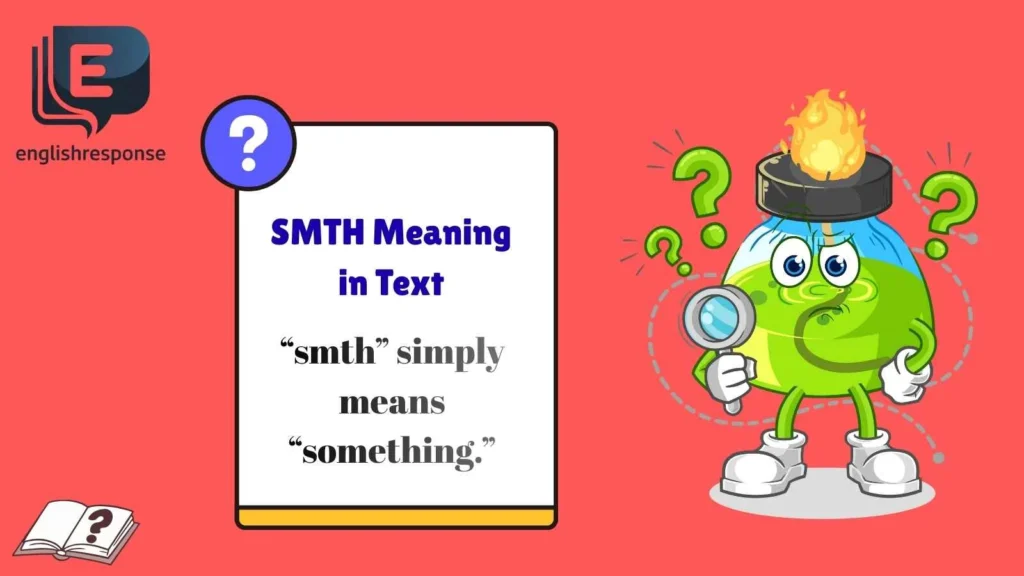
In text messages, “smth” simply means “something.”
That’s it.
It’s a shortened version people use to save time while typing. Instead of writing the full word, they remove most vowels and shorten it to four letters.
Here’s how it looks in real life:
- “I need to tell you smth.”
- “Did you forget smth?”
- “Let’s do smth fun tonight.”
It’s casual. It’s quick. And it’s mostly used in informal conversations.
You won’t see it in professional emails or academic writing. But in everyday texting? Totally normal.
Origin and Background of the Term
To understand “smth,” we need to go back to the early days of texting.
When mobile phones first became popular in the late 1990s and early 2000s, SMS messages had strict character limits. People had to fit their thoughts into 160 characters.
Typing was slow too. Remember old keypad phones? You had to press a number multiple times just to get one letter.
So people got creative.
They started removing vowels:
- “something” became “smth”
- “before” became “b4”
- “please” became “pls”
Over time, these shortcuts became part of internet culture.
Platforms like Facebook, Twitter, and Instagram helped spread this style globally.
Today, even though we have full keyboards and unlimited messages, the habit stuck. Why? Because it’s fast. And honestly, it feels natural in casual chats.
How SMTH Is Used in Daily Life
You’ll mostly see “smth” in informal digital conversations.
Here are common situations:
1. Casual Chats with Friends
“Let’s plan smth for the weekend.”
2. Flirty Text Messages
“I have smth to tell you 😉”
3. Group Conversations
“Did someone say smth about dinner?”
4. Social Media Comments
“Why does this remind me of smth?”
5. Quick Replies
“Yeah, I heard smth like that.”
Notice the pattern?
It’s relaxed. It’s friendly.
You wouldn’t write:
“Dear Manager, I would like to discuss smth important.”
That would look unprofessional.
Emotional or Practical Meaning of SMTH
At first glance, “smth” seems neutral. It just means “something.”
But tone changes everything.
Depending on context, it can feel:
- Mysterious: “I need to tell you smth.”
- Suspicious: “Are you hiding smth?”
- Exciting: “I found smth amazing!”
- Serious: “We need to talk about smth.”
In modern digital communication, speed often equals comfort. Using “smth” signals familiarity.
It says, “This is casual. We’re comfortable.”
That’s powerful in a world where tone can easily be misunderstood.
Similar or Related Terms
Here are some related texting abbreviations and how they differ:
- sth – Another short form of “something” (less common in texting)
- smone – Short for “someone”
- smwhere – Short for “somewhere”
- b4 – Means “before”
- idk – Means “I don’t know”
- btw – Means “by the way”
The difference?
“Smth” is extremely casual. Some others like “btw” are widely accepted even in semi-formal communication.
Context matters.
Common Misunderstandings About SMTH
Even simple abbreviations can cause confusion.
Here are common misconceptions:
1. It’s a typo
No. Most of the time, it’s intentional.
2. It’s rude
Not necessarily. It depends on tone and relationship.
3. It’s uneducated
That’s not fair. Text shortcuts are part of digital culture, not intelligence.
4. It’s universally understood
Actually, older generations may not recognize it instantly.
5. It’s acceptable everywhere
Definitely not. Avoid it in professional or academic writing.
Understanding where it fits makes all the difference.
Examples of SMTH in Sentences
Here are natural, everyday examples:
- “I feel like smth is missing.”
- “Can you grab smth from the store?”
- “He said smth weird yesterday.”
- “Let’s cook smth easy tonight.”
- “Did you hear smth about the meeting?”
- “There’s smth I’ve been meaning to tell you.”
- “I want smth different this time.”
- “Why does this smell like smth burned?”
Notice how natural it feels in casual conversation?
That’s the key.
Why Understanding SMTH Meaning in Text Matters Today
We live in a digital world.
Communication is faster than ever. Messages are short. Attention spans are shorter.
If you don’t understand common texting abbreviations, you might:
- Misinterpret tone
- Feel confused in conversations
- Miss subtle emotional cues
For students, social media users, content creators, and even marketers, knowing modern language trends is valuable.
Language evolves constantly. What seems strange today becomes normal tomorrow.
Staying updated helps you connect better — especially with younger audiences.
And connection? That’s everything.
FAQs:
What does smth mean in simple words?
It simply means “something.” It’s a shortened texting version used in casual conversations.
Is smth positive or negative?
It’s neutral. The emotional meaning depends entirely on context and tone.
Where is smth commonly used?
It’s mostly used in text messages, social media chats, and informal online conversations.
Is smth formal or informal?
It’s informal. Avoid using it in professional emails, academic papers, or official communication.
Why do people search for smth meaning in text?
Language changes over time. Many people see the abbreviation in messages and want clarity to avoid misunderstandings.
Conclusion:
So now you know the full story behind smth meaning in text.
It’s just a quick, casual way to say “something.” But like many small words, it carries tone, emotion, and context.
Used correctly, it makes conversations feel natural and relaxed. Used in the wrong setting, it can look careless.
Language isn’t fixed — it grows with us. The more you understand modern communication, the more confidently you can express yourself.
And sometimes, understanding one small word can make a big difference in how we connect with others.

Rana Sawalha is a passionate language enthusiast and author at EnglishResponse, dedicated to helping readers improve their English communication skills. With a focus on practical tips, engaging examples, and real-world conversation strategies, Rana Sawalha empowers learners to speak confidently and respond like a pro in any situation.