You’re texting someone. They send a message that ends with “imao.”
You pause.
Is that a typo? Did they mean “lmao”? Or is this some new slang you somehow missed?
If you’ve ever felt confused seeing “imao meaning in text” pop up in chats, you’re not alone. Online language evolves fast. One day you’re fluent in internet slang, and the next, you’re Googling abbreviations like it’s a decoding mission.
Understanding text slang isn’t just about staying trendy. It helps you avoid misunderstandings, awkward replies, or replying with the wrong tone. And in today’s digital world, communication is everything.
What Does IMAO Mean?
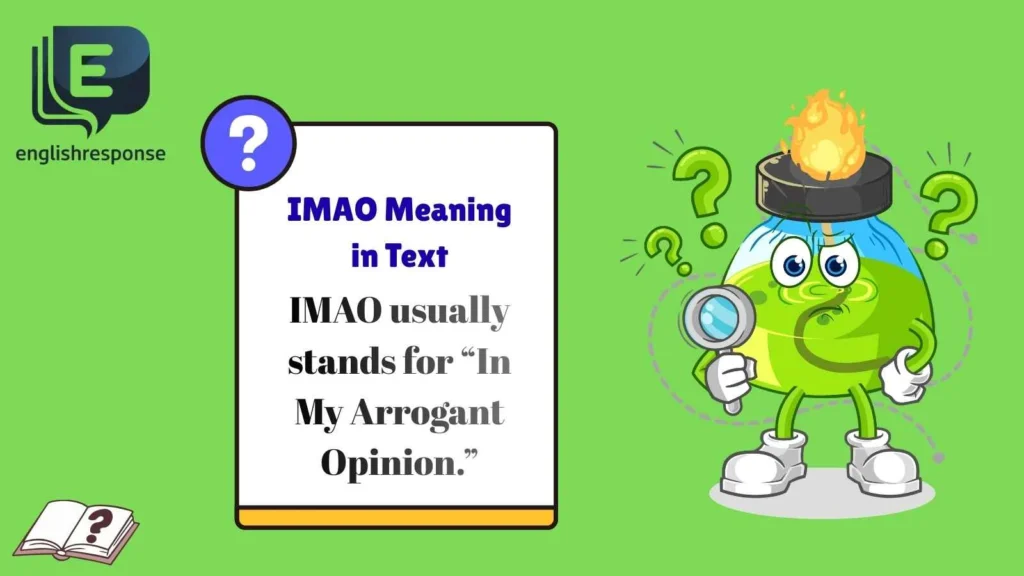
In text conversations, IMAO usually stands for “In My Arrogant Opinion.”
Yes, you read that right — arrogant, not honest.
Most people are familiar with “IMO” (In My Opinion). Some know “IMHO” (In My Humble Opinion). But IMAO adds a playful twist by replacing “humble” with “arrogant.”
It’s typically used sarcastically.
For example:
- “That’s the best pizza place in town, IMAO.”
- “You should definitely watch that movie, IMAO.”
- “Blue is clearly the best color, IMAO.”
Notice the tone? It’s not meant to be truly arrogant. It’s often self-aware humor — like saying, “Okay, maybe I’m being dramatic, but this is what I think.”
However, sometimes people confuse it with “LMAO” (Laughing My A** Off), especially when typed quickly. Context usually clears that up.
Origin and Background of the Term
Internet slang didn’t appear overnight. It evolved in chat rooms, gaming forums, and early messaging platforms in the late 1990s and early 2000s.
Abbreviations like IMO became popular because typing full sentences took longer on older keyboards and early mobile phones. Then came variations like IMHO — adding personality and tone.
IMAO emerged later as a humorous spin on IMHO.
Instead of pretending to be humble, it playfully admits:
“Yeah, this is my opinion… and I might sound confident about it.”
It’s a reflection of modern online humor — ironic, slightly exaggerated, and self-aware.
That’s how digital language grows: people experiment, twist words, and create new tones.
How IMAO Is Used in Daily Life
You won’t usually hear someone say “IMAO” out loud. It lives mostly in text messages, social media comments, and online chats.
Here are practical ways it appears:
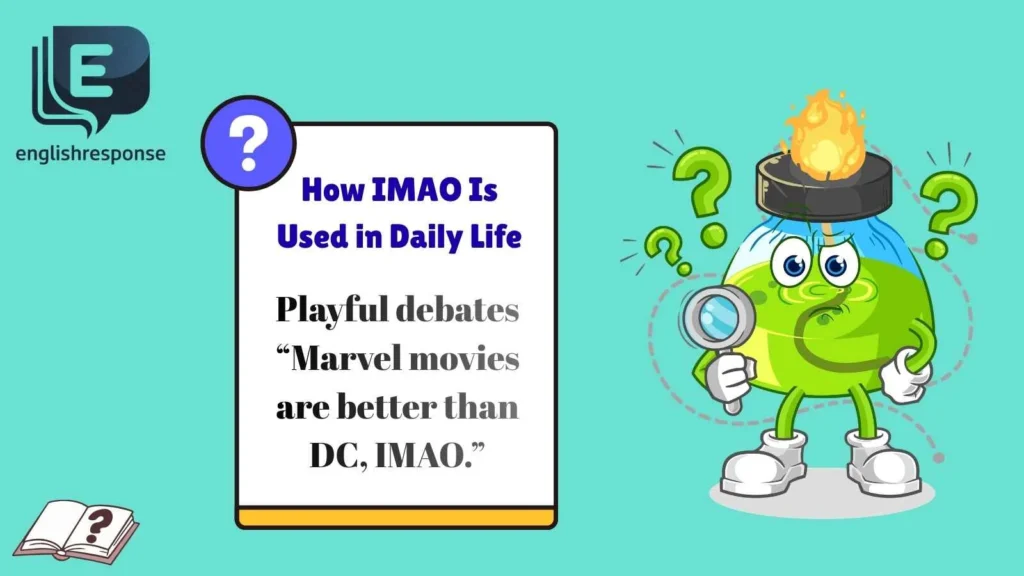
- Playful debates
- “Marvel movies are better than DC, IMAO.”
- Light sarcasm
- “Pineapple absolutely belongs on pizza, IMAO.”
- Confident recommendations
- “You need to visit that café. Best coffee ever, IMAO.”
- Friendly teasing
- “I’m clearly the funniest person here, IMAO.”
- Opinion threads online
- “That’s the most underrated album of the decade, IMAO.”
Notice something important?
The tone is rarely aggressive. It’s usually lighthearted confidence.
Emotional or Practical Meaning of IMAO
IMAO isn’t just an abbreviation. It carries emotional nuance.
When someone says “IMAO,” they’re often:
- Showing playful confidence
- Softening a strong opinion
- Signaling sarcasm
- Avoiding sounding too serious
In digital conversations, tone can easily be misunderstood. We don’t hear voice inflections or see facial expressions.
So people use abbreviations like IMAO to add personality.
It’s a way of saying:
“I know this is just my take — don’t take it too seriously.”
That self-awareness makes conversations smoother and less confrontational.
Similar or Related Terms
Here are related abbreviations people often mix up:
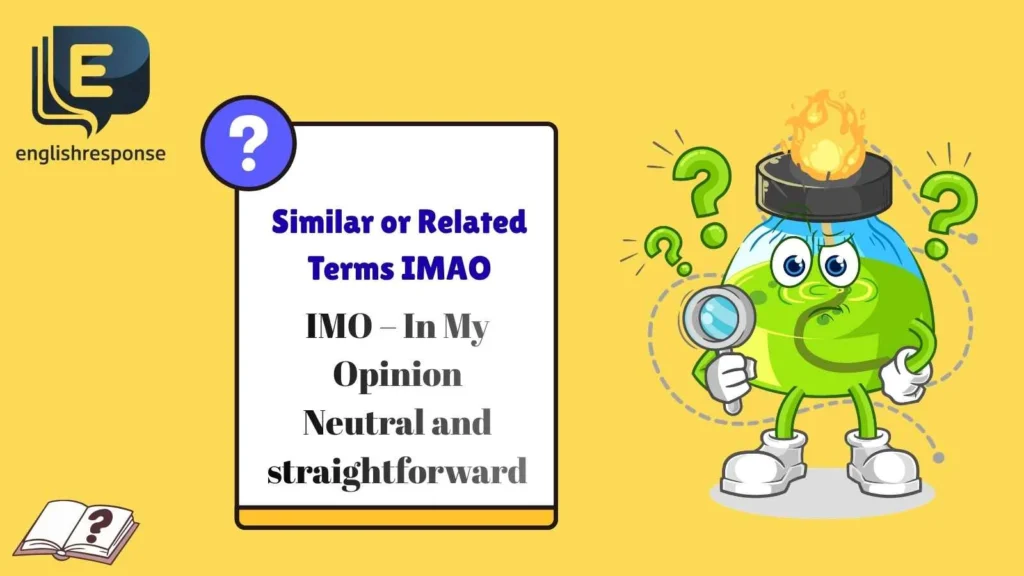
- IMO – In My Opinion
Neutral and straightforward. - IMHO – In My Humble Opinion
Suggests politeness or modesty. - LMAO – Laughing My A** Off
Expresses strong laughter. - LMFAO – Laughing My Freaking A** Off
Even stronger laughter. - TBH – To Be Honest
Signals honesty, sometimes bluntness.
The key difference?
IMAO carries humor and mild sarcasm, while IMO and IMHO are more neutral.
Common Misunderstandings About IMAO
Let’s clear up some confusion.
1. It’s not the same as LMAO
People often mistype or misread it. They mean very different things.
2. It’s not always arrogant
Despite the word “arrogant,” it’s usually ironic.
3. It’s not formal
You wouldn’t use it in emails to your boss.
4. It doesn’t mean “I mean also”
Some assume it’s random typing. It’s intentional slang.
5. It’s not extremely common
Compared to IMO or LMAO, IMAO is less popular — which is why many people search for its meaning.
Examples of IMAO in Sentences
Here are natural, everyday examples:
- “That’s the best burger in the city, IMAO.”
- “You should quit that job and start your own thing, IMAO.”
- “Summer is way better than winter, IMAO.”
- “He’s the most underrated player on the team, IMAO.”
- “That song deserved an award, IMAO.”
- “I’m the best cook in this house, IMAO.”
- “That’s the smartest decision you could make, IMAO.”
- “This is the most comfortable hoodie ever, IMAO.”
Each one shows opinion mixed with personality.
Why Understanding IMAO Meaning in Text Matters Today
Digital communication shapes relationships.
Whether you’re chatting with friends, networking online, or commenting on social media — understanding slang helps you:
- Avoid misinterpretation
- Respond appropriately
- Stay culturally aware
- Communicate confidently
Online language evolves constantly. What felt confusing yesterday becomes normal tomorrow.
By understanding terms like IMAO meaning in text, you stay ahead of the curve.
And more importantly, you become a better digital communicator.
That’s valuable in friendships, dating, business, and social spaces.
FAQs:
What does IMAO mean in simple words?
IMAO means “In My Arrogant Opinion.” It’s a humorous way of sharing your opinion with playful confidence.
Is IMAO positive or negative?
It’s usually neutral or playful. The tone depends on context, but most people use it jokingly rather than seriously.
Where is IMAO commonly used?
It’s commonly used in text messages, social media comments, online forums, and casual chats.
Is IMAO formal or informal?
It’s completely informal. Avoid using it in professional or academic writing.
Why do people search for IMAO meaning in text?
Because it’s less common than similar terms like IMO or LMAO, and many people confuse it with other abbreviations.
Conclusion:
Language never stands still.
Every year, new words, abbreviations, and expressions enter our daily conversations. “IMAO” is just one example of how online culture reshapes communication.
Now that you understand imao meaning in text, you won’t hesitate the next time you see it. You’ll recognize the humor, the tone, and the subtle confidence behind it.
And that’s the beauty of modern language — it connects us, evolves with us, and keeps conversations alive.

Rana Sawalha is a passionate language enthusiast and author at EnglishResponse, dedicated to helping readers improve their English communication skills. With a focus on practical tips, engaging examples, and real-world conversation strategies, Rana Sawalha empowers learners to speak confidently and respond like a pro in any situation.