Have you ever received a message that simply said “WTH?” and paused for a second, wondering what just happened?
You’re not alone.
Texting has changed the way we communicate. Conversations are faster, shorter, and often filled with abbreviations. One of the most common — and sometimes confusing — is WTH. It pops up in chats, social media comments, memes, and even casual workplace messages.
But what does it actually mean? Is it rude? Is it funny? Should you use it?
Understanding modern text slang like this isn’t just about staying trendy. It helps you avoid misunderstandings, express emotions better, and connect more naturally in digital conversations.
What Does WTH Meaning in Text?
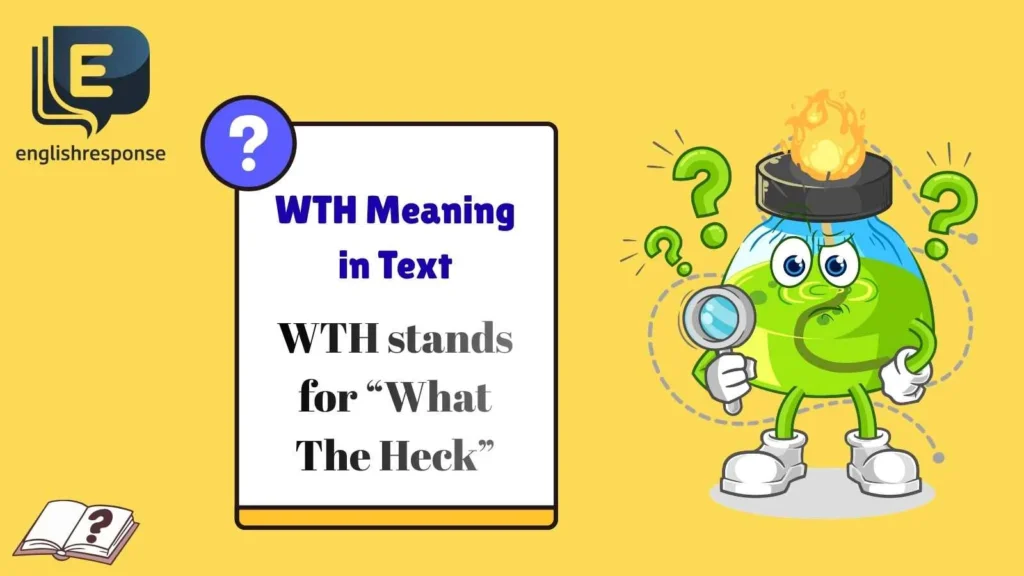
In texting, WTH stands for “What The Heck” — and sometimes, more strongly, “What The Hell.”
It’s an expression of surprise, confusion, frustration, or disbelief.
Think of it as a quick emotional reaction.
Here are a few real-life examples:
- Your friend sends you a photo of pineapple on sushi. You reply: “WTH is that?”
- You see your favorite team lose badly. You text: “WTH just happened?”
- Someone tells you they quit their job without a backup plan. You say: “WTH? Are you serious?”
It’s not always angry. Sometimes it’s playful. Tone matters — especially in text.
Origin and Background of the Term
Abbreviations didn’t start with smartphones. They began long before that.
Back in the early 2000s, during the rise of SMS texting and platforms like AOL Instant Messenger, people had limited character space. Messages had to be short. Every letter counted.
So phrases like:
- LOL (Laugh Out Loud)
- BRB (Be Right Back)
- OMG (Oh My God)
…became common.
WTH followed naturally. It was a cleaner, softer alternative to stronger expressions. Instead of typing something potentially offensive, people shortened it.
As social media platforms like Twitter grew (especially with character limits), short reactions became even more popular. WTH fit perfectly into the fast-paced digital world.
Over time, it became part of everyday internet language — especially among younger generations.
How WTH Is Used in Daily Life
You’ll see WTH almost everywhere online. Here’s how it commonly appears:
1. Reacting to Something Unexpected
“WTH, I didn’t see that plot twist coming!”
2. Expressing Confusion
“WTH are these new rules?”
3. Showing Playful Shock
“WTH 😂 You cut your hair?”
4. Mild Frustration
“WTH, my phone just died at 2%!”
5. Friendly Teasing
“WTH bro, you forgot my birthday?”
6. Social Media Comments
Under a strange video: “WTH did I just watch?”
Notice something important: context changes the tone. Add a laughing emoji, and it feels light. Use all caps with no emoji, and it can feel intense.
Emotional or Practical Meaning of WTH
At its core, WTH is about emotional reaction.
It’s fast. It’s instinctive. It captures that split-second feeling when something surprises you.
In today’s digital culture, we don’t always write long explanations. We react. WTH is a reaction word.
It also reflects how communication has evolved. We value speed and emotional immediacy. A short abbreviation can express what a full sentence might struggle to convey.
But here’s the key:
It softens stronger language. Instead of saying something offensive, WTH provides a socially safer outlet.
That’s why it’s widely accepted — though still informal.
Similar or Related Terms
Here are other expressions that are similar to WTH, but slightly different:
- WTF – Stronger and more offensive. Not workplace-friendly.
- OMG – Expresses surprise, but usually excitement or shock.
- SMH – “Shaking My Head,” used for disappointment.
- Seriously? – A full-word alternative, less slang-heavy.
- What on earth? – Polite and more formal version.
The difference often lies in intensity and politeness. WTH sits in the middle — not too harsh, not too soft.
Common Misunderstandings About WTH
Let’s clear up a few myths.
1. It’s Always Rude
Not true. Tone and context decide that.
2. It Always Means “What The Hell”
Sometimes it means “What The Heck.” The interpretation varies.
3. It’s Only for Teenagers
Adults use it too — especially online.
4. It’s Professional
Nope. It’s informal. Avoid it in formal emails or serious business communication.
5. It Shows Anger
It can, but often it shows surprise or disbelief instead.
Understanding these nuances helps you avoid awkward situations.
Examples of WTH in Sentences
Here are natural, everyday examples:
- “WTH, why is traffic so bad today?”
- “WTH did you just send me? 😂”
- “I opened the fridge and WTH… no milk.”
- “WTH is going on in this group chat?”
- “WTH, that ending made no sense.”
- “WTH, you’re moving abroad next week?”
- “WTH bro, that scared me!”
- “WTH was that noise?”
Notice how it fits naturally into casual speech.
Why Understanding WTH Meaning in Text Matters Today
Language is constantly evolving.
If you ignore digital slang, you risk misreading tone. Imagine your boss texting “WTH happened to the file?” That feels different from a friend saying it with laughing emojis.
Understanding expressions like WTH helps you:
- Avoid miscommunication
- Interpret emotional tone correctly
- Stay culturally aware
- Communicate naturally in digital spaces
In professional environments, knowing when not to use it is equally important.
Digital literacy today isn’t just about typing. It’s about understanding context, tone, and cultural meaning.
FAQs:
What does WTH mean in simple words?
It means “What The Heck” or “What The Hell.” It’s used to show surprise, confusion, or disbelief in text messages.
Is WTH positive or negative?
It depends on tone. It can be playful, confused, shocked, or mildly frustrated. Context matters.
Where is WTH commonly used?
Mostly in texting, social media comments, memes, and casual online conversations.
Is WTH formal or informal?
It’s informal. Avoid using it in academic writing, professional emails, or serious business settings.
Why do people search for WTH meaning in text?
Because digital slang evolves quickly. New users, parents, professionals, or non-native speakers often want clarity about modern abbreviations.
Conclusion:
Language isn’t static — it grows with us.
The phrase WTH meaning in text may seem small, but it represents something bigger: how we express emotion quickly in a digital world. It’s short, expressive, and flexible. Used correctly, it adds personality to conversations.
Just remember: context is everything. Use it with friends. Avoid it in formal settings. Read tone carefully.
Because at the end of the day, communication isn’t just about words — it’s about connection. And when you understand the language people use today, you stay connected to the world around you.

Rana Sawalha is a passionate language enthusiast and author at EnglishResponse, dedicated to helping readers improve their English communication skills. With a focus on practical tips, engaging examples, and real-world conversation strategies, Rana Sawalha empowers learners to speak confidently and respond like a pro in any situation.