Ever received a message that said, “I’m tired af” or “That movie was funny af” and paused for a second?
You’re not alone.
Texting slang moves fast, and if you’re not keeping up, it can feel like you’re decoding a secret language. One of the most common expressions people search for today is “af meaning in text.” And honestly, it makes sense. This tiny two-letter abbreviation packs a surprisingly strong punch.
Understanding what it means isn’t just about slang. It’s about reading tone correctly, avoiding misunderstandings, and staying socially fluent in digital conversations.
What Does AF Meaning in Text?
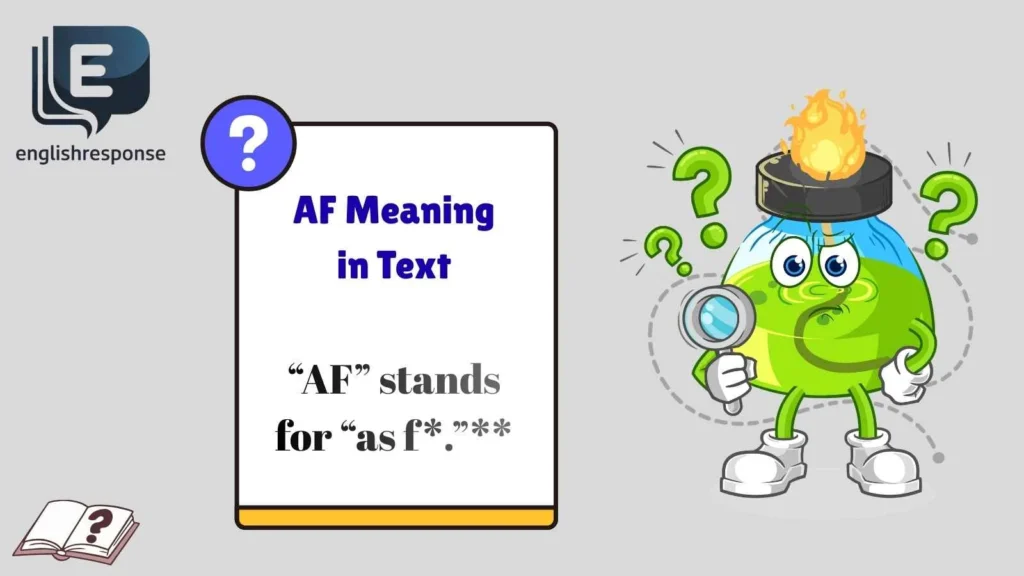
In texting, “AF” stands for “as f*.”**
Yes, that word.
It’s used to intensify a feeling or description. Think of it as turning the volume all the way up on whatever you’re describing.
Instead of saying:
- “I’m hungry.”
- “I’m hungry af.”
That extra “af” adds emphasis. It means very, extremely, or seriously — but with stronger emotional force.
Here are a few everyday examples:
- “This weather is hot af.”
- “I’m bored af right now.”
- “That exam was hard af.”
In simple terms?
AF = very, but stronger and more dramatic.
Origin and Background of the Term
The phrase “as f***” has existed in spoken English for decades. It started as informal street slang, mostly in casual speech.
As texting and social media grew — especially on platforms like Twitter, Instagram, and TikTok — people shortened phrases to type faster.
Instead of spelling out the full expression, users began writing “AF.”
It became popular in memes, captions, and online humor. Over time, it moved from niche internet slang to mainstream texting culture.
Today, you’ll see it everywhere — from group chats to viral posts.
Language always evolves. And “af” is simply part of how digital communication became faster, shorter, and more expressive.
How AF Is Used in Daily Life
Let’s make this practical.
Here are common ways people use “af” in real conversations:
- To show strong emotion
“I’m stressed af.” - To exaggerate humorously
“That cat is lazy af.” - To hype something up
“That concert was lit af.” - To complain casually
“This traffic is annoying af.” - To express excitement
“I’m excited af for the weekend!” - To emphasize attraction
“She looked good af.”
Notice something?
It almost always appears in casual conversations. You wouldn’t use it in a job interview or formal email.
Tone matters.
Emotional or Practical Meaning of AF
Here’s where it gets interesting.
“AF” isn’t just about intensity. It’s about emotion amplification.
When someone says, “I’m tired af,” they’re not just tired. They’re exhausted in a dramatic, relatable way.
It adds personality. It makes messages feel raw and unfiltered.
In modern digital culture, people want their messages to feel authentic. Sometimes formal language feels too polished. “AF” adds that edge — that realness.
But it also reflects something deeper.
We live in a fast, expressive world. Attention spans are shorter. Messages are quicker. And people want strong emotional impact in fewer words.
That’s exactly what “af” delivers.
Similar or Related Terms
Here are some related expressions you might see:
- Very – Neutral and formal.
- Extremely – Strong but polite.
- Super – Casual emphasis.
- So – Mild intensifier.
- Literally – Often exaggerated for emphasis.
- Lowkey – Slightly or secretly.
- Highkey – Obviously or strongly.
The difference?
“AF” is stronger and more emotionally charged than most of these.
Common Misunderstandings About AF
Let’s clear up a few myths.
1. It always means something negative.
Not true. It can describe positive things too.
Example: “I’m happy af.”
2. It’s acceptable everywhere.
Nope. It’s informal and can be inappropriate in professional settings.
3. Only teenagers use it.
While it’s popular among younger people, adults use it too — especially online.
4. It’s always offensive.
It depends on context. Among friends, it’s normal. In formal situations, it can sound rude.
5. It replaces full sentences.
Not exactly. It intensifies — it doesn’t explain.
Understanding context is key.
Examples of AF in Sentences
Here are natural, everyday uses:
- “I’m hungry af. Let’s order food.”
- “That movie was scary af.”
- “This coffee is strong af.”
- “I’m proud af of you.”
- “She’s talented af.”
- “It’s cold af outside.”
- “I’m grateful af for this opportunity.”
- “That gym workout was intense af.”
See how it adds emotional flavor?
Without “af,” the sentence feels flatter.
Why Understanding AF Meaning in Text Matters Today
You might wonder — does this really matter?
Yes. It does.
We communicate mostly through screens now. Tone can easily be misread.
Imagine someone texts:
“I’m tired.”
Versus:
“I’m tired af.”
The second one feels stronger, maybe even dramatic or playful.
Understanding slang like this helps you:
- Avoid misinterpretation
- Connect better with younger audiences
- Stay culturally aware
- Improve digital communication skills
If you’re a parent, teacher, marketer, or content creator, knowing these nuances is powerful.
Language isn’t just words. It’s culture.
And culture is constantly shifting.
FAQs:
What does af meaning in text in simple words?
It means “very” or “extremely,” but in a stronger and more informal way.
Is af positive or negative?
It can be both.
Example: “Happy af” (positive)
“Annoyed af” (negative)
It depends entirely on context.
Where is af commonly used?
Mostly in texting, social media, memes, and casual online conversations.
Is af formal or informal?
It’s very informal. Avoid using it in professional emails, academic writing, or business settings.
Why do people search for af meaning in text?
Because slang evolves quickly. Many people want to understand modern texting language so they don’t feel left out or confused.
Language changes with passage of time — and staying updated helps you stay connected.
Conclusion:
So now you know.
The af meaning in text is simple but powerful. It stands for “as f***” and acts as a strong intensifier in casual conversations. It adds personality.
But like all slang, context is everything.
Use it wisely. Understand it clearly. And remember — language isn’t static. It evolves with culture, technology, and people.
When you understand modern expressions, you don’t just decode words — you connect better with the world around you.

Rana Sawalha is a passionate language enthusiast and author at EnglishResponse, dedicated to helping readers improve their English communication skills. With a focus on practical tips, engaging examples, and real-world conversation strategies, Rana Sawalha empowers learners to speak confidently and respond like a pro in any situation.