You’re scrolling through your messages, half-awake, when someone texts:
“BTW, did you finish the report?”
You pause for a second. You know what it means… but do you really? 🤔
That tiny three-letter term shows up everywhere—texts, DMs, emails, comments—and yet many people still feel unsure about how and when to use it.
BTW is one of those shortcuts that quietly became part of our daily language. It’s casual, quick, and surprisingly powerful. Understanding it isn’t just about slang—it’s about keeping up with modern communication and avoiding awkward misunderstandings.
In this guide, we’ll break down the btw meaning in text in a simple, human way. No dictionary vibes. No robotic explanations. Just real-life examples, stories, and practical tips you can actually use.
What Does BTW Mean in Text?
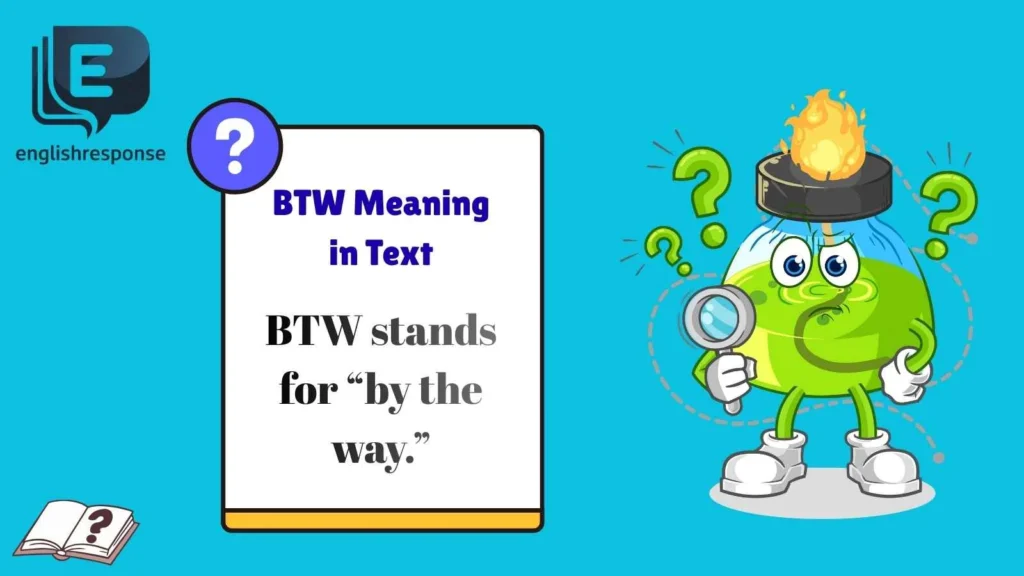
BTW stands for “by the way.”
In texting, it’s used to casually introduce extra information—something important, random, or slightly off-topic.
Think of it as the digital version of tapping someone on the shoulder and saying, “Oh, also…”
Real-life examples:
- “I’ll call you later. BTW, congrats on the new job!”
- “That movie was great. BTW, the ending shocked me.”
- “I’m running late—btw, traffic is nonsensical.”
It’s not formal, and it’s rarely serious. It keeps conversations flowing without sounding stiff or rehearsed.
Origin and Background of the Term
Long before smartphones and WhatsApp ticks, people were already saying “by the way” in spoken English. It was a polite way to shift topics without being abrupt.
When texting exploded in the late 1990s and early 2000s, character limits mattered. Typing fast mattered even more. So phrases got trimmed down, and BTW was born.
Teenagers, chat rooms, early SMS culture—all helped turn “btw” into a global shorthand. Over time, it moved from casual chats to emails, forums, and even workplace messages.
What’s interesting? Even though language keeps changing, btw has survived every digital era. That says a lot about how useful—and human—it really is.
How BTW Is Used in Daily Life
You’ll see btw everywhere once you start noticing it. Here’s how people actually use it day to day:
- To add an afterthought
“I liked your post. BTW, your caption was hilarious.” - To change the topic smoothly
“We’ll discuss this later. Btw, are you free tonight?” - To remind someone of something
“Meeting at 10. BTW, don’t forget the files.” - To share casual news
“I’m moving next month, btw.” - To soften information
“BTW, I won’t be able to make it today.” - To sound relaxed and friendly
“That’s fine, btw, no rush.”
Short. Easy. Human.
Emotional or Practical Meaning of BTW
At first glance, btw seems purely practical—but emotionally, it does more.
It signals casualness.
It tells the reader: “This isn’t heavy. Relax.”
In social terms, it lowers pressure. Instead of sounding commanding or dramatic, “btw” keeps things light and approachable. That’s why it’s popular among friends, coworkers, and even strangers online.
In modern digital culture, where tone is often misunderstood, btw acts like emotional punctuation. It helps your message feel warmer, softer, and more human.
Similar or Related Terms
Here are a few terms people often confuse with btw, plus how they’re different:
- FYI – For your information (more informative, slightly formal)
- TBH – To be honest (expresses opinion or truth)
- IDK – I don’t know (shows uncertainty)
- IMO – In my opinion (personal viewpoint)
- ASAP – As soon as possible (urgent tone)
👉 BTW is casual, not urgent, not serious—just conversational.
Common Misunderstandings About BTW
Even simple words can cause confusion. Let’s clear things up.
- “BTW is rude”
Not true. Tone depends on context, not the word itself. - “BTW is only for teens”
Adults use it daily—especially at work. - “It can be used in formal writing”
Nope. Avoid it in academic or legal content. - “BTW always means unimportant info”
Sometimes it introduces something very important. - “Capital letters change the meaning”
BTW and btw mean the same thing—tone comes from context.
Examples of BTW in Sentences
Here are natural, everyday examples you’ll actually hear or read:
- “I’m on my way, btw.”
- “Great job today—BTW, your presentation was awesome.”
- “BTW, did you hear the news?”
- “I’ll explain later. Btw, thanks for understanding.”
- “That café is closed, btw.”
- “BTW, your idea worked perfectly.”
- “I agree with you, btw.”
- “Btw, no pressure—just asking.”
Why Understanding BTW Matters Today
Digital communication moves fast. Really fast.
And misunderstandings happen even faster.
Knowing the btw meaning in text helps you:
- Read messages accurately
- Respond with confidence
- Avoid sounding awkward or out of touch
- Communicate naturally in modern spaces
Whether you’re chatting with friends, networking online, or messaging coworkers, small terms like btw shape how people perceive your tone.
In a world driven by quick texts and short attention spans, understanding language shortcuts keeps you connected.
FAQs:
What does btw mean in simple words?
It means “by the way”, used to add extra or casual information.
Is btw positive or negative?
Neither. It’s neutral and depends entirely on context.
Where is btw commonly used?
Text messages, social media, chats, emails, and online comments.
Is btw formal or informal?
It’s informal. Avoid it in professional documents.
Why do people search for btw meaning in text?
Because language evolves, and people want to stay relevant and avoid confusion as meanings change with time.
Conclusion:
Language isn’t just words—it’s connection.
And small expressions like btw play a bigger role than we realize.
Now that you understand the btw meaning in text, you’re better equipped to read between the lines, respond naturally, and communicate with confidence in today’s fast-paced digital world.
So next time someone drops a casual “btw” into a message, you won’t hesitate—you’ll get it instantly. And sometimes, that little understanding is what keeps conversations human, warm, and real.

Rana Sawalha is a passionate language enthusiast and author at EnglishResponse, dedicated to helping readers improve their English communication skills. With a focus on practical tips, engaging examples, and real-world conversation strategies, Rana Sawalha empowers learners to speak confidently and respond like a pro in any situation.