Have you ever received a message that simply said “cm” and paused for a second, wondering what it meant? You’re not alone. In today’s fast-paced digital world, short forms dominate our screens.
From “LOL” to “BRB,” texting has created its own mini-language — and “cm meaning in text” is one of those terms people frequently search for.
Understanding texting slang isn’t just about keeping up with trends. It’s about staying connected. Whether you’re chatting with friends, replying to a colleague, or scrolling through social media, knowing what these abbreviations mean helps you avoid confusion — and awkward replies.
In simple terms, “cm” usually means “call me.” But like many abbreviations, its meaning can shift depending on context.
What Does CM Mean?
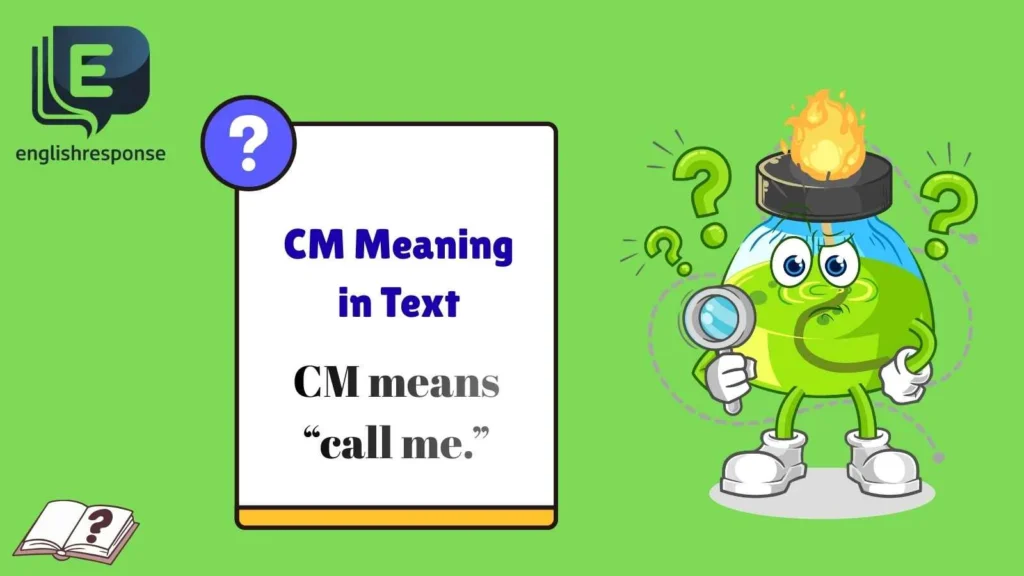
Most commonly, CM means “call me.”
It’s a short and quick way to ask someone to make a phone call instead of texting back.
For example:
- “Hey, when you’re free, cm.”
- “I need to tell you something important, cm asap.”
- “Got a minute? Cm.”
Instead of typing the full phrase, people shorten it to save time. It’s practical, fast, and fits the rhythm of texting culture.
However, context matters. In different situations, “cm” could also mean:
- Centimeter (cm) in academic or measurement discussions.
- Initials of a name or title.
But in casual texting? It almost always means “call me.”
Origin and Background of the Term
The abbreviation “cm” didn’t appear overnight. It evolved naturally with the rise of SMS messaging in the early 2000s.
Back then, text messages had strict character limits. People had to be creative. They shortened words to fit their thoughts into 160 characters. That’s how abbreviations like “u” (you), “r” (are), and “cm” (call me) became popular.
As smartphones grew more advanced, character limits disappeared — but the habit stuck.
It’s interesting how digital language mirrors real-life communication. Just like we use shortcuts in speech (“gonna,” “wanna”), texting created its own shorthand. “CM” is simply a product of that fast-moving, convenience-driven culture.
How CM Is Used in Daily Life

You’ll see “cm” in everyday situations, especially in casual conversations.
Here are common examples:
- Urgent request
“Something happened. Cm right now.” - Private conversation shift
“It’s better to explain on the phone. Cm.” - Missed call reminder
“Saw your message. Cm when you’re free.” - Professional but informal chat
“We need to discuss the update. Cm after 5?” - Emotional conversation
“I don’t want to text this. Cm please.”
Notice how short and direct it is. There’s no fluff. It signals that the conversation needs a more personal touch.
Emotional or Practical Meaning of CM
On the surface, “cm” looks simple. But emotionally, it can carry weight.
When someone says “cm,” they’re often signaling:
- Urgency
- Importance
- Privacy
- Emotional depth
Texting is convenient, but sometimes words on a screen aren’t enough. A phone call feels more personal. It allows tone, emotion, and immediate interaction.
In relationships — romantic, friendly, or professional — switching from text to voice can strengthen communication. That tiny “cm” often means, “This matters.”
Similar or Related Terms
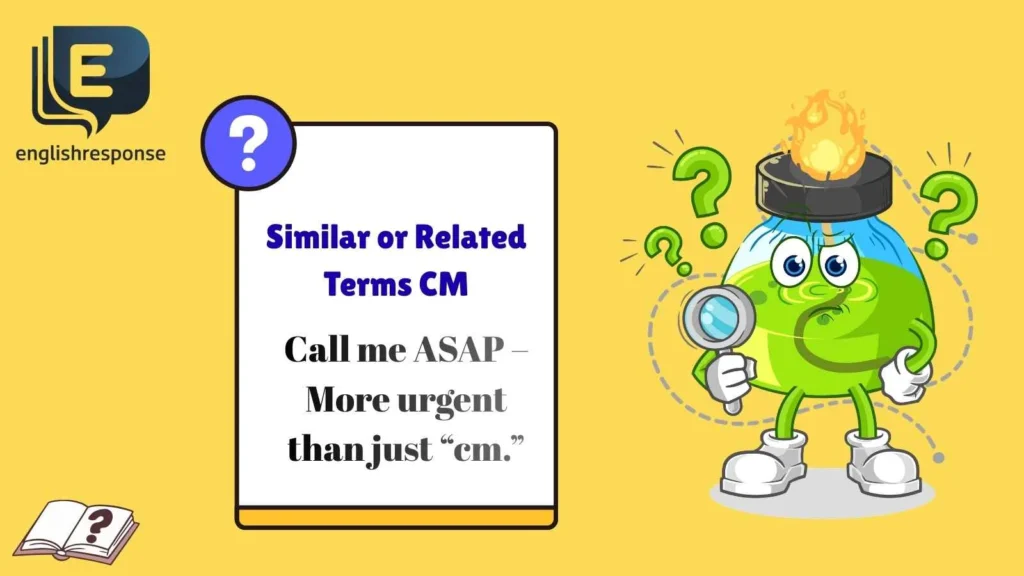
Here are some related abbreviations and how they differ:
- Call me ASAP – More urgent than just “cm.”
- HMU (Hit Me Up) – Means contact me, not necessarily by phone.
- Ring me – More common in British English.
- Ping me – Usually means send a message, not call.
- DM me – Contact privately through direct message.
The key difference?
“CM” specifically suggests a phone call, not just any contact.
Common Misunderstandings About CM
Even simple abbreviations can cause confusion.
Here are common misconceptions:
- It always means centimeter.
Not in texting conversations. - It’s formal language.
No, it’s casual and informal. - It’s rude because it’s short.
Not at all. It’s just efficient. - It always signals bad news.
Sometimes it’s serious, but not always. - Older generations don’t use it.
Actually, many adults use texting shortcuts now.
Context is everything. Read the situation before assuming tone.
Examples of CM in Sentences
Here are natural, everyday examples:
- “I can’t explain it here. Cm.”
- “Got your message late. Cm tomorrow?”
- “Important update about the project. Cm.”
- “Hey, long time no talk! Cm sometime.”
- “I’m outside your house. Cm.”
- “There’s something funny I want to tell you. Cm!”
- “Interview rescheduled. Cm for details.”
- “I miss hearing your voice. Cm tonight?”
See how flexible it is? It works in emotional, professional, and casual settings.
Why Understanding CM Meaning in Text Matters Today
Digital communication shapes how we connect. Misunderstanding a simple abbreviation can create confusion — or even tension.
Imagine ignoring “cm” because you thought it meant something else. You might miss an urgent call or important update.
Language evolves constantly. Staying informed helps you communicate confidently across generations and platforms.
Whether you’re a parent trying to understand your teen’s texts, a professional navigating workplace chats, or just someone who values clear communication — knowing cm meaning in text keeps you in control.
It’s not about memorizing slang. It’s about staying connected in a digital world.
FAQs:
What does cm meaning in simple words?
In simple words, “cm” means “call me.” It’s a quick way to ask someone to make a phone call.
Is cm positive or negative?
It’s neutral. The tone depends on context. It can signal urgency, importance, or just a casual request.
Where is cm commonly used?
Mostly in text messages, WhatsApp chats, Instagram DMs, and casual workplace messaging apps.
Is cm formal or informal?
It’s informal. In professional emails, it’s better to write “Please call me.”
Why do people search for cm meaning in text?
Because abbreviations can be confusing. People want clarity before responding, especially if the message feels urgent.
Conclusion:
At first glance, “cm” looks like just two small letters. But as we’ve seen, it carries meaning, urgency, and even emotion depending on context.
Understanding cm meaning in text helps you communicate better and avoid misunderstandings. In a world where conversations happen in seconds, clarity is powerful.
Language keeps evolving — and staying curious keeps you ahead. Never feel embarrassed about asking what something means. Growth starts with understanding.

Rana Sawalha is a passionate language enthusiast and author at EnglishResponse, dedicated to helping readers improve their English communication skills. With a focus on practical tips, engaging examples, and real-world conversation strategies, Rana Sawalha empowers learners to speak confidently and respond like a pro in any situation.