You’re texting someone, everything feels normal, and suddenly they reply with “dw”.
No emojis. No explanation. Just two letters.
Your brain immediately goes: Wait… what does that mean?
Are they annoyed? Calm? Ending the conversation?
That’s exactly why understanding the dw meaning in text matters more than people think.
In today’s fast-paced digital world, we rely on short forms and abbreviations to save time and keep conversations flowing.
But those shortcuts can easily cause confusion if you don’t know the tone behind them. One small text can completely change how a message feels.
This article breaks down what “dw” really means, how it’s used in everyday texting, and why it’s usually meant to reassure, not dismiss.
You’ll also see real-life examples, common misunderstandings, and practical insights so you’ll never second-guess it again.
What Does DW Meaning in Text?
In texting and online chats, “dw” means “don’t worry.”
It’s a casual, friendly way of telling someone that everything is okay, or that there’s no need to stress over something small.
Instead of typing the full phrase, people shorten it to save time—especially in quick conversations.
Real-life examples:
- You apologize for replying late, and someone says “dw!”
- You make a small mistake, and the reply is “dw, it’s fine.”
- You’re overthinking a situation, and someone reassures you with “dw about it.”
Most of the time, dw is meant to comfort, not brush you off. The tone depends on context, but it’s usually positive and relaxed.
Origin and Background of the Term
The phrase “don’t worry” has existed for centuries, but “dw” as a text abbreviation grew with the rise of digital communication.
Back in early chat rooms, SMS texting, and instant messaging apps, people were limited by:
- Character counts
- Slow typing on keypads
- The need for fast replies
So shortening common phrases became normal. “Don’t worry” turned into “dw”, just like:
- “Be right back” → brb
- “Laughing out loud” → lol
Over time, “dw” stuck around because it feels warm, casual, and non-dramatic—perfect for modern conversations where people prefer relaxed communication over formality.
How DW Is Used in Daily Life
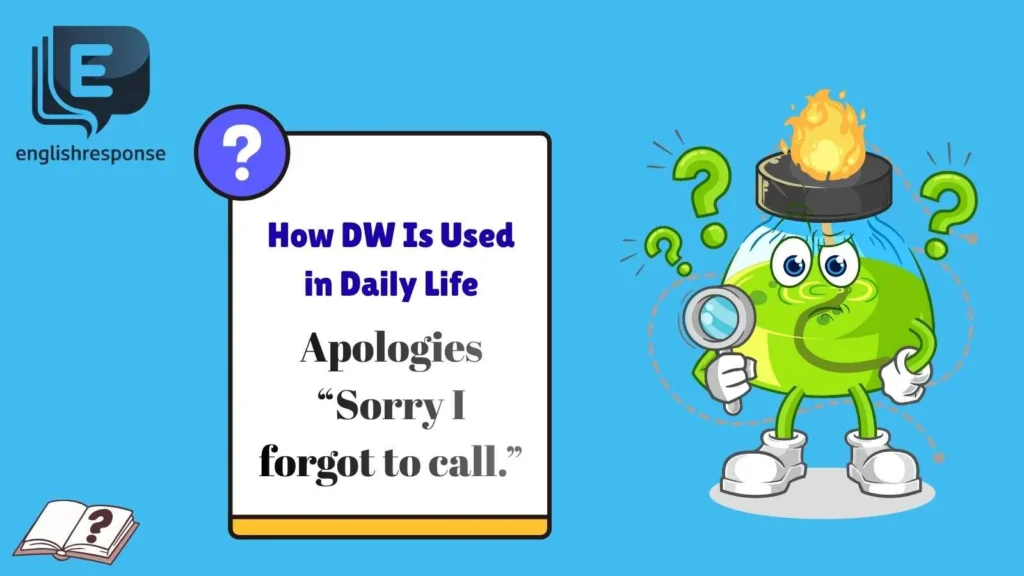
You’ll see dw everywhere once you start noticing it. Here are some common situations where it shows up naturally.
- Apologies
“Sorry I forgot to call.”
→ dw, no big deal. - Small mistakes
“I sent the wrong file.”
→ dw, I’ll fix it. - Late replies
“Just saw this message.”
→ dw! - Reassurance
“I hope I didn’t offend you.”
→ dw, you didn’t. - Casual endings
“I’ll explain later.”
→ dw 👍 - Friendly chats
“I might be late.”
→ dw, take your time.
Short, simple, and effective—that’s why people love using it.
Emotional or Practical Meaning of DW
Beyond its literal meaning, dw carries emotional weight.
It often signals:
- Calmness
- Understanding
- Emotional maturity
- Patience
When someone says “dw”, they’re usually saying, “I’m not upset, and I don’t want you to stress.”
In a world where people overthink texts, that reassurance can make a huge difference. It softens conversations and keeps things from escalating unnecessarily.
Culturally, it reflects how modern communication values emotional ease and low pressure.
Similar or Related Terms
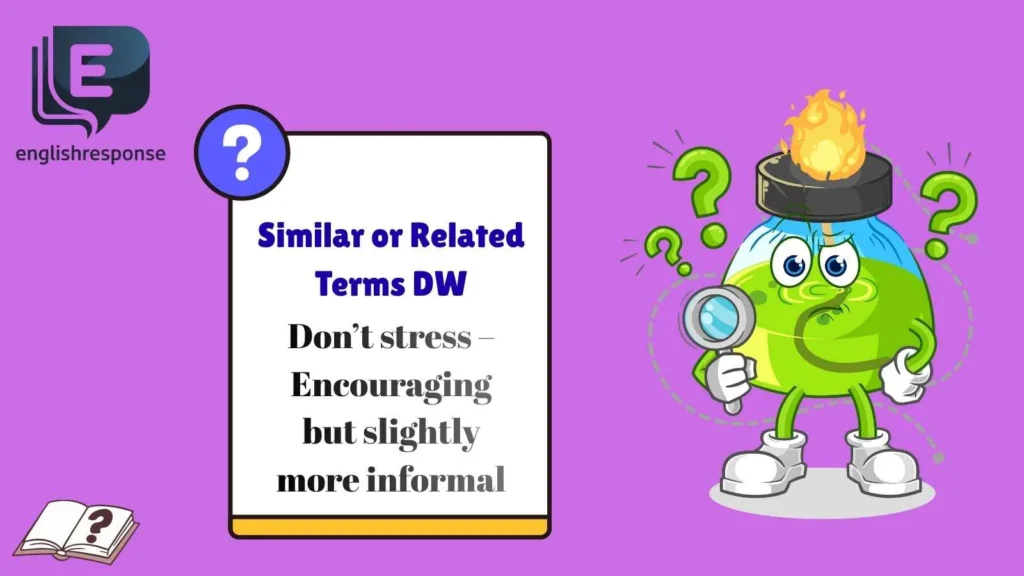
Here are some common alternatives to dw, with slight differences in tone:
- No worries – Friendly and relaxed, often used in spoken English
- It’s fine – Neutral, can be reassuring or distant depending on tone
- All good – Casual and positive
- No problem – Helpful and polite
- It’s okay – Emotionally supportive
- Don’t stress – Encouraging but slightly more informal
Each phrase works differently depending on context, but dw is one of the quickest and softest options.
Common Misunderstandings About DW
Despite its positive intent, people sometimes misread dw. Let’s clear that up.
- It means they don’t care
→ Not true. It usually means they care enough to reassure you. - It sounds rude or cold
→ It’s short, not cold. Context matters. - It ends the conversation
→ Not always. It can simply ease tension. - It’s passive-aggressive
→ Rarely. Tone and relationship matter more. - It’s unprofessional
→ In formal settings, yes—but in casual chats, it’s perfectly normal.
Understanding context prevents unnecessary overthinking.
Examples of DW in Sentences
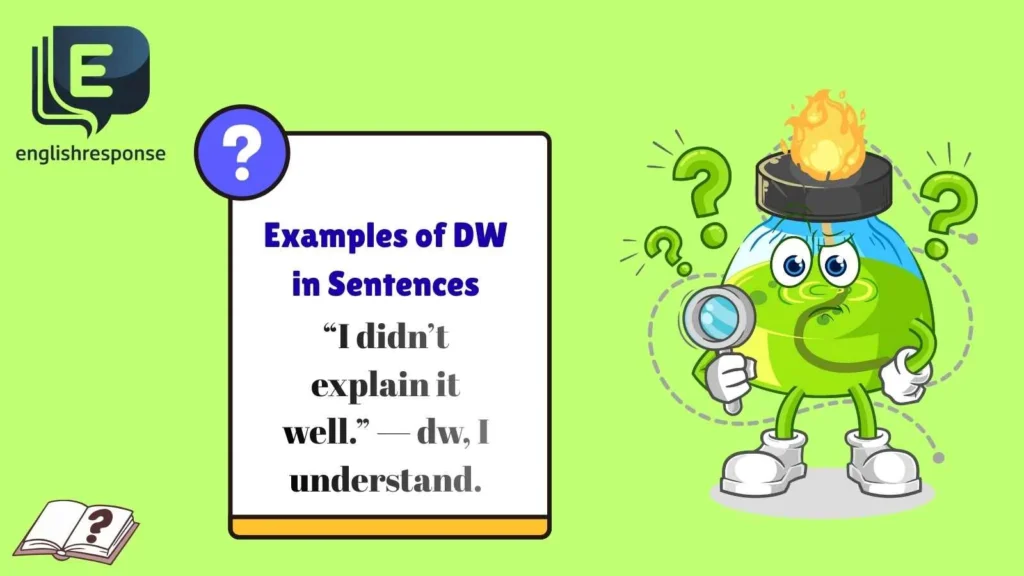
Here are some natural, everyday examples you might actually see or use:
- “Sorry for the delay.” — dw, I was busy too.
- “I hope that didn’t mess things up.” — dw, everything’s fine.
- “I’ll resend the message.” — dw 👍
- “I forgot our call.” — dw, we’ll talk later.
- “I might be late.” — dw, take your time.
- “I didn’t explain it well.” — dw, I understand.
- “My bad!” — dw lol
- “I’ll fix it tomorrow.” — dw, no rush.
Why Understanding DW Matters Today
Texting is emotional—even when it doesn’t look like it.
Misreading short replies can lead to:
- Overthinking
- Anxiety
- Unnecessary conflict
Knowing the dw meaning in text helps you:
- Read tone more accurately
- Communicate with confidence
- Avoid emotional misunderstandings
In modern relationships—whether friendships, work chats, or dating—small phrases carry big meaning. Understanding them makes you a better communicator and a calmer texter.
FAQs:
What does dw mean in simple words?
It means “don’t worry.” It’s a casual way to reassure someone.
Is dw positive or negative?
It’s usually positive and meant to calm or comfort.
Where is dw commonly used?
Mostly in text messages, social media, and casual online chats.
Is dw formal or informal?
It’s informal and best used in relaxed conversations.
Why do people search for dw meaning in text?
Because tone is hard to read in short messages, and people don’t want to misunderstand intent as language changes over time.
Conclusion:
Language keeps evolving, and texting has created a world where two letters can carry a full emotion.
The dw meaning in text isn’t dismissive—it’s reassuring, friendly, and often caring. Once you understand that, you’ll stop overthinking and start communicating with more ease.
Next time someone texts you “dw,” take a breath.
They’re probably just telling you everything’s okay—and sometimes, that’s exactly what we need to hear 💛

Rana Sawalha is a passionate language enthusiast and author at EnglishResponse, dedicated to helping readers improve their English communication skills. With a focus on practical tips, engaging examples, and real-world conversation strategies, Rana Sawalha empowers learners to speak confidently and respond like a pro in any situation.