You’re chatting with someone, waiting on a delivery, or following up on a task, and suddenly you see one simple question pop up: “ETA?”
No long sentence. No explanation. Just three letters.
If you’ve ever paused for a second wondering what it actually means — or how to respond without sounding clueless — you’re not alone.
The eta meaning in text has quietly become part of everyday digital communication, especially in fast-paced online conversations.
At its core, ETA is about time, expectations, and clarity. But in texting and messaging apps, it often carries more than just a literal meaning. It can express urgency, curiosity, impatience, or even politeness, depending on the context.
Understanding this term isn’t just about knowing a definition. It’s about reading the situation correctly, replying confidently, and avoiding awkward misunderstandings.
In a world where messages move fast and attention spans are short, knowing what ETA means — and how it’s used — actually matters more than you think.
What Does ETA Meaning in Text Mean?
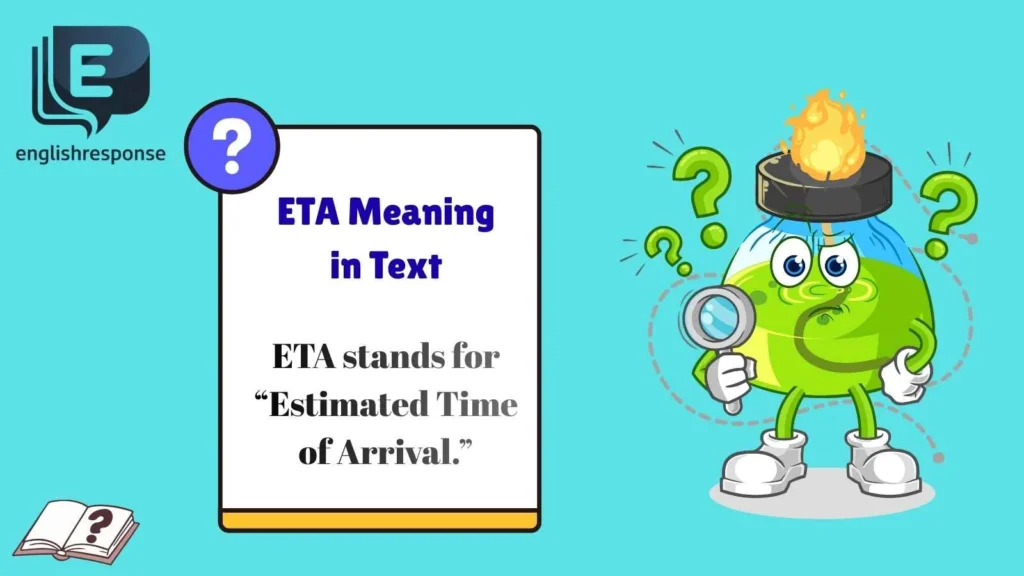
In simple terms, ETA stands for “Estimated Time of Arrival.”
When someone uses it in a text, they’re asking when something or someone is expected to arrive or be completed.
But here’s the key thing: in texting, ETA isn’t limited to physical arrival. It’s often used more broadly.
For example:
- When will you reach home?
- When will the work be done?
- When can I expect a reply, update, or delivery?
Real-life examples:
- “What’s your ETA?” → When will you get here?
- “ETA on the report?” → When will it be ready?
- “Driver says ETA is 10 mins.” → Arrival expected in 10 minutes
Instead of typing a full question, people use ETA because it’s quick, efficient, and universally understood — especially in digital conversations.
Origin and Background of the Term
ETA didn’t start in texting at all.
The term comes from transportation, logistics, and military communication, where timing was critical. Pilots, ship captains, and military units needed a precise way to communicate arrival times without unnecessary explanation.
Over time, ETA moved into:
- Aviation schedules
- Shipping and cargo tracking
- Public transport systems
Then came smartphones, messaging apps, and instant communication.
As texting culture evolved, people borrowed short, professional terms and adapted them for everyday use. ETA fit perfectly. It was short, clear, and flexible.
What’s interesting is how the term softened over time. In formal settings, ETA still sounds professional. In texts, it can sound casual, friendly, or even slightly impatient — depending on how it’s used.
That evolution is why ETA feels so natural in modern conversations.
How ETA Is Used in Daily Life
You’ll see ETA everywhere once you start noticing it. Here are some common, real-world uses:
- Waiting for a friend who’s running late
- Tracking a food delivery or ride-share
- Asking a coworker for an update
- Checking on an online order
- Coordinating plans with family
Practical examples:
- “Hey, what’s your ETA? We’re already here.”
- “Food’s on the way. ETA 15 minutes.”
- “Any ETA on when you’ll call?”
- “Package delayed, new ETA tomorrow.”
- “Stuck in traffic — ETA 20 mins.”
Each example shows how ETA keeps communication efficient while still feeling natural.
Emotional or Practical Meaning of ETA
On the surface, ETA is about time. But emotionally, it often signals expectation and anticipation.
When someone asks for your ETA, they might be:
- Waiting on you
- Planning their next move
- Feeling anxious or excited
- Trying to manage their time better
In modern culture, ETA reflects how much we value predictability and respect for time. People don’t just want things to happen — they want to know when.
In texting, ETA can also soften impatience. Instead of saying, “You’re late,” someone might simply ask, “ETA?”
It sounds less confrontational, more practical.
That’s why this small term carries such social importance today.
Similar or Related Terms
Here are a few terms often confused with ETA, explained simply:
- ETD – Estimated Time of Departure (when something leaves, not arrives)
- ASAP – As soon as possible (urgency, not timing)
- EOD – End of day (deadline, not arrival)
- On the way (OTW) – Already traveling, ETA implied
- Delay – Indicates lateness but not a specific time
Each term serves a different purpose, even though they’re often used together.
Common Misunderstandings About ETA
Despite its simplicity, ETA is often misunderstood. Let’s clear things up.
- ETA is not an exact time
It’s an estimate, not a promise. - ETA doesn’t only mean physical arrival
It can refer to completion, response, or delivery. - ETA isn’t rude by default
Tone depends on context and relationship. - ETA can change
Traffic, delays, or workload can affect it. - ETA isn’t always urgent
Sometimes it’s just informational.
Understanding these nuances helps avoid miscommunication.
Examples of ETA Meaning in Text (Real Sentences)
Here are some natural, everyday examples:
- “Running late — ETA about 10 minutes.”
- “What’s your ETA? Just checking.”
- “Driver shared an ETA of 7:45 PM.”
- “Any ETA on the update?”
- “Meeting delayed. New ETA soon.”
- “Can you give me an ETA?”
- “Flight ETA has changed.”
- “Still waiting, no ETA yet.”
These are exactly how real people use it in daily texts.
Why Understanding ETA Meaning in Text Matters Today
We live in a fast, digital-first world. Plans change quickly, and communication needs to keep up.
Understanding ETA helps you:
- Respond faster and smarter
- Avoid confusion or awkward replies
- Sound informed and confident
- Manage expectations better
In professional settings, knowing how to use ETA correctly shows clarity and responsibility. In personal conversations, it shows respect for someone’s time.
Small terms like ETA may seem minor, but they play a big role in smooth communication today.
FAQs:
What does ETA mean in simple words?
ETA means the expected time when someone or something will arrive or be ready.
Is ETA positive or negative?
It’s neutral. The tone depends on how and when it’s used.
Where is ETA commonly used?
In texts, emails, delivery tracking, work updates, and travel conversations.
Is ETA formal or informal?
It works in both. Formal at work, casual in texts.
Why do people search for ETA meaning in text?
Because it’s widely used, short, and often confusing for new or non-native users as language changes over time.
Conclusion:
The eta meaning in text may look simple, but it carries real weight in modern communication. It helps people plan, stay informed, and feel respected — all with just three letters.
Once you understand it, you’ll start using ETA naturally, confidently, and correctly.
And the next time someone asks for your ETA, you won’t hesitate — you’ll know exactly what they’re asking and how to respond.

Rana Sawalha is a passionate language enthusiast and author at EnglishResponse, dedicated to helping readers improve their English communication skills. With a focus on practical tips, engaging examples, and real-world conversation strategies, Rana Sawalha empowers learners to speak confidently and respond like a pro in any situation.