We’ve all had those days. You spill coffee on your shirt right before an important meeting. Your phone battery dies when you need GPS the most. Or you send a message… to the wrong person. That sinking feeling usually comes with one short reaction: FML.
If you’ve seen “FML” in texts, social media posts, or memes and wondered what it really means, you’re not alone. Internet slang moves fast, and missing the meaning can leave you feeling out of the loop.
Understanding phrases like fml meaning in text isn’t just about slang—it’s about staying connected in modern conversations.
In this article, we’ll break down FML in a simple, human way, without dictionary stiffness. You’ll learn where it came from, how people actually use it, and why it resonates so deeply today. By the end, you won’t just know what FML means—you’ll feel why people say it.
What Does FML Meaning in Text?
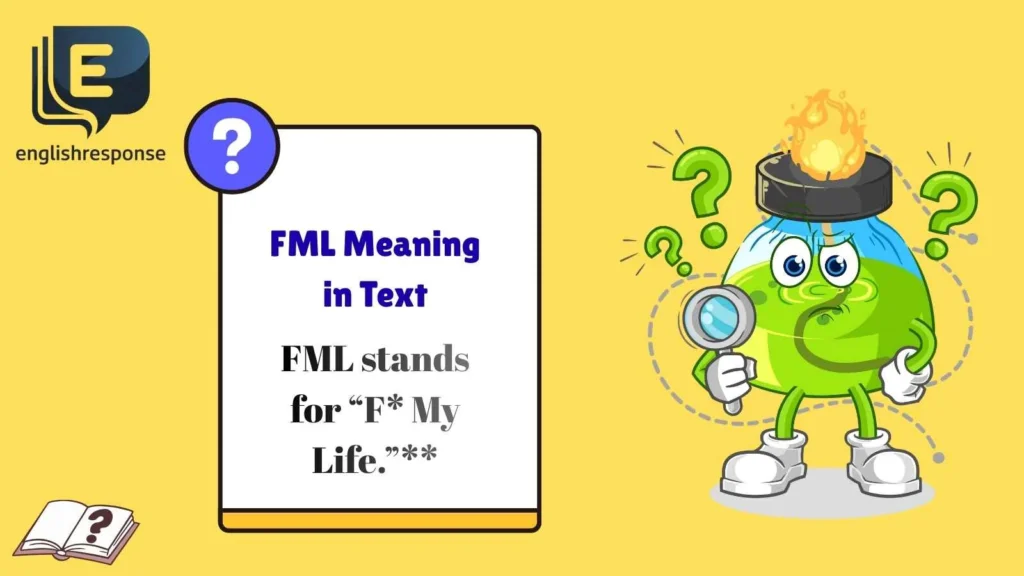
At its core, FML stands for “F* My Life.”**
It’s an expression people use when something goes wrong and they feel frustrated, unlucky, or overwhelmed.
It’s not always literal. Most of the time, it’s said dramatically or humorously, not as a serious life statement.
Real-life examples:
- You miss your bus by 10 seconds and it starts raining: “FML.”
- You studied all night, and the exam is postponed: “Seriously, FML.”
- Your phone falls face-down and cracks: “Yep… FML.”
In text conversations, FML is a quick emotional shortcut. Instead of explaining everything, three letters say it all.
Origin and Background of the Term
The phrase behind FML existed long before texting. People have been saying “f*** my life” out loud for decades as a raw expression of frustration.
But FML truly exploded in the early 2000s, when texting and online forums became popular. Typing full sentences was slower back then, so abbreviations ruled the internet.
The turning point came in 2009 with the launch of a website literally called FMyLife, where users shared short, embarrassing, or unlucky life moments. The stories were funny, painful, and incredibly relatable—and the acronym stuck.
Over time, FML became less shocking and more culturally normalized, especially among younger internet users. Today, it’s part of everyday digital language.
How FML Is Used in Daily Life
FML pops up everywhere—from texts to tweets to group chats. Here’s how people actually use it:
- As a reaction to bad luck
“I forgot my headphones at home. FML.” - As humor
“I waved back at someone who wasn’t waving at me. FML 😂” - To exaggerate minor problems
“No ketchup with my fries. FML.” - To seek sympathy
“Worked all weekend and still behind. FML.” - As self-aware sarcasm
“Tried cooking. Burnt water. FML.”
The tone depends on context. Sometimes it’s serious. Often, it’s playful. That flexibility is why it’s still popular.
Emotional or Practical Meaning of FML
FML matters because it captures modern emotional expression perfectly. Life today is fast, stressful, and public—especially online.
People use FML to:
- Vent without oversharing
- Connect through shared frustration
- Turn stress into humor
- Feel understood without long explanations
In a strange way, saying FML can be comforting. It tells others, “I’m struggling right now,” without asking for a big emotional response.
It reflects a culture where we openly acknowledge imperfection—and sometimes laugh at it.
Similar or Related Terms
Here are common terms related to FML and how they differ:
- SMH – Shaking my head; disappointment or disbelief
- UGH – General annoyance or frustration
- RIP – Used humorously when something goes wrong
- WTF – Shock or confusion
- LOL – Laughing, sometimes sarcastically
- IDK – Uncertainty, not frustration
FML is unique because it blends emotion + drama + humor in one phrase.
Common Misunderstandings About FML
Despite how common it is, FML is often misunderstood.
- It doesn’t always mean real despair
Most uses are exaggerated or joking. - It’s not always negative
Sometimes it’s used humorously. - It’s not appropriate everywhere
It’s casual and informal—not for work emails. - It’s not a cry for help every time
Context matters. Tone matters. - It’s not universal
Some cultures or age groups may avoid it.
Understanding these nuances helps you respond appropriately.
Examples of FML in Sentences
Here are natural, everyday examples:
- “I locked my keys inside the car. FML.”
- “My alarm didn’t go off today. FML.”
- “Just realized I sent that text to my boss. FML.”
- “Internet down during a deadline. FML.”
- “Dropped my phone in water… again. FML.”
- “All dressed up and nowhere to go. FML.”
- “Missed the sale by one day. FML.”
Each sentence shows how flexible and relatable the term is.
Why Understanding FML Meaning in Text Matters Today
Language evolves fast, especially online. Knowing slang like FML helps you:
- Understand tone in digital conversations
- Avoid miscommunication
- Connect better with younger audiences
- Interpret memes, posts, and captions correctly
For content creators, marketers, and educators, understanding internet language is practical power. It builds relevance and trust.
And honestly? Sometimes knowing what FML means just helps you laugh and say, “Yep… same.”
FAQs:
What does fml meaning in text in simple words?
It means someone is frustrated or unlucky and reacting emotionally, often with humor.
Is fml positive or negative?
Mostly negative, but often used jokingly or sarcastically.
Where is fml commonly used?
Texts, social media, memes, online chats, and casual conversations.
Is fml formal or informal?
Very informal. It’s not suitable for professional settings.
Why do people search for fml meaning in text?
Because it’s widely used online, and context can be confusing without knowing the tone.
Conclusion:
FML is more than just an acronym—it’s a tiny emotional release valve for modern life. It lets people express frustration, laugh at bad luck, and feel less alone in small struggles.
Understanding the fml meaning in text helps you read between the lines, connect more naturally, and keep up with how people actually communicate today.
And remember—everyone has an FML moment now and then. What matters is knowing tomorrow’s message might just be better. 💛

Rana Sawalha is a passionate language enthusiast and author at EnglishResponse, dedicated to helping readers improve their English communication skills. With a focus on practical tips, engaging examples, and real-world conversation strategies, Rana Sawalha empowers learners to speak confidently and respond like a pro in any situation.