You’re texting someone. The conversation’s flowing. Then suddenly, they send: “gtg.”
And just like that, you’re wondering — wait, what does that mean?
If you’ve ever paused mid-chat trying to decode a short message, you’re not alone. Text abbreviations are everywhere. They save time, feel casual, and keep conversations moving fast. But if you don’t know what they mean, they can feel confusing — even awkward.
That’s exactly why understanding gtg meaning in text matters today. Whether you’re chatting with friends, replying to coworkers, or scrolling through social media, this tiny three-letter phrase shows up more often than you think.
In this guide, we’ll break it down in simple, human terms — no dictionary jargon, no robotic explanations. Just real examples, real context, and everything you need to confidently understand and use “gtg.”
What Does GTG Mean?
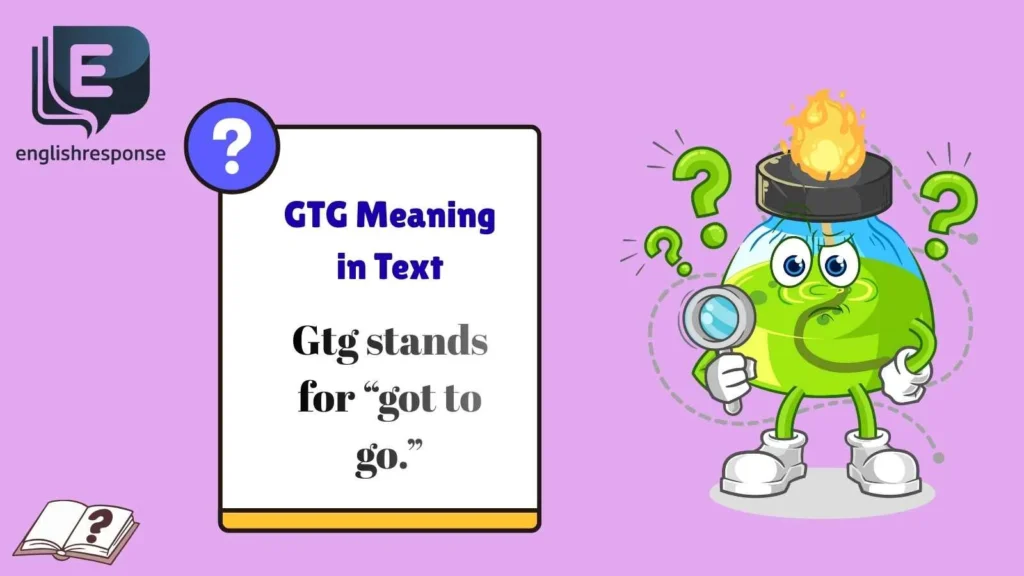
In texting, gtg stands for “got to go.”
It’s a quick way of saying:
- I need to leave.
- I have to go now.
- I can’t continue this conversation.
It’s usually used at the end of a chat when someone needs to sign off quickly.
Real-Life Examples
- “Sorry, my mom’s calling. gtg!”
- “Meeting starting now, gtg.”
- “Battery’s at 1%. gtg 😭”
Notice something? It’s short, casual, and straight to the point. No long explanations. Just a quick exit.
That’s the beauty of texting language — it mirrors how we speak in fast, informal moments.
Origin and Background of the Term
The phrase “gtg” didn’t just appear overnight.
It became popular during the early internet days — especially in chatrooms, online gaming, and instant messaging platforms like AOL Instant Messenger and MSN Messenger.
Back then, typing speed mattered. Internet connections were slower. Conversations happened in real time. People needed quick ways to say goodbye without typing full sentences.
So instead of writing:
“I’ve got to go now, talk later.”
They typed:
“gtg”
Simple. Efficient. Effective.
Over time, it moved from desktop chatrooms to mobile texting. Today, it’s part of everyday digital language.
It’s a perfect example of how language evolves with technology.
How GTG Is Used in Daily Life

Let’s look at how people actually use it today.
1. Ending a Casual Chat
“Dinner’s ready. gtg!”
2. During Gaming
“Enemy squad incoming. gtg!”
3. Work Conversations
“Client just called. gtg, will message later.”
4. Social Media DMs
“Heading out now, gtg.”
5. Group Chats
“Class starting. gtg guys.”
Notice something important?
It’s usually friendly. It’s rarely dramatic. It simply signals an exit.
And because it’s short, it feels natural in fast-moving conversations.
Emotional or Practical Meaning of GTG
On the surface, “gtg” is just about leaving.
But socially, it does more than that.
It helps people:
- Avoid awkward long goodbyes
- Exit quickly without overexplaining
- Maintain casual tone
In modern digital culture, attention spans are shorter. Conversations move fast. People multitask constantly.
“gtg” fits perfectly into that world.
It communicates:
“I value this conversation, but I need to step away.”
There’s no negativity in it. It’s practical, polite, and efficient.
In fact, in many cases, it softens the exit compared to simply disappearing.
Similar or Related Terms
Here are other phrases that mean something similar — but with slight differences:
- BRB – “Be right back.” (Temporary exit)
- TTYL – “Talk to you later.” (Conversation will continue later)
- G2G – Same meaning as gtg, just written differently
- Bye – Direct goodbye
- AFK – “Away from keyboard.” (Often used in gaming)
The difference?
“gtg” usually means leaving immediately — not necessarily coming back soon.
Common Misunderstandings About GTG
Let’s clear up a few myths.
1. It’s rude.
Not true. It’s casual, not disrespectful.
2. It means someone is angry.
Nope. It simply means they need to leave.
3. It’s only for teenagers.
Wrong. Adults use it too — especially in informal chats.
4. It’s unprofessional.
Depends on context. In formal emails? Yes, avoid it.
In Slack chats? Totally fine.
5. It means the conversation is over forever.
Not at all. It just means “for now.”
Understanding context makes all the difference.
Examples of GTG in Sentences
Here are some natural, everyday uses:
- “Dad’s home, gtg!”
- “Low battery, gtg before my phone dies.”
- “Uber’s here, gtg!”
- “Boss just walked in. gtg.”
- “Practice starting. gtg!”
- “Internet lagging, gtg.”
- “Running late for class, gtg.”
- “Movie starting now, gtg talk later.”
Short. Natural. Real.
That’s how people use it.
Why Understanding GTG Meaning in Text Matters Today
Digital communication is now part of daily life.
We text more than we call. We DM more than we email.
Knowing common abbreviations like gtg meaning in text helps you:
- Avoid confusion
- Respond confidently
- Understand tone better
- Communicate smoothly
Imagine misinterpreting “gtg” as something negative. That could create unnecessary tension.
Language builds relationships — even in short messages.
And small details matter.
In a world where conversations happen in seconds, understanding digital slang keeps you connected.
FAQs:
What does gtg mean in simple words?
It means “got to go.” The person needs to leave the conversation.
Is gtg positive or negative?
It’s neutral. It simply signals that someone needs to step away.
Where is gtg commonly used?
Mostly in text messages, social media chats, gaming platforms, and informal work chats.
Is gtg formal or informal?
It’s informal. Avoid using it in professional emails or formal writing.
Why do people search for gtg meaning in text?
Because texting language keeps evolving. With passage of time, new abbreviations appear, and people want to stay updated and avoid misunderstandings.
Conclusion:
So now you know — gtg meaning in text simply stands for “got to go.”
It’s quick. It’s casual.
From early internet chatrooms to today’s smartphone conversations, it’s become a small but powerful part of digital language.
Understanding terms like this isn’t just about slang — it’s about staying connected in a fast-moving world.
Because sometimes, three little letters can say a lot.
And the more fluent you become in modern communication, the easier it is to build smoother, stronger conversations — one message at a time.

Rana Sawalha is a passionate language enthusiast and author at EnglishResponse, dedicated to helping readers improve their English communication skills. With a focus on practical tips, engaging examples, and real-world conversation strategies, Rana Sawalha empowers learners to speak confidently and respond like a pro in any situation.