You’re chatting with someone online. They ask, “How are you?”
You reply, “Good, just tired.”
Then they respond with “HBU?”
If you’ve ever paused for a second wondering what that even means, you’re not alone.
Texting and online conversations move fast, and abbreviations like HBU are everywhere. Missing their meaning can make you feel out of the loop—or worse, awkwardly silent.
Understanding modern text slang isn’t just about being trendy; it’s about connecting better, responding naturally, and keeping conversations flowing.
In simple terms, HBU meaning in text is friendly, casual, and often used without much thought—but it still carries social weight. Knowing how and when to use it can make your replies feel more human and less forced.
What Does HBU Meaning in Text Mean?
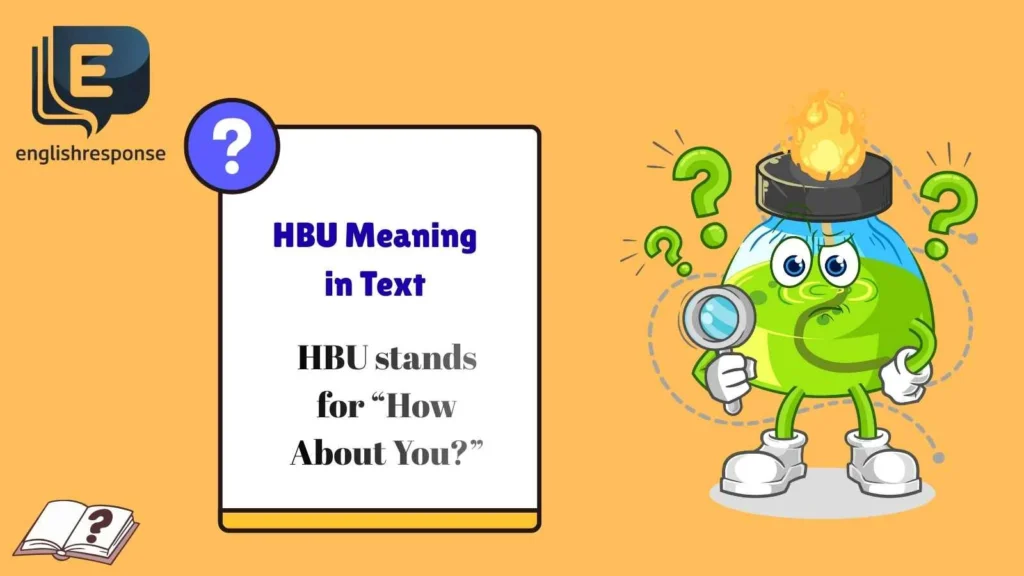
HBU stands for “How About You?”
That’s it. Simple, right?
But the way it’s used makes all the difference.
In text conversations, HBU is usually a quick follow-up question. After someone answers a question, they throw it back to keep the conversation balanced.
Real-life examples:
- “I’m doing great today, HBU?”
- “I’ve already eaten lunch. HBU?”
- “I like coffee more than tea. HBU?”
It’s casual, friendly, and conversational. Instead of typing the full sentence, people shorten it to save time and keep things relaxed.
Origin and Background of the Term
The phrase “How about you?” has been around forever. Long before texting, people used it in spoken conversations to show politeness and interest.
HBU was born when texting, instant messaging, and early chat rooms became popular in the late 1990s and early 2000s. Back then, typing took effort. Character limits were real. Speed mattered.
So people shortened everything:
- BRB
- LOL
- IDK
- AND… HBU
Over time, HBU moved from chat rooms to SMS, then to social media, WhatsApp, Instagram DMs, Snapchat, and gaming chats. Today, it’s a default response in casual digital conversations.
What’s interesting? Even though language keeps changing, HBU has stuck around. That tells us it still serves a real social purpose.
How HBU Is Used in Daily Life
You’ll see HBU everywhere once you notice it. Here are some common, practical ways people use it.
- After answering a question
“I’m free tonight. HBU?” - During small talk
“Work was exhausting today. HBU?” - In friendly check-ins
“I’m feeling better now. HBU?” - In flirting or casual chats
“I miss late-night talks. HBU?” - In group chats
“I’m okay with the plan. HBU everyone?” - In online gaming or forums
“I usually play on weekends. HBU?”
It’s short, smooth, and keeps conversations moving without sounding pushy.
Emotional or Practical Meaning of HBU
At first glance, HBU looks neutral. But emotionally? It does more than you think.
Using HBU shows:
- Interest in the other person
- Politeness instead of self-centered replies
- A desire for two-way conversation
When someone doesn’t say HBU back, it can feel dismissive—even if they don’t mean it.
In modern digital culture, small signals matter. A tiny abbreviation like HBU can make conversations feel warmer and more human.
Practically, it also:
- Saves time
- Keeps chats flowing
- Reduces awkward pauses
Sometimes, one simple HBU is enough to keep a conversation alive.
Similar or Related Terms
Here are some related expressions you’ll often see, and how they differ:
- WBU – What about you?
Slightly more casual, similar meaning. - U? – Just “You?”
Very informal, sometimes blunt. - And you? – More polite, slightly formal.
- HYD? – How you doing?
More personal, less neutral. - Sup? – What’s up?
Casual greeting, not a follow-up.
Each one fits a different tone. HBU sits nicely in the middle—friendly but not too personal.
Common Misunderstandings About HBU
Even simple abbreviations can be misunderstood. Let’s clear up some confusion.
- It’s not rude
HBU isn’t lazy or disrespectful. It’s normal digital language. - It’s not formal
You wouldn’t use HBU in emails or professional messages. - It’s not flirting by default
Tone depends on context, not the word itself. - It doesn’t demand a deep answer
A short reply is perfectly fine. - It’s not outdated
People still use HBU daily across platforms. - It’s not universal
Some older users or non-native speakers may not recognize it.
Understanding these helps you respond confidently.
Examples of HBU in Sentences
Here are some natural, everyday examples you might actually use:
- “I’m just relaxing at home, HBU?”
- “I already finished the assignment. HBU?”
- “I prefer movies over series. HBU?”
- “I’m feeling much better today, HBU?”
- “I usually wake up early. HBU?”
- “I’ve never been there before. HBU?”
- “I’m free after 6 PM. HBU?”
- “I like that song too. HBU?”
Short, natural, and easy to use.
Why Understanding HBU Matters Today
Digital communication shapes how we connect. Misunderstanding small things like HBU meaning in text can create unnecessary confusion.
Knowing it helps you:
- Respond naturally in chats
- Avoid awkward silence
- Build better online connections
- Sound more confident and current
Whether you’re texting friends, chatting online, or using social media, language awareness matters. Slang isn’t just slang—it’s social glue.
In a fast-moving digital world, understanding tiny details keeps you in sync, not left behind.
FAQs:
What does HBU mean in simple words?
HBU means “How about you?” It’s a quick way to ask the same question back.
Is HBU positive or negative?
It’s neutral to positive. The tone depends on the conversation.
Where is HBU commonly used?
Mostly in text messages, social media, chats, and online conversations.
Is HBU formal or informal?
It’s informal and shouldn’t be used in professional settings.
Why do people search for HBU meaning in text?
Because abbreviations change over time, and people want to keep up with modern communication as language evolves.
Conclusion:
Language keeps evolving, but connection remains the goal.
HBU may look small, but it plays a big role in everyday digital conversations. Understanding it helps you reply with confidence, clarity, and warmth—without overthinking.
The next time someone says “HBU?”, you won’t hesitate. You’ll know exactly what it means and how to respond naturally.

Rana Sawalha is a passionate language enthusiast and author at EnglishResponse, dedicated to helping readers improve their English communication skills. With a focus on practical tips, engaging examples, and real-world conversation strategies, Rana Sawalha empowers learners to speak confidently and respond like a pro in any situation.