You’re scrolling through your messages, maybe half-awake or multitasking, when you see a short reply: “hn”.
No emojis. No explanation. Just two letters.
And suddenly, you’re thinking: What does that even mean? Is it rude? Is it agreement? Or did they just forget to type the rest?
If you’ve ever paused over a message like this, you’re not alone. Texting has changed how we communicate, and short forms like “hn” can feel confusing without context. These tiny expressions carry tone, emotion, and intent, even when they look simple.
Understanding the hn meaning in text matters more than you might think. It can help you avoid misunderstandings, read emotions better, and respond the right way—especially in casual chats, friendships, or even relationships.
In this article, we’ll break it all down in clear, human language. No dictionary stiffness. No robotic explanations. Just real-life meaning, examples, and insight into how people actually use “hn” today.
What Does HN Mean in Text?
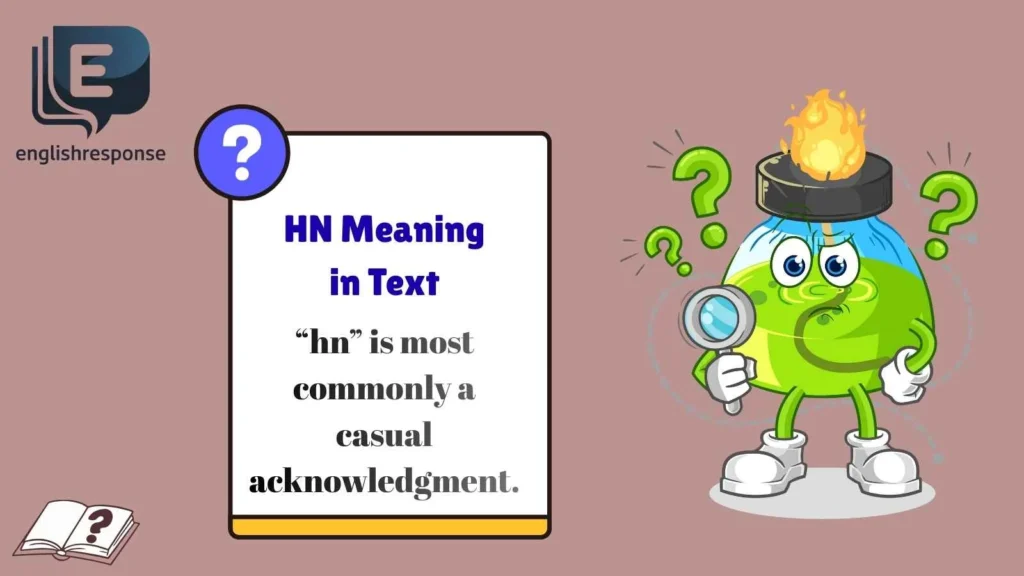
In texting, “hn” is most commonly a casual acknowledgment. It usually means:
- “I hear you”
- “Okay”
- “Hmm”
- Mild agreement or understanding
It’s neutral by default, but its real meaning depends heavily on context and tone.
For example:
- If someone is explaining something and you reply with “hn,” it often means you’re listening.
- If it’s sent alone with no follow-up, it might signal low interest or emotional distance.
Unlike full words, hn doesn’t explain itself. That’s why people often misread it.
Real-life examples:
- Friend: “I’ll be late today.”
You: “hn” → Got it. - Someone venting emotionally, and you reply “hn” → This might feel cold or dismissive.
So while it’s short, hn carries weight depending on the situation.
Origin and Background of the Term
The use of “hn” didn’t come from dictionaries or formal language. It evolved naturally from spoken sounds.
In real conversations, people often respond with:
- “Hmm”
- “Uh-huh”
- A simple nod
When texting became fast and informal, these sounds turned into written shortcuts. “Hn” is essentially a compressed version of “hmm” or “uh-huh.”
It gained popularity in:
- Casual texting
- Online chats
- Youth and internet culture
Over time, people started using fewer letters to communicate faster. Typing “hn” became quicker than writing a full sentence, especially when the response didn’t need emotion or detail.
It’s not about laziness—it’s about speed and tone efficiency.
How HN Is Used in Daily Life
You’ll mostly see hn in informal settings. Here’s how it shows up in real conversations:
- Acknowledging information
Someone shares news, and “hn” means message received. - Listening mode
Used while someone is talking or explaining something long. - Low-energy response
When the sender doesn’t feel like typing much. - Neutral reaction
Not excited, not upset—just present. - Soft disagreement or uncertainty
Sometimes it means “I’m not fully convinced.” - Ending a topic quietly
It can signal that the conversation is winding down.
Short, simple, and subtle—that’s the power of hn.
Emotional or Practical Meaning of HN
Emotionally, hn is a minimalist response. It often reflects:
- Emotional neutrality
- Mental distraction
- Polite acknowledgment without engagement
That’s why it can feel emotionless or even passive in sensitive conversations.
In some cultures and friend groups, it’s perfectly normal. In others, it might come off as dry or uninterested.
Practically speaking, “hn” saves time. But emotionally, it can send mixed signals.
If someone you care about constantly replies with “hn,” it might be worth checking in. Sometimes, what’s unsaid matters more than what is typed.
Similar or Related Terms
Here are some commonly confused or related texting expressions:
- Hmm – Shows thinking or hesitation
- K – Short for “okay,” can sound blunt
- Oh – Indicates realization or surprise
- Uh-huh – Clear acknowledgment
- Mk – Casual agreement
- 👍 – Visual acknowledgment, often warmer
Each one carries a slightly different tone, even if they seem similar.
Common Misunderstandings About HN
Let’s clear up some myths:
- “HN is always rude”
Not true. It’s neutral unless context makes it rude. - “HN means disinterest every time”
Sometimes people are just busy or tired. - “Only one meaning exists”
Meaning changes with tone, relationship, and situation. - “It’s slang with a fixed definition”
It’s more of a texting sound than a word. - “HN ends conversations”
It can, but not always intentionally.
Understanding these nuances helps avoid unnecessary overthinking.
Examples of HN in Sentences
Here are natural, everyday uses:
- “I’ll call you later.” — “hn”
- “That meeting was exhausting.” — “hn, I get that.”
- “I don’t know if this will work.” — “hn… maybe.”
- “I already sent the email.” — “hn okay.”
- “It’s raining again.” — “hn”
- “I’m just feeling off today.” — “hn, sorry about that.”
- “We’ll see what happens.” — “hn.”
See how tone changes with added words? Context is everything.
Why Understanding HN Matters Today
Digital communication is fast, short, and often emotionally compressed. Words like “hn” are part of that reality.
Understanding them helps you:
- Read emotional cues better
- Avoid misunderstandings
- Respond more thoughtfully
- Improve texting communication
In a world where messages replace face-to-face talk, even two letters can shape a relationship.
Knowing the hn meaning in text gives you clarity—and clarity builds better connections.
FAQs:
What does hn mean in simple words?
It usually means “okay,” “I hear you,” or “hmm.” It’s a casual acknowledgment.
Is hn positive or negative?
Neither by default. It’s neutral, but context can make it feel positive or cold.
Where is hn commonly used?
Mostly in casual texting, chats, and informal online conversations.
Is hn formal or informal?
It’s very informal and shouldn’t be used in professional communication.
Why do people search for hn meaning in text?
Because it’s short, unclear, and easy to misinterpret—especially in emotional conversations.
Meanings also evolve with time, so people want updated understanding.
Conclusion:
Language keeps changing, and texting has its own silent rules. “HN” may be tiny, but it carries tone, emotion, and intent when used the wrong—or right—way.
Understanding the hn meaning in text helps you pause less, worry less, and communicate better. Instead of guessing, you can read the situation clearly and respond with confidence.
At the end of the day, communication isn’t about how many words we use—it’s about how well we understand each other. And sometimes, even two letters can teach us that.

Rana Sawalha is a passionate language enthusiast and author at EnglishResponse, dedicated to helping readers improve their English communication skills. With a focus on practical tips, engaging examples, and real-world conversation strategies, Rana Sawalha empowers learners to speak confidently and respond like a pro in any situation.