You’ve probably seen someone text “ight” and thought… Wait, what does that even mean?
Is it a typo? Slang? Lazy typing? Or something deeper?
In today’s fast-paced digital world, short forms rule conversations. And “ight” is one of those casual slang words that pops up in texts, DMs, Snapchat, and even gaming chats. It looks simple, but its meaning can change depending on tone and context.
Understanding modern slang isn’t just about keeping up — it’s about staying connected in conversations. If you misread a casual “ight,” you might completely misunderstand the vibe of the message.
What Does Ight Meaning in Text?
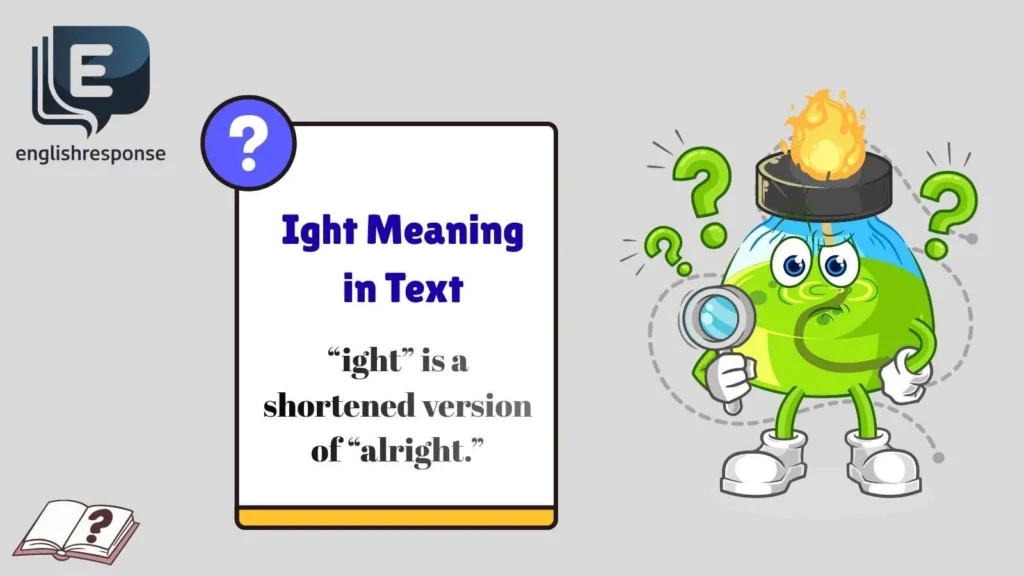
Simply put, “ight” is a shortened version of “alright.”
That’s it.
But here’s where it gets interesting — depending on tone, it can mean:
- Okay
- Sure
- Fine
- I agree
- Whatever
For example:
- “You coming at 7?”
“Ight.”
→ Means: Okay. - “We’ll talk later.”
“Ight.”
→ Means: Sure. - “Do whatever you want.”
“Ight…”
→ Could mean: Fine (maybe slightly annoyed).
So while the base meaning is “alright,” the emotional tone depends entirely on context.
Origin and Background of the Term
“Ight” comes from African American Vernacular English (AAVE), where “alright” has long been pronounced in shortened forms like “aight” or “ight.”
Over time, texting culture simplified it even further.
In the early 2000s, when SMS messages had character limits, people started shortening everything:
- You → u
- Before → b4
- Alright → aight → ight
Hip-hop culture also played a huge role. Artists frequently used “aight” or “ight” in lyrics and interviews. As hip-hop became globally influential, the slang spread quickly through social media.
Today, it’s common in casual texting across many age groups — especially Gen Z and Millennials.
Language evolves. And “ight” is proof of that.
How Ight Is Used in Daily Life
You’ll mostly see “ight” in informal digital conversations. Here are some real-life situations where people use it:
1. Confirming Plans
“Meet at 6?”
“Ight.”
2. Agreeing Casually
“Let’s order pizza.”
“Ight, sounds good.”
3. Ending a Conversation
“I’m heading out.”
“Ight, text me later.”
4. Slightly Annoyed Agreement
“Just do it yourself then.”
“Ight…”
5. Acknowledging a Message
“Don’t forget tomorrow.”
“Ight.”
Notice something?
It’s usually short. Quick. Effortless.
That’s the whole point — modern texting favors speed over formality.
Emotional or Practical Meaning of Ight
Here’s where people often get confused.
“Ight” isn’t just a word — it carries tone.
It can feel:
- Chill
- Neutral
- Slightly dismissive
- Playful
- Passive-aggressive (sometimes)
For example:
“Ight bro.”
Feels relaxed.
“Ight then.”
Might feel annoyed.
In today’s culture, tone matters more than grammar. And because text doesn’t show facial expressions, words like “ight” rely heavily on context.
That’s why understanding slang is socially important. It helps you read between the lines.
Similar or Related Terms
Here are words similar to “ight,” but with slight differences:
- Aight – Older spelling, same meaning as “ight.”
- Bet – Means “okay” or “deal,” but often more enthusiastic.
- Okay / OK – More neutral and standard.
- K – Can feel cold or dismissive.
- Alright – The full formal version.
The difference? Tone and personality.
“Alright” feels complete.
“Ight” feels casual and relaxed.
“K” sometimes feels rude.
Subtle differences matter in texting.
Common Misunderstandings About Ight
Let’s clear up a few misconceptions.
1. It’s a Typo
No, it’s intentional slang.
2. It’s Always Rude
Not true. Tone decides that.
3. Only Teenagers Use It
Adults use it too — especially online.
4. It’s Grammatically Wrong
It’s informal, not wrong. Slang follows its own linguistic rules.
5. It Means “Goodbye”
Not exactly. It can end a conversation, but it mainly means “alright.”
Understanding these distinctions prevents awkward misinterpretations.
Examples of Ight in Sentences
Here are everyday examples you might recognize:
- “You free tonight?” – “Ight, yeah.”
- “Send me the address.” – “Ight.”
- “We’ll talk tomorrow.” – “Ight bet.”
- “That’s your choice.” – “Ight then.”
- “Practice at 5.” – “Ight, I’ll be there.”
- “Don’t forget.” – “Ight, I won’t.”
- “You sure?” – “Ight, I’m sure.”
- “Cool?” – “Ight.”
Short. Direct. Efficient.
Why Understanding Ight Matters Today
Language shapes connection.
If someone texts you “ight” and you assume they’re annoyed, you might respond defensively. But if you understand it simply means “okay,” you’ll avoid unnecessary drama.
In professional settings, you probably wouldn’t use it. But in casual chats? It helps you sound natural and relatable.
Slang isn’t “bad English.” It’s evolving English.
And knowing how digital language works makes you socially fluent — especially online.
In a world driven by texting, understanding tone is a real communication skill.
FAQs:
What does ight mean in simple words?
It simply means “alright” or “okay.” It’s just a shorter, casual version used in texting.
Is ight positive or negative?
It’s usually neutral. But tone can make it sound relaxed, playful, or slightly annoyed.
Where is ight commonly used?
Mostly in texting, social media, gaming chats, and informal conversations.
Is ight formal or informal?
It’s completely informal. Avoid using it in professional emails or academic writing.
Why do people search for ight meaning in text?
Because slang evolves fast. Many people see it in messages and want to understand the tone behind it.
Conclusion:
At first glance, “ight” looks like a lazy spelling mistake.
But it’s actually a powerful example of how language evolves with culture and technology.
It means “alright,” yes — but it also reflects modern communication style, speed, and personality.
Understanding slang like this helps you connect better, avoid misunderstandings, and stay culturally aware. Language isn’t fixed — it grows with us.
And the more you understand it, the more confidently you can navigate today’s digital conversations.

Rana Sawalha is a passionate language enthusiast and author at EnglishResponse, dedicated to helping readers improve their English communication skills. With a focus on practical tips, engaging examples, and real-world conversation strategies, Rana Sawalha empowers learners to speak confidently and respond like a pro in any situation.