Ever been in a group chat where someone casually drops “IIRC” and you pause for a second thinking… wait, what does that mean?
You’re not alone.
Texting and social media have created a whole new language. Abbreviations pop up daily, and sometimes they can feel like secret codes.
One of those commonly used short forms is IIRC — and understanding it can save you from confusion (or awkward replies).
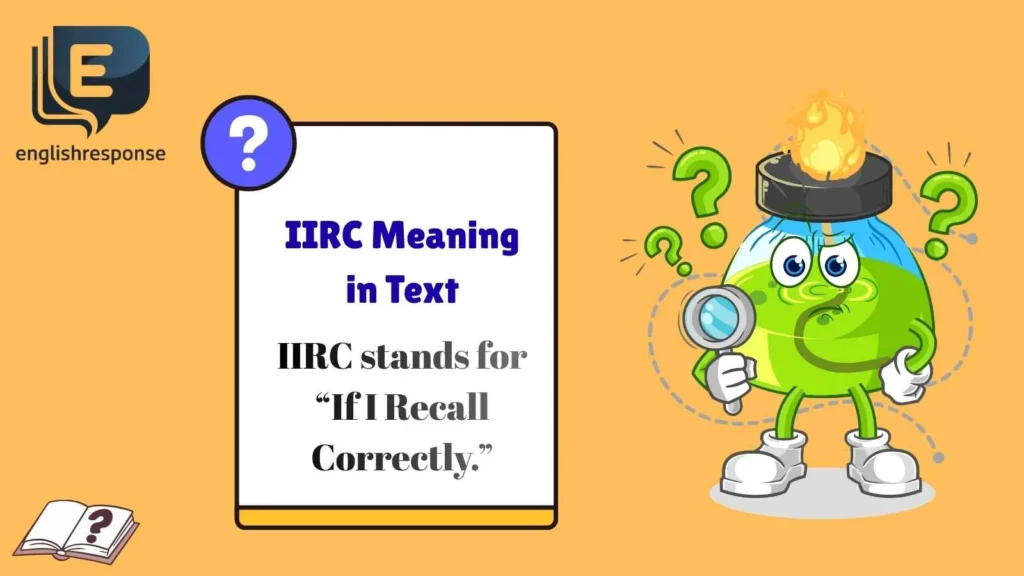
In simple terms, IIRC meaning in text is “If I Recall Correctly.” It’s used when someone shares information but isn’t 100% certain about it. It’s casual, friendly, and surprisingly useful in everyday conversations.
What Does IIRC Meaning in Text?
IIRC stands for “If I Recall Correctly.”
People use it when they’re trying to remember something and want to show they might not be completely sure.
Think of it as a polite way of saying:
- “I think this is right…”
- “From what I remember…”
- “Correct me if I’m wrong…”
Simple Real-Life Examples:
- “IIRC, the meeting starts at 10 AM.”
- “IIRC, she moved to Canada last year.”
- “IIRC, that movie came out in 2018.”
Notice something? It softens the statement. Instead of sounding overly confident, it leaves room for correction.
That’s why it’s popular — it sounds humble and conversational.
Origin and Background of the Term
IIRC didn’t appear overnight.
It became popular in the early days of internet forums and email discussions during the late 1990s and early 2000s. Back then, platforms like Reddit-style forums, message boards, and chatrooms were text-heavy.
Typing full sentences took time, especially on slower keyboards and early mobile devices. So users shortened phrases.
“IIRC” became a convenient shortcut for long explanations. Instead of writing:
“If I remember correctly, I think that happened in 2005.”
Users simply typed:
“IIRC, that happened in 2005.”
It stuck. And like many internet abbreviations, it spread quickly through online communities.
Today, it’s still widely used — especially on Reddit, Twitter (X), forums, and casual texting.
How IIRC Is Used in Daily Life
You’ll mostly see IIRC in informal conversations. Here’s how people commonly use it:
- Correcting someone gently
“IIRC, that’s not how the rule works.” - Sharing uncertain information
“IIRC, the store closes at 9 PM.” - Recalling past events
“IIRC, we met at a conference in 2021.” - Participating in online debates
“IIRC, the policy changed last year.” - Memory-based storytelling
“IIRC, he said he was from Texas.”
It’s especially helpful when you don’t want to sound arrogant or overly certain.
Instead of saying, “You’re wrong,” IIRC adds a soft edge.
Emotional or Practical Meaning of IIRC
At first glance, IIRC seems like just another abbreviation.
But emotionally, it does something important.
It shows humility.
It says:
“I might not be completely right, and that’s okay.”
In online communication, tone can easily be misunderstood. Without facial expressions or voice tone, people can appear harsh without meaning to.
IIRC adds warmth. It makes conversations feel collaborative instead of confrontational.
Practically speaking, it also protects your credibility. If you’re wrong, you’ve already signaled uncertainty.
Smart move, right?
Similar or Related Terms
Here are some related abbreviations and how they differ:
- IMO (In My Opinion)
Used to share personal views, not memory-based statements. - IMHO (In My Humble Opinion)
Similar to IMO but adds modesty. - TBH (To Be Honest)
Used when someone wants to express honesty or bluntness. - AFAIK (As Far As I Know)
Means you’re sharing knowledge to the best of your understanding. - FYI (For Your Information)
Used to provide information, not uncertainty.
The key difference?
IIRC focuses specifically on memory recall, not opinion or knowledge limits.
Common Misunderstandings About IIRC
Let’s clear up some confusion.
1. It Doesn’t Mean “I’m Right”
IIRC actually suggests uncertainty, not confidence.
2. It’s Not Formal Language
You shouldn’t use it in professional documents or academic writing.
3. It’s Not Rude
Some people think abbreviations sound lazy. But in casual settings, it’s perfectly normal.
4. It’s Not Always Accurate
People use it when they think they remember something correctly. They can still be wrong.
5. It’s Not Just for Young People
Anyone active online might use it — age doesn’t matter.
Examples of IIRC in Sentences
Here are everyday examples you might see:
- “IIRC, the exam date was postponed.”
- “IIRC, this café used to be a bookstore.”
- “IIRC, you said you’d call me.”
- “IIRC, that phone model was discontinued.”
- “IIRC, he works in marketing.”
- “IIRC, we already discussed this last week.”
- “IIRC, the game update drops tomorrow.”
- “IIRC, tickets were around $50.”
Notice how natural it sounds in informal settings.
Why Understanding IIRC Meaning in Text Matters Today
Digital communication moves fast.
If you misunderstand common abbreviations, you might misinterpret tone or intent.
Knowing what IIRC means helps you:
- Avoid confusion in chats
- Communicate more clearly
- Sound digitally fluent
- Participate confidently in online discussions
In a world where most conversations happen on screens, understanding internet shorthand isn’t optional anymore — it’s practical.
It’s like learning modern slang. The more you know, the smoother your communication becomes.
And honestly? It just makes life easier.
FAQs:
What does IIRC meaning in text mean in simple words?
It means “If I Recall Correctly.” People use it when they think they remember something but aren’t completely sure.
Is IIRC positive or negative?
It’s neutral and polite. It shows uncertainty in a respectful way.
Where is IIRC commonly used?
Mostly in text messages, online forums, Reddit discussions, and social media platforms.
Is IIRC formal or informal?
It’s informal. Avoid using it in professional emails or academic writing.
Why do people search for IIRC meaning in text?
Because they see it in conversations and want to understand what it means and how to use it correctly.
Change with passage of time — language evolves, and new abbreviations keep appearing.
Conclusion:
Understanding IIRC meaning in text isn’t just about decoding an abbreviation.
It’s about communicating smarter.
It softens conversations. It keeps discussions friendly instead of argumentative.
In today’s digital world, small details like this make a big difference. When you understand internet language, you connect better, respond confidently, and avoid unnecessary misunderstandings.

Rana Sawalha is a passionate language enthusiast and author at EnglishResponse, dedicated to helping readers improve their English communication skills. With a focus on practical tips, engaging examples, and real-world conversation strategies, Rana Sawalha empowers learners to speak confidently and respond like a pro in any situation.