You’re scrolling through messages or social media, and suddenly you see someone reply with just “ion”. No punctuation. No explanation. Just that one short word. Confusing, right?
You’re not alone. Many people pause and wonder: Is this a typo? A slang word? Something deeper? Understanding the ion meaning in text actually opens a small window into how language evolves online and how people express themselves quickly and casually.
In today’s fast-paced digital conversations, words are shortened, sounds replace spelling, and meanings shift with culture. Ion is a perfect example of that transformation. It’s simple, informal, and often emotional — yet incredibly common.
Knowing what “ion” means can help you avoid misunderstandings, reply confidently, and feel more connected in online chats.
Whether you saw it on WhatsApp, Instagram, TikTok, or Twitter, this guide breaks it down in a clear, friendly, and human way — no dictionary stiffness here.
What Does Ion Meaning in Text Mean?
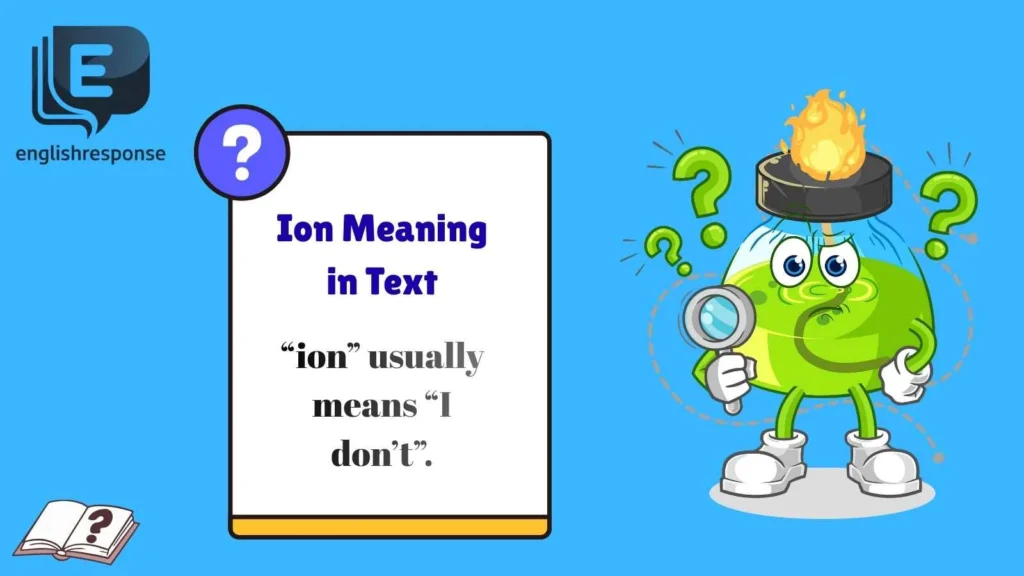
In texting and online slang, “ion” usually means “I don’t”.
It’s a phonetic spelling — meaning it sounds like “I don’t” when spoken quickly, especially in casual speech. Over time, people started typing it the same way it sounds.
Real-life examples:
- “Ion care what they think.”
- “Ion know if I’m going today.”
- “Ion wanna argue.”
In each case, ion = I don’t.
It’s not formal English, and it’s definitely not chemistry-related here. It’s just modern, relaxed communication shaped by speed, culture, and convenience.
Origin and Background of the Term
The story behind “ion” isn’t academic — it’s cultural.
This slang form became popular through spoken English, especially in African American Vernacular English (AAVE), where “I don’t” is often pronounced quickly as “ion.” Social media, music, and texting helped carry it into mainstream internet language.
Think of it like this: language online doesn’t wait for spelling rules. It follows sound and rhythm.
Hip-hop lyrics, viral tweets, and casual texting all played a role in spreading “ion.” Once people saw others using it and understood the meaning, it stuck. Over time, it became a shared shorthand — fast, expressive, and familiar.
Language has always evolved. “Ion” is just the digital generation’s version of that evolution.
How Ion Is Used in Daily Life
You’ll mostly see “ion” in informal digital conversations. It’s not something you’d use in emails or professional writing, but it thrives in casual spaces.
Here’s how people commonly use it:
- In text messages with friends
- In social media captions or comments
- In online arguments or emotional replies
- In jokes or sarcastic responses
- In short, fast conversations
It’s often used to sound relaxed, real, or emotionally direct.
For example:
“Ion got time for drama today.”
That sentence feels more casual — even more personal — than “I don’t have time for drama today.”
Emotional or Practical Meaning of Ion
Beyond its literal meaning, ion carries tone.
When someone uses “ion,” they’re usually being:
- Casual
- Honest
- Emotional
- Unfiltered
It often appears in moments of frustration, confidence, or indifference.
Compare these:
- “I don’t care.”
- “Ion care.”
The second feels more raw and expressive. It sounds like how someone would say it out loud when emotions are involved.
That’s why people love using it — it feels human, not polished.
Similar or Related Terms
Here are some common terms similar to “ion,” with clear differences:
- IDK – Short for “I don’t know”; more neutral
- Don’t – Proper English; formal compared to ion
- Ionno – Slang for “I don’t know”
- I ain’t – Informal, often used with emphasis
- Dunno – Casual spoken English
Each one carries its own tone and personality, but “ion” is especially conversational and modern.
Common Misunderstandings About Ion
Let’s clear up some confusion — because “ion” is often misunderstood.
- It’s not a typo
People think it’s a mistake. It’s intentional slang. - It’s not related to science
In chemistry, an ion is charged — but that’s unrelated here. - It’s not rude by default
Tone depends on context, not the word itself. - It’s not formal English
Using it in professional settings can look unpolished. - It’s not universal
Some age groups or regions may not recognize it.
Understanding these points helps you read messages more accurately and respond appropriately.
Examples of Ion in Sentences
Here are natural, everyday examples you might actually see or use:
- “Ion think that’s a good idea.”
- “Ion got energy for that today.”
- “Ion care who started it.”
- “Ion know why they’re mad.”
- “Ion wanna stay out late.”
- “Ion see the problem.”
- “Ion feel like explaining.”
- “Ion said what I said.”
Each sentence feels casual, expressive, and real — exactly why people love this slang.
Why Understanding Ion Meaning in Text Matters Today
Language online moves fast. If you don’t keep up, it’s easy to feel left out or misinterpret messages.
Understanding ion meaning in text helps you:
- Communicate better online
- Avoid confusion or awkward replies
- Understand tone and emotion
- Stay culturally aware
- Feel confident in modern conversations
For students, professionals, parents, and anyone active online, knowing slang like “ion” isn’t about sounding cool — it’s about understanding people.
Language connects us. When you understand it, you connect more deeply.
FAQs:
What does ion mean in simple words?
“Ion” simply means “I don’t” in casual texting and online slang.
Is ion positive or negative?
It can be either. The tone depends on context — it can sound confident, indifferent, or frustrated.
Where is ion commonly used?
Mostly in text messages, social media, and informal online chats.
Is ion formal or informal?
It’s informal and shouldn’t be used in professional writing.
Why do people search for ion meaning in text?
Because it looks confusing at first and doesn’t follow traditional spelling rules.
Change with passage of time — slang evolves, and people want to keep up.
Conclusion:
Language isn’t static — it grows with us. The ion meaning in text shows how people adapt words to match real speech, emotion, and speed. It’s short, expressive, and deeply human.
Once you understand it, you’ll stop second-guessing messages and start reading them with clarity and confidence. That small moment of understanding can make conversations smoother and connections stronger.

Rana Sawalha is a passionate language enthusiast and author at EnglishResponse, dedicated to helping readers improve their English communication skills. With a focus on practical tips, engaging examples, and real-world conversation strategies, Rana Sawalha empowers learners to speak confidently and respond like a pro in any situation.