You’re texting a friend. The conversation’s flowing. Then suddenly, they reply with just two letters: “JP.”
Wait… what? Is that a name? A code? A joke you missed?
If you’ve ever paused mid-chat wondering what JP meaning in text actually is, you’re not alone. Text slang evolves fast. One week it’s “FR,” the next it’s “JP,” and if you blink, you’re already behind.
Understanding modern abbreviations isn’t just about staying trendy. It helps you avoid awkward misunderstandings and respond confidently. In today’s digital world, even two tiny letters can carry tone, humor, or sarcasm.
What Does JP Meaning in Text?
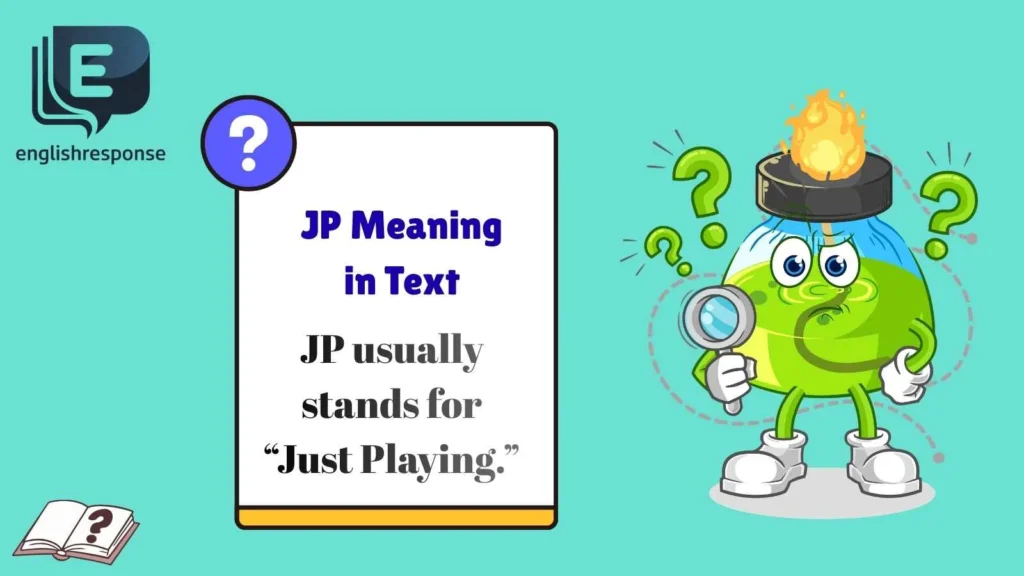
In texting, JP usually stands for “Just Playing.”
It’s commonly used after someone makes a joke, sarcastic comment, or playful tease. Think of it as a quick way to say, “Relax, I’m kidding.”
Simple Example:
- “Wow, you’re the slowest texter ever. JP 😂”
- “You owe me $100 for that coffee. JP!”
See how it works? The message might sound serious at first, but “JP” softens it instantly.
It’s like adding a friendly wink at the end of a sentence.
However, context matters. In rare cases, “JP” can also refer to initials (like a person’s name) or a location (like Japan). But in casual chats, it almost always means “Just Playing.”
Origin and Background of the Term
The rise of “JP” is tied to the growth of texting culture in the early 2000s.
Back when SMS messages had character limits, people shortened everything. “Laughing Out Loud” became LOL. “Be Right Back” became BRB. Naturally, “Just Playing” turned into JP.
Teenagers and young adults popularized it through instant messaging apps like AOL Messenger and later on platforms like WhatsApp and Snapchat.
It wasn’t born in a dictionary. It was born in real conversations.
Over time, social media accelerated its usage. Now, it’s part of the informal digital language many people use daily — especially among younger audiences.
How JP Is Used in Daily Life
Let’s make this practical.
Here’s how people use JP in everyday conversations:
- After teasing a friend
- “You’re always late. JP!”
- After fake bragging
- “I’m obviously the smartest person here. JP 😂”
- When correcting a dramatic statement
- “I’m never talking to you again. JP, don’t panic.”
- In playful arguments
- “You cheated in that game. JP… or did you?”
- In flirty chats
- “You miss me already, huh? JP 😉”
Notice the pattern? It usually follows a statement that could be misunderstood.
That’s the whole point — it prevents tension.
Emotional or Practical Meaning of JP
On the surface, “JP” just means “Just Playing.”
But emotionally? It does more.
It signals:
- Humor
- Playfulness
- Light sarcasm
- Emotional reassurance
In digital communication, tone can get lost. Without facial expressions or voice, messages can feel harsher than intended.
Adding “JP” helps soften the mood.
It says, “I’m joking. We’re good.”
In a world where texts can easily be misinterpreted, that little abbreviation builds clarity and connection.
Similar or Related Terms
Here are other slang terms that function similarly:
- JK (Just Kidding) – Almost identical to JP. More widely used.
- LOL (Laugh Out Loud) – Shows humor but doesn’t always clarify teasing.
- LMFAO – Stronger laughter expression.
- /s – Used online to indicate sarcasm.
- Kidding – The full word version, slightly more formal.
Difference:
“JP” feels more casual and playful, while “JK” is more common and universally recognized.
Common Misunderstandings About JP
Even simple slang can cause confusion. Let’s clear things up.
1. JP always means Japan
Not in texting context. It usually means “Just Playing.”
2. It’s rude or disrespectful
No. It actually softens messages.
3. It’s professional
Definitely not. It’s informal slang.
4. Older people don’t use it
While younger users popularized it, anyone can use it casually.
5. It replaces apologies
Not exactly. If you genuinely offend someone, “JP” won’t fix it.
6. It works in serious conversations
Avoid it in emotional or serious discussions. It may seem insensitive.
Examples of JP in Sentences
Here are natural, everyday examples:
- “You forgot my birthday again? JP, I know you didn’t.”
- “I’m blocking you forever. JP 😂”
- “That outfit is terrible… JP, it looks great!”
- “You owe me lunch for life. JP!”
- “I can’t believe you did that. JP, relax.”
- “Guess what? I won the lottery! JP.”
- “You’re my favorite person… JP. Or am I?”
- “I’m moving to Antarctica tomorrow. JP!”
These examples show how tone shifts instantly when “JP” is added.
Why Understanding JP Matters Today
Digital communication dominates modern life.
From texting to Instagram DMs, short-form language is everywhere.
If you misunderstand slang like “JP,” you might:
- Misread tone
- Overreact
- Miss humor
- Feel confused
Understanding abbreviations helps you communicate confidently. It also helps you connect better with younger generations, online communities, and social media culture.
Language evolves constantly. Staying updated isn’t about being trendy — it’s about being socially aware.
And honestly? It just makes texting easier.
FAQs:
What does jp meaning in text mean in simple words?
It simply means “Just Playing.” It shows that someone is joking or teasing.
Is jp positive or negative?
It’s generally positive. It’s used to lighten the mood and avoid misunderstandings.
Where is jp commonly used?
Mostly in texting, social media chats, DMs, and casual online conversations.
Is jp formal or informal?
It’s completely informal. Don’t use it in emails, professional settings, or academic writing.
Why do people search for jp meaning in text?
Because slang changes over time. New abbreviations appear, and people want to understand them to avoid confusion.
Change with passage of time is natural — and digital language evolves quickly.
Conclusion:
So, what’s the final takeaway about jp meaning in text?
It’s simple. It means “Just Playing.” It prevents awkward misunderstandings. And it keeps conversations light and friendly.
In today’s fast-moving digital world, even two letters can carry emotion, tone, and reassurance.
Understanding small slang terms like “JP” helps you communicate better, connect deeper, and avoid unnecessary confusion.
Language evolves — and growing with it keeps you relevant and confident.

Rana Sawalha is a passionate language enthusiast and author at EnglishResponse, dedicated to helping readers improve their English communication skills. With a focus on practical tips, engaging examples, and real-world conversation strategies, Rana Sawalha empowers learners to speak confidently and respond like a pro in any situation.