You’re scrolling through messages, everything feels normal, and then suddenly someone ends a sentence with “js.” No punctuation. No explanation. Just js.
And now you’re stuck wondering: Is that sarcasm? Attitude? Or something casual?
Welcome to the confusing but fascinating world of modern texting slang.
The js meaning in text isn’t complicated, but it is subtle — and that’s what makes it important. One tiny abbreviation can completely change the tone of a message. It can soften a comment, make it playful, or even passive-aggressive depending on context.
In today’s fast-paced digital conversations, people want to say more with fewer words. That’s where abbreviations like js come in.
Understanding it helps you avoid misunderstandings, read emotions better, and reply with confidence instead of confusion.
In this guide, we’ll break it all down in simple, human language — with real examples, everyday scenarios, and cultural insight. By the end, you won’t just know what js means… you’ll feel when and how to use it naturally.
What Does JS Mean in Text?
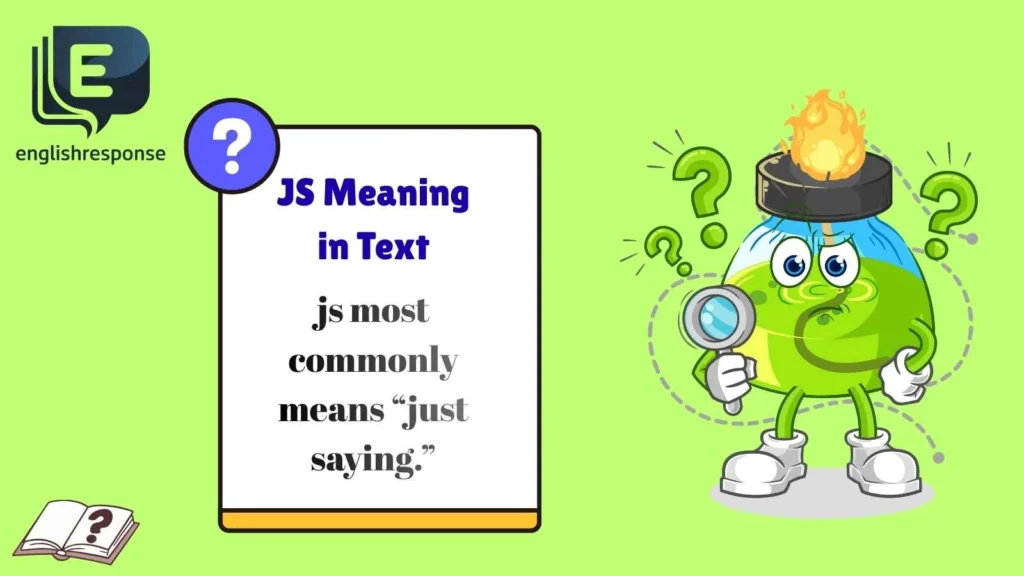
In texting and online conversations, js most commonly means “just saying.”
It’s used to soften a statement, share an opinion casually, or add a non-confrontational tone. Think of it as someone shrugging while they talk.
Instead of sounding serious or demanding, js makes a message feel relaxed and low-pressure.
Real-life examples:
- “That movie was kinda long, js.”
- “You could try calling her again, js.”
- “I think you deserve better, js.”
In all these cases, the speaker isn’t forcing their opinion. They’re simply putting it out there — just saying.
It’s casual, informal, and very common in texting, DMs, and social media comments.
Origin and Background of the Term
The rise of js is directly connected to how digital communication evolved.
Back in the early days of texting, people were limited by character counts, keypad typing, and slow input methods. Shortcuts weren’t just trendy — they were necessary.
“Just saying” was a phrase people already used in spoken English to:
- Reduce tension
- Add humor
- Avoid sounding bossy
Over time, it naturally shortened to js, especially among younger users on platforms like:
- SMS texting
- MSN Messenger
- Facebook chat
- Twitter (now X)
As internet culture grew, js became a subtle social tool — a way to express opinions without starting arguments. It reflects how modern communication values tone as much as words.
How JS Is Used in Daily Life
You’ll see js everywhere once you know what to look for. Here’s how people actually use it day to day.
- Giving advice without pressure
“You might want to rest today, js.” - Sharing an honest opinion
“That outfit looks uncomfortable, js.” - Softening criticism
“You’ve been quiet lately, js.” - Ending a thought casually
“I’d choose the other option, js.” - Adding humor or sarcasm
“That meeting could’ve been an email, js.” - Avoiding confrontation
“Not trying to argue, js.”
In each case, js acts like emotional cushioning. It says, “Don’t take this too seriously.”
Emotional or Practical Meaning of JS
Emotionally, js is about distance and safety.
People use it when they:
- Don’t want to sound rude
- Want to share truth gently
- Aren’t looking for debate
- Feel unsure about how their message will land
In a way, js protects both the speaker and the listener. It lowers emotional stakes.
Culturally, it reflects a generation that values soft honesty — saying what you think without being harsh. In online spaces where tone is easily misread, js helps messages feel more human.
Similar or Related Terms
Here are some common alternatives and related expressions, with clear differences:
- FYI – Informational, not emotional
- IMO – Emphasizes personal opinion
- TBH – Signals honesty, often stronger
- Just saying – Full phrase, more expressive
- No offense – Defensive, sometimes risky
- Lowkey – Downplays intensity
While these overlap, js is usually the softest and least confrontational.
Common Misunderstandings About JS
Let’s clear up some confusion people often have.
- It’s not always sarcastic
Tone depends on context, not the abbreviation. - It’s not rude by default
It’s usually meant to soften, not attack. - It’s not formal English
Avoid it in professional emails or documents. - It doesn’t mean JavaScript here
In tech, JS = JavaScript. In texting, context matters. - It’s not passive-aggressive every time
Some people genuinely use it casually. - It doesn’t end conversations
It can invite discussion — gently.
Examples of JS in Sentences
Here are natural, everyday examples you might actually see or use:
- “You seem stressed lately, js.”
- “That café is overrated, js.”
- “You could text first too, js.”
- “I think you nailed that presentation, js.”
- “That joke might’ve gone too far, js.”
- “I’d double-check the time, js.”
- “You deserve credit for that, js.”
- “Not trying to be harsh, js.”
Notice how js changes the emotional tone every time.
Why Understanding JS Matters Today
Language evolves fast, especially online. Slang like js isn’t just trendy — it’s functional.
Understanding it helps you:
- Read messages accurately
- Avoid emotional misunderstandings
- Communicate more naturally
- Stay culturally fluent
- Sound less robotic and more human
In a world where most relationships now involve texting — friendships, dating, work chats — small phrases carry big emotional weight. Knowing what js means gives you an edge in digital communication.
It’s not about slang. It’s about connection.
FAQs:
What does js meaning in text in simple words?
It means “just saying” — a casual way to share a thought without pressure.
Is js positive or negative?
It can be either, depending on tone and context. Usually neutral or soft.
Where is js commonly used?
Text messages, DMs, social media comments, and casual online chats.
Is js formal or informal?
It’s informal. Don’t use it in professional writing.
Why do people search for js meaning in text?
Because it’s short, subtle, and easy to misunderstand without context — and language keeps changing with time.
Conclusion:
The js meaning in text may look small, but it carries emotional nuance, cultural context, and human intention. It’s a reminder that communication isn’t just about words — it’s about how we say them.
Once you understand js, you stop guessing and start responding with confidence. You read between the lines. You connect better.
Language evolves because people evolve — and staying curious keeps you in sync with the world around you.

Rana Sawalha is a passionate language enthusiast and author at EnglishResponse, dedicated to helping readers improve their English communication skills. With a focus on practical tips, engaging examples, and real-world conversation strategies, Rana Sawalha empowers learners to speak confidently and respond like a pro in any situation.