You’re scrolling through your messages, half-asleep or half-busy, and suddenly you see someone reply with just “RS”. No context. No explanation. Just two letters staring back at you. 🤨
Now you’re wondering: Is this slang? Is it rude? Is it serious? Or did I miss something important?
You’re not alone. Short text abbreviations like RS pop up everywhere — chats, comments, DMs, even group conversations. And while they seem simple, their meaning can change based on context, tone, and who’s using them.
Understanding the rs meaning in text isn’t just about decoding slang. It’s about reading people better, avoiding misunderstandings, and staying fluent in modern digital communication.
In today’s fast-paced world, where messages are short and emotions are implied, knowing what RS really means can save you from confusion — or even embarrassment.
What Does RS Meaning in Text?
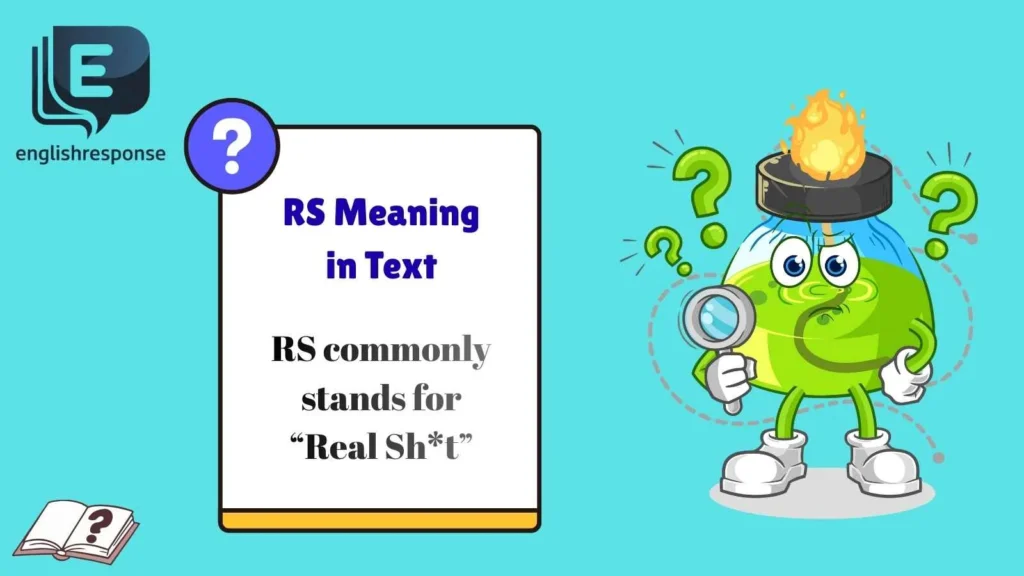
In most texting and online conversations, RS commonly stands for “Real Sh*t” or “Real Stuff”, depending on how casual or clean the conversation is.
When someone uses RS, they’re usually agreeing strongly or emphasizing that something is honest, true, or deeply relatable.
It’s less about adding new information and more about saying:
“I genuinely agree.”
“That’s facts.”
“You’re speaking the truth.”
Real-life examples:
- “Life’s been hard lately, not gonna lie.”
“RS.” - “That movie hit way too close to home.”
“RS, I felt that.” - “Working nonstop is exhausting.”
“RS, no breaks at all.”
In short, RS = strong agreement with emotion behind it.
Origin and Background of the Term
The use of RS comes from spoken language, especially in informal and urban conversations. People have always said phrases like “real talk” or “that’s real” to show honesty and emotional truth.
As texting became faster and more minimal, long phrases got shortened:
- “That’s real” → “Real sh*t”
- “I agree completely” → “RS”
Social media, especially platforms like Twitter, Instagram, and Reddit, helped popularize RS as a quick, punchy response. It fits perfectly into the culture of fast reactions, where people want to respond without typing full sentences.
Over time, RS evolved from slang into a widely understood expression — especially among younger users and online communities.
How RS Is Used in Daily Life
You’ll usually see RS used in casual, emotional, or relatable moments. Here’s how it shows up in everyday texting:
- Agreement without overexplaining
Someone says something true — you reply “RS” and move on. - Emotional validation
It tells the other person: “I feel that too.” - Supportive reaction
Especially when someone opens up or vents. - Comment sections
Used under relatable posts or opinions. - Group chats
A fast way to say “same here” without repeating others. - Late-night conversations
Where honesty hits harder and words are shorter.
It’s short, but it carries weight.
Emotional or Practical Meaning of RS
What makes RS powerful isn’t the letters — it’s the emotion behind them.
When someone replies with RS, they’re saying:
- “You’re not alone.”
- “That’s genuine.”
- “I relate to this deeply.”
In a digital world where tone is hard to read, RS acts like a nod, a quiet but meaningful acknowledgment.
Culturally, it reflects how people today communicate:
- Less words
- More feeling
- Quick validation
That’s why rs meaning in text matters — it’s about emotional literacy, not just slang.
Similar or Related Terms
Here are some common terms related to RS, and how they differ:
- Facts – Strong agreement, often logical
- Fr (For real) – Similar meaning, slightly lighter
- No cap – Emphasizes honesty
- True – Neutral agreement
- Same – Personal relatability
- I felt that – Emotional connection
Each has its own tone, but RS feels raw and sincere.
Common Misunderstandings About RS
Despite being simple, RS is often misunderstood. Let’s clear things up:
- It’s not rude by default
It may look blunt, but it’s usually supportive. - It doesn’t always mean profanity
Some people interpret it as “real stuff” instead of “real sh*t”. - It’s not sarcasm
Unless context clearly suggests otherwise. - It’s not formal language
Using it in professional emails would feel out of place. - It’s not dismissive
Most of the time, it means agreement, not disinterest.
Context always decides the meaning.
Examples of RS in Sentences
Here are natural, everyday examples you might actually see:
- “Being tired all the time is draining.” — RS
- “This year changed me.” — RS, for real.
- “Mental health matters more than money.” — RS
- “Adulting isn’t easy.” — **RS, nobody warned us.”
- “That song hits different at night.” — RS
- “I need a break from everything.” — **RS, you deserve it.”
Short. Real. Relatable.
Why Understanding RS Matters Today
Language is constantly evolving, especially online. Understanding terms like RS helps you:
- Communicate more naturally
- Avoid misreading tone
- Connect better with others
- Stay culturally aware
In modern conversations, what’s not said matters as much as what is. A simple “RS” can build connection, show empathy, or strengthen a conversation.
Knowing the rs meaning in text keeps you fluent in digital culture — and that’s a real skill today.
FAQs:
What does RS mean in simple words?
It means strong agreement or “that’s true,” often with emotional honesty.
Is RS positive or negative?
Mostly positive or supportive, depending on context.
Where is RS commonly used?
In text messages, social media, group chats, and comments.
Is RS formal or informal?
It’s informal and best used in casual conversations.
Why do people search for RS meaning in text?
Because short replies can be confusing, and people want to avoid misunderstandings as language changes over time.
Conclusion:
At the end of the day, RS is small but meaningful. It’s one of those modern expressions that proves you don’t need many words to say something real.
In just two letters, someone can show understanding, agreement, and emotional connection.
Language evolves because people evolve — and learning these little details helps you stay connected, confident, and in sync with the world around you.

Rana Sawalha is a passionate language enthusiast and author at EnglishResponse, dedicated to helping readers improve their English communication skills. With a focus on practical tips, engaging examples, and real-world conversation strategies, Rana Sawalha empowers learners to speak confidently and respond like a pro in any situation.