If you’ve ever been scrolling through Instagram, chatting on Snapchat, or reading text messages and suddenly saw “SFS”, you’re not alone in pausing for a second.
Social media language moves fast, and new abbreviations pop up almost daily. Missing just one can make you feel out of the loop.
So, what does SFS meaning in text actually refer to? In simple words, it’s a short expression people use online to support, promote, or engage with others. But here’s the thing — its meaning isn’t always the same. Context matters, platform matters, and even tone matters.
Understanding SFS isn’t just about slang. It’s about digital communication, online relationships, and how people build connections in today’s fast-paced world.
Whether you’re a casual social media user, a content creator, or just curious, knowing this term helps you communicate more confidently and avoid awkward misunderstandings.
What Does SFS Mean?
At its core, SFS most commonly means “Shoutout For Shoutout.”
In everyday terms, it’s a mutual promotion. One person promotes another person’s account, and in return, they get promoted back. Simple, right?
Here’s how it usually works in real life:
- Someone messages: “SFS?”
- You agree.
- You post their profile on your story or feed.
- They do the same for you.
However, depending on the context, SFS meaning in text can also stand for:
- Snap For Snap (mostly on Snapchat)
- Spam For Spam (less common, but still used)
That’s why context is key. The same three letters can mean different things depending on where and how they’re used.
Origin and Background of the Term
The term SFS didn’t come from a dictionary or a formal setting. It was born naturally on social media platforms, especially Instagram and Snapchat, around the early 2010s.
Back then, growing an account wasn’t as algorithm-driven as it is today. People relied heavily on community support. Shoutouts became a friendly way to help each other gain followers without spending money.
Imagine this scenario:
A teenager builds a small Instagram page about photography. Another user with a similar audience reaches out. They exchange shoutouts. Both gain new followers. No ads. No tools. Just human collaboration.
That’s how SFS became popular — through trust, reciprocity, and social interaction. Over time, the abbreviation stuck and became part of everyday digital language.
How SFS Is Used in Daily Life
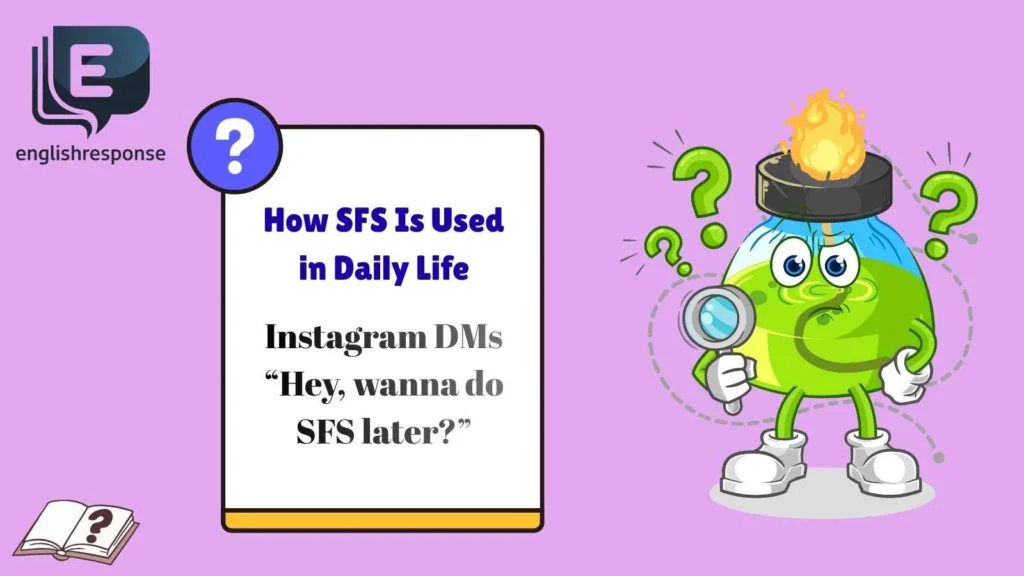
You’ll see SFS used casually, often without much explanation. Here are some common real-world uses:
- Instagram DMs
“Hey, wanna do SFS later?” - Snapchat messages
“SFS streaks today?” - Story captions
“Reply SFS 💬” - Comment sections
“Anyone down for SFS?” - Group chats
“Let’s do SFS to help each other grow.” - Small business accounts
Creators offering SFS to promote products or pages.
Notice how informal and friendly it is. It’s rarely used in serious or professional conversations.
Emotional or Practical Meaning of SFS
Beyond the letters, SFS represents connection.
Emotionally, it signals:
- Support
- Mutual respect
- Willingness to help
Practically, it’s about:
- Visibility
- Growth
- Engagement
For many users, especially beginners, SFS feels like a confidence boost. Someone noticed your account. Someone wants to collaborate. In a digital world where numbers often feel overwhelming, SFS brings a sense of belonging.
It’s not just marketing — it’s social bonding in a modern format.
Similar or Related Terms
Here are some related terms you might see online:
- LFL (Like For Like)
Users exchange likes on posts. - F4F (Follow For Follow)
Mutual following agreement. - SB (Snap Back)
Used on Snapchat when replying to snaps. - DM Me
Invitation for private conversation. - Collab
A more formal version of mutual promotion.
Each term has a slightly different purpose, but all revolve around interaction and engagement.
Common Misunderstandings About SFS
Let’s clear up some confusion 👇
- SFS always means Shoutout For Shoutout
Not always. It can also mean Snap For Snap. - SFS guarantees followers
It helps, but results vary. - It’s spammy
Only if overused or forced. - Big accounts don’t do SFS
Some still do — selectively. - SFS is outdated
It’s less powerful than before, but still relevant. - It’s only for influencers
Anyone can use it, even casual users.
Understanding these points helps you use SFS wisely and authentically.
Examples of SFS in Sentences
Here are some natural, everyday examples:
- “She asked me for SFS on Instagram.”
- “I did SFS with a small business page.”
- “SFS really helped my account grow at first.”
- “He posted my profile after we agreed on SFS.”
- “I’m open to SFS if our content matches.”
- “They do SFS every weekend.”
- “SFS works better when the audience is similar.”
- “I don’t do random SFS anymore.”
These sentences reflect how real people actually use the term.
Why Understanding SFS Matters Today
Digital communication shapes how we connect, promote, and express ourselves. Knowing the SFS meaning in text helps you:
- Avoid confusion
- Communicate confidently
- Build online relationships
- Understand social media culture
- Use platforms more strategically
In today’s world, even small abbreviations carry social meaning. Learning them keeps you informed, relevant, and comfortable online — especially if you interact with younger audiences or digital communities.
Language evolves. Staying curious keeps you ahead.
FAQs:
What does SFS mean in simple words?
SFS usually means Shoutout For Shoutout, where two people promote each other on social media.
Is SFS positive or negative?
It’s generally positive, as it’s based on mutual support.
Where is SFS commonly used?
Mostly on Instagram, Snapchat, and texting apps.
Is SFS formal or informal?
It’s informal and used in casual online conversations.
Why do people search for SFS meaning in text?
Because it appears often in messages and stories, and context can be confusing.
With the passage of time, meanings evolve, so people want clarity.
Conclusion:
Language isn’t just words — it’s connection, emotion, and intent. Understanding the SFS meaning in text helps you navigate social media with confidence and clarity.
It reminds us that behind every abbreviation is a real person reaching out, hoping to connect.
Stay curious. Stay kind. And remember — even small interactions can lead to meaningful growth, both online and off. 🌱

Rana Sawalha is a passionate language enthusiast and author at EnglishResponse, dedicated to helping readers improve their English communication skills. With a focus on practical tips, engaging examples, and real-world conversation strategies, Rana Sawalha empowers learners to speak confidently and respond like a pro in any situation.