You’re scrolling through messages, maybe chatting with a friend or reading comments online, and suddenly you see “tm” dropped casually at the end of a sentence. No explanation. No context. Just tm. 🤔
Naturally, your brain pauses and thinks, Wait… what does tm mean in text?
You’re not alone. In today’s fast-paced digital world, text abbreviations pop up faster than trends on social media. Some are easy to guess, while others feel confusing or even misleading. The meaning of “tm” can change depending on where, how, and why it’s used.
Understanding the tm meaning in text isn’t just about decoding slang. It’s about staying connected, avoiding awkward misunderstandings, and feeling confident in online conversations.
Whether you’re texting friends, commenting on social media, or reading memes, knowing what “tm” really means can save you from confusion — and maybe even embarrassment.
In this guide, we’ll break it all down in simple, human language, with real-life examples, emotional context, and practical explanations.
What Does TM Mean in Text?
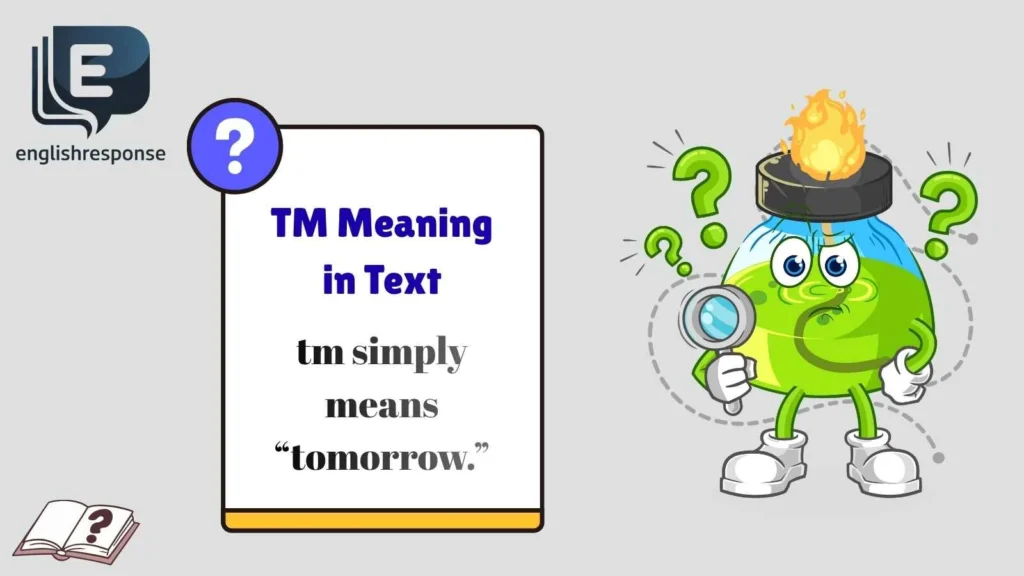
In most texting and online conversations, tm simply means “tomorrow.”
It’s a shorthand people use when they want to type quickly and keep things casual. Instead of writing the full word, they drop it to just two letters — tm.
Real-life examples:
- “I’ll send you the details tm.”
- “Let’s talk about it tm, I’m exhausted.”
- “Deadline’s tm, don’t forget.”
In these cases, tm carries no hidden meaning. It’s just a time reference, similar to “tdy” for today or “yday” for yesterday.
However, context matters. In rare situations, tm can also stand for:
- Trademark (mostly in business or branding contexts)
- Too much (very informal, less common)
But in everyday texting, tomorrow is by far the most common and widely understood meaning.
Origin and Background of the Term
The rise of tm is closely tied to how digital communication evolved.
Back in the early days of SMS texting, people were limited by:
- Character limits
- Keypad typing
- Slow message delivery
Every letter mattered. That’s when abbreviations like lol, brb, and tm became popular. Typing “tomorrow” on a numeric keypad felt like a chore, so shortening it made sense.
Over time, these shortcuts didn’t disappear — they became part of internet culture. Social media, messaging apps, and comment sections helped normalize them even further.
Interestingly, tm already existed in another world: branding. The trademark symbol (™) has been around for centuries in commerce. But texting gave tm a completely new personality — casual, fast, and conversational.
Language evolves with people, and tm is a perfect example of how convenience shapes communication.
How TM Is Used in Daily Life
You’ll see tm everywhere once you start noticing it. It’s especially common in casual, informal conversations.
Here are some everyday ways people use it:
- “Can we finish this tm?”
- “I’ll call you tm, promise.”
- “Exam’s tm, I’m stressed.”
- “Movie night tm?”
- “Let’s decide tm, okay?”
Short. Simple. No drama.
People use tm when:
- They’re in a hurry
- They’re chatting with friends
- They want a relaxed tone
You probably wouldn’t use it in a formal email or work proposal, but in texts and DMs, it feels completely natural.
Emotional or Practical Meaning of TM
Beyond its literal meaning, tm carries an emotional undertone.
When someone says “I’ll do it tm,” it can feel:
- Reassuring
- Hopeful
- Or… slightly risky 😅
Sometimes tm implies:
- “Not right now, but soon”
- “I need more time”
- “Let’s deal with this later”
Culturally, people often joke that tm never comes, especially when used to delay responsibilities. We’ve all been there.
Yet, at its core, tm represents optimism — the belief that there’s always another day to try again, fix things, or move forward.
Similar or Related Terms
Here are some commonly related abbreviations you might see alongside tm:
- tdy – Means today
- tmrw / tmrw – Another version of tomorrow
- l8r – Means later
- soon – Less specific, more flexible
- next day – Clear but longer
Each term varies slightly in tone and clarity, but tm remains one of the quickest and most casual options.
Common Misunderstandings About TM
Despite being simple, tm still causes confusion. Here are some common misconceptions:
- It always means trademark
→ Not in texting. Context decides the meaning. - It’s rude or lazy
→ It’s informal, not disrespectful. - Only teenagers use it
→ People of all ages use texting shortcuts. - It’s unprofessional everywhere
→ It’s fine in chats, not formal documents. - It means “too much” by default
→ Rare and context-specific.
Understanding the situation helps avoid misreading the message.
Examples of TM in Sentences
Here are some natural, everyday examples:
- “I’ll explain everything tm, okay?”
- “We’re meeting tm morning.”
- “Let’s finish this tm, my brain’s fried.”
- “Shopping tm?”
- “I’ll reply properly tm.”
- “Big day tm, wish me luck!”
- “Remind me tm, I’ll forget.”
- “Deal with it tm, not today.”
These examples show how smoothly tm fits into casual language.
Why Understanding TM Matters Today
Modern communication moves fast. Texts, comments, captions — everything is instant. Knowing abbreviations like tm helps you:
- Avoid confusion
- Respond appropriately
- Feel confident online
- Understand tone better
In a world where miscommunication happens easily, small things matter. A two-letter word can change how a message feels.
Understanding tm meaning in text isn’t about grammar rules — it’s about staying connected, informed, and comfortable in digital spaces.
Language keeps changing, and staying curious keeps you ahead.
FAQs:
What does tm mean in simple words?
It usually means tomorrow in casual texting and online chats.
Is tm positive or negative?
It’s neutral. The tone depends on context and intention.
Where is tm commonly used?
Mostly in text messages, social media, and casual online conversations.
Is tm formal or informal?
It’s informal and best used with friends or casual contacts.
Why do people search for tm meaning in text?
Because abbreviations evolve, and people want clarity as meanings change over time.
Conclusion:
Language doesn’t stand still — it grows with us. The tm meaning in text might look small, but it plays a big role in how we communicate daily.
Knowing what it means helps you read between the lines, reply with confidence, and stay in sync with modern conversations.
So next time someone says, “I’ll do it tm,” you’ll understand not just the word — but the feeling behind it.

Rana Sawalha is a passionate language enthusiast and author at EnglishResponse, dedicated to helping readers improve their English communication skills. With a focus on practical tips, engaging examples, and real-world conversation strategies, Rana Sawalha empowers learners to speak confidently and respond like a pro in any situation.