You’re texting someone, the conversation is flowing, and suddenly they end the chat with “TTYL.” No emojis. No explanation. Just four letters.
You pause. Did they get bored? Are they annoyed? Or is this just… normal texting behavior?
If you’ve ever felt confused by texting shortcuts, you’re not alone. Text slang evolves fast, and missing the meaning can completely change how a message feels. That’s exactly why understanding ttyl meaning in text matters today.
In simple terms, TTYL is a casual way to say goodbye, but there’s more emotion behind it than most people realize. It can sound friendly, distant, polite, or even affectionate—depending on context.
In a world where digital conversations replace face-to-face goodbyes, knowing how and when TTYL is used helps you read between the lines. And sometimes, those lines say more than the words themselves.
What Does TTYL Mean?
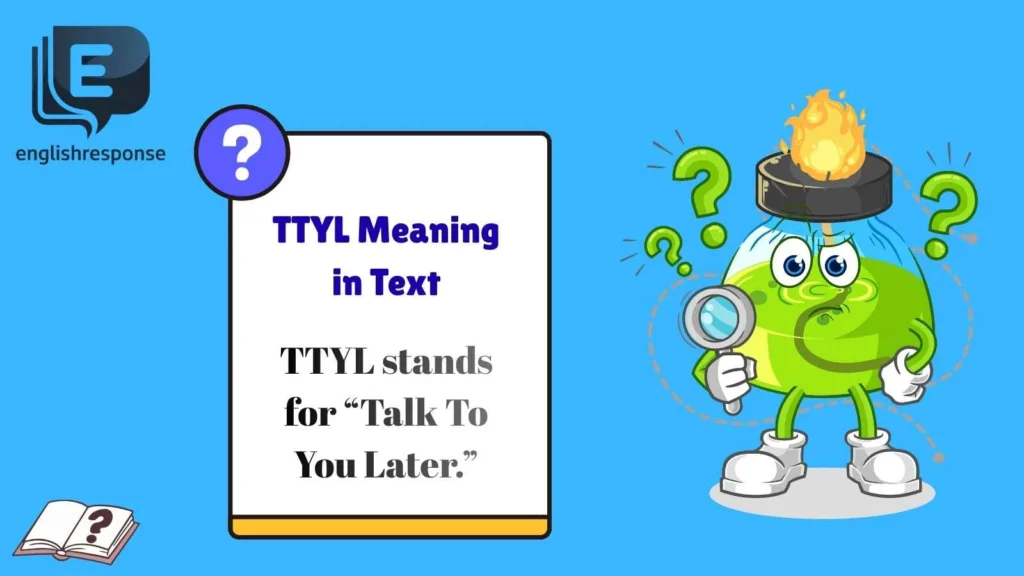
TTYL stands for “Talk To You Later.”
That’s it. Simple. Friendly. Casual.
When someone uses TTYL in a text, they’re saying:
“I’m done talking for now, but I’ll talk to you again.”
It’s not a permanent goodbye. It’s more like waving as you walk away.
Real-life examples:
- Your friend texts: “I’m heading into a meeting, ttyl.”
- Your sibling says: “Phone’s dying, ttyl!”
- Someone you’re chatting with ends the conversation using TTYL to keep things light.
The key thing to remember? TTYL usually implies future communication, not distance or disinterest.
Origin and Background of the Term
TTYL didn’t come from social media or TikTok. It’s actually older than most people think.
The phrase became popular in the early days of internet chatrooms and instant messaging, especially in the late 1990s and early 2000s. Back then, people typed fast to keep up with real-time conversations on platforms like AOL Instant Messenger and MSN.
Typing full sentences took effort, so shortcuts were born:
- BRB (Be Right Back)
- LOL (Laugh Out Loud)
- TTYL (Talk To You Later)
Over time, TTYL stuck because it felt polite but relaxed. It softened goodbyes without sounding final.
Even as technology evolved, TTYL stayed relevant—proof that some language shortcuts just work.
How TTYL Is Used in Daily Life
TTYL shows up in more situations than you might expect. It’s flexible, casual, and easy to use.
Here’s how people use it in real life:
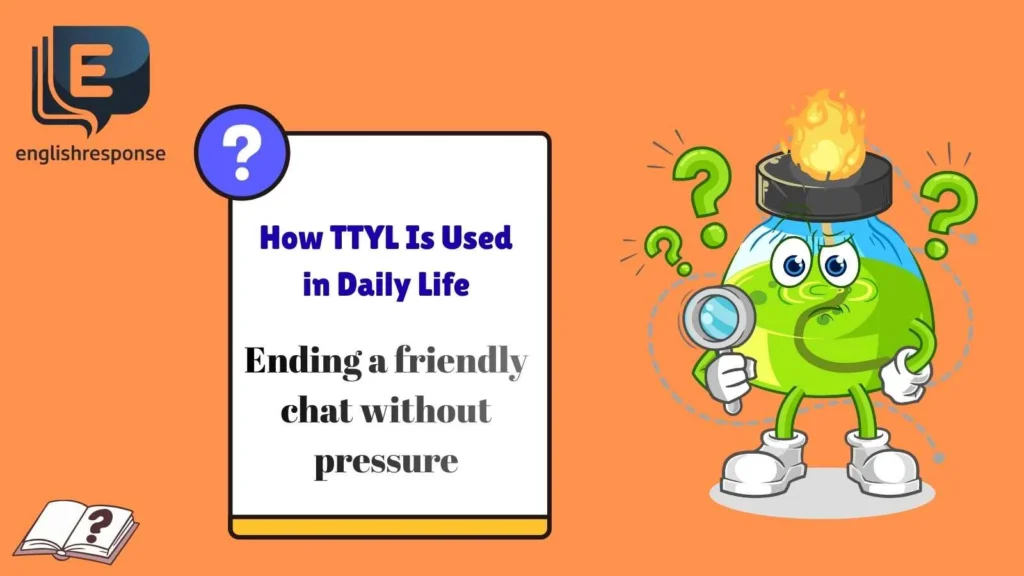
- Ending a friendly chat without pressure
- Stepping away temporarily
- Keeping the tone light and positive
- Avoiding awkward goodbyes
- Saying goodbye without sounding cold
Examples in action:
- “I need to cook dinner, ttyl.”
- “Class is starting, ttyl!”
- “Let me call you later, ttyl 😊”
Notice how TTYL feels softer than “bye”. It leaves the door open.
Emotional or Practical Meaning of TTYL
On the surface, TTYL is practical. Emotionally, though, it carries subtle meaning.
When someone says TTYL, they’re often signaling:
- Respect for your time
- Intent to reconnect
- Comfort and familiarity
In close relationships, TTYL can feel warm and reassuring. In casual conversations, it’s neutral and polite.
What it usually doesn’t mean:
- Anger
- Rejection
- Disinterest (unless paired with dry behavior)
Understanding this emotional layer helps prevent overthinking—something we all do in text conversations.
Similar or Related Terms
Here are common alternatives to TTYL and how they differ:
- BRB – Leaving briefly, coming back soon
- GTG – Need to leave immediately
- Talk soon – Slightly warmer, more intentional
- Catch you later – Casual and friendly
- See you later – More conversational, sometimes flirty
Each phrase changes the tone just a little. TTYL sits comfortably in the middle—friendly, neutral, and easy.
Common Misunderstandings About TTYL
Let’s clear up some myths.
- “TTYL means they don’t care.”
Not true. It usually means the opposite. - “It’s rude.”
TTYL is widely accepted and polite in casual texting. - “They won’t text again.”
Most people use it with genuine intent to talk later. - “It sounds lazy.”
It’s efficient, not lazy—especially in fast conversations. - “It’s outdated.”
Still used daily, especially in informal chats.
Context matters more than the letters themselves.
Examples of TTYL in Sentences
Here are natural, everyday examples:
- “I’m hopping on a call, ttyl.”
- “My battery’s almost dead, ttyl!”
- “Let me finish this task, ttyl.”
- “Heading out now, ttyl 😊”
- “I’ll reply later, ttyl.”
- “Busy afternoon ahead, ttyl!”
- “Need to drive, ttyl—be safe!”
- “I’ll message you tonight, ttyl.”
Each one feels relaxed, human, and friendly.
Why Understanding TTYL Matters Today
Digital communication has replaced many face-to-face interactions. That means tone lives in tiny details—like abbreviations.
Understanding ttyl meaning in text helps you:
- Avoid misreading intent
- Respond appropriately
- Communicate confidently
- Reduce unnecessary anxiety
In a world where texts can be misunderstood in seconds, clarity matters. Knowing what TTYL really means keeps conversations smooth and stress-free.
Sometimes, language knowledge isn’t about words—it’s about connection.
FAQs:
What does ttyl mean in simple words?
It means “Talk to you later.” The person is ending the conversation but plans to talk again.
Is ttyl positive or negative?
Generally positive or neutral. Tone depends on context, but it’s rarely negative.
Where is ttyl commonly used?
Mostly in text messages, chats, and social media, especially casual conversations.
Is ttyl formal or informal?
TTYL is informal and best used with friends, family, or casual contacts.
Why do people search for ttyl meaning in text?
Because tone can be confusing in texts, and people want to understand intent and emotion behind short messages—especially as language changes with time.
Conclusion:
TTYL may be just four letters, but it carries a lot of quiet meaning.
It’s friendly. It’s flexible. And most importantly, it’s human.
Understanding ttyl meaning in text helps you communicate with confidence instead of confusion. When you know what words really mean, you stop guessing—and start connecting.
So next time someone texts “TTYL,” don’t overthink it.
Sometimes, it’s just a gentle reminder that conversations pause—but connections don’t end.

Rana Sawalha is a passionate language enthusiast and author at EnglishResponse, dedicated to helping readers improve their English communication skills. With a focus on practical tips, engaging examples, and real-world conversation strategies, Rana Sawalha empowers learners to speak confidently and respond like a pro in any situation.