You’re scrolling through your messages, and suddenly someone drops a short, confusing text: “wtw?”
No emojis. No context. Just three letters staring back at you.
Your first thought? Is this slang? A typo? A secret code?
Don’t worry — you’re not alone. In today’s fast-moving digital world, text slang evolves faster than most of us can keep up with.
WTW is one of those modern abbreviations that pops up everywhere, especially in casual chats, social media DMs, and late-night conversations.
At its core, wtw meaning in text is simple, but how it’s used can change based on tone, timing, and relationship.
Understanding it helps you avoid awkward replies, miscommunication, or feeling out of the loop.
What Does WTW Mean?
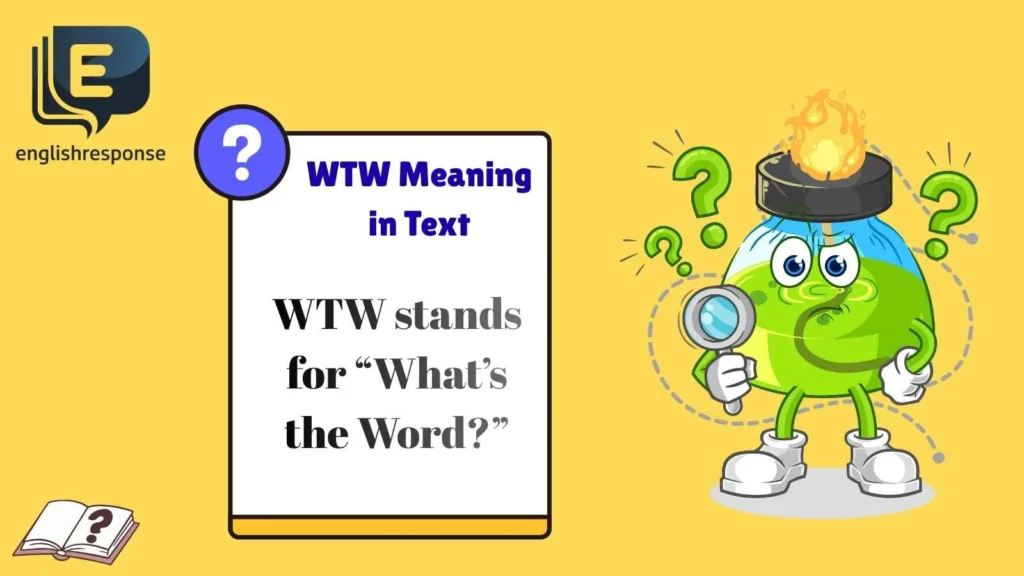
WTW stands for “What’s the Word?” or “What’s the Wave?”, depending on the context.
In simple terms, it means:
👉 What’s going on?
👉 What’s the plan?
👉 What are we doing?
It’s a casual way to check in or start a conversation without typing a full sentence.
Real-life examples:
- A friend texts “wtw tonight?” — they’re asking about plans.
- Someone messages “wtw?” — they’re seeing what’s happening.
- A group chat says “wtw for the weekend” — planning mode activated.
No dictionary stiffness here. WTW is about vibe, timing, and intent.
Origin and Background of the Term
WTW didn’t appear out of nowhere.
It traces back to African American Vernacular English (AAVE), where phrases like “what’s the word?” and “what’s the wave?” were used in spoken conversation long before texting existed.
As texting, Twitter, and Instagram grew, those spoken phrases got shortened. Efficiency became king. Three letters could now replace a full sentence.
Over time, WTW spread through music, pop culture, and social media, especially among younger users. Rappers, influencers, and online communities helped push it into mainstream digital language.
What started as a spoken phrase became a texting staple — quick, flexible, and loaded with context.
How WTW Is Used in Daily Life
WTW is versatile. That’s part of its charm.
Here’s how people actually use it day to day:
- Planning hangouts
“wtw after work?” - Casual check-ins
“haven’t heard from you, wtw?” - Starting a conversation
“wtw 👀” - Late-night curiosity
“wtw rn?” - Social media DMs
“saw your story, wtw?” - Group chats
“wtw for food?”
Short. Easy. No pressure. That’s the beauty of it.
Emotional or Practical Meaning of WTW
Beyond the literal meaning, WTW carries emotion.
Sometimes it’s excitement.
Sometimes it’s someone low-key saying, “I want to talk.”
In modern digital culture, short messages often hide bigger intentions. WTW can mean:
- “I miss you”
- “I’m bored”
- “Let’s do something”
- “I’m open to whatever”
It’s not just slang — it’s a social signal. Understanding that helps you respond with the right tone, whether playful, chill, or direct.
Similar or Related Terms
Here are some terms that feel similar but aren’t exactly the same:
- WYD – What are you doing right now
- WYA – Where are you at
- HMU – Hit me up
- Sup – Casual greeting
- What’s good – Friendly check-in
- Plans? – Direct but less slangy
Each one carries a slightly different vibe. WTW sits comfortably in the middle — casual, open-ended, and flexible.
Common Misunderstandings About WTW
Let’s clear up some confusion.
- It’s not rude
Short doesn’t mean disrespectful. - It’s not always about plans
Sometimes it’s just conversation. - It’s not formal
Don’t use it in emails or work chats. - It’s not aggressive
Tone depends on context, not letters. - It’s not universal
Some age groups or cultures may not use it. - It’s not flirting by default
But… it can be 😉
Examples of WTW in Sentences
Here are some natural, everyday examples:
- “wtw later? I’m free.”
- “Hey, wtw? You’ve been quiet.”
- “wtw for dinner tonight?”
- “I’m bored… wtw?”
- “Group chat: wtw this weekend?”
- “Saw your post, wtw 👀”
- “Long day. wtw?”
- “If you’re down, wtw after class?”
These sound exactly like how real people text — because that’s how they’re used.
Why Understanding WTW Matters Today
Language changes fast. Digital slang is modern literacy.
Understanding terms like wtw meaning in text helps you:
- Communicate clearly
- Avoid misunderstandings
- Stay socially aware
- Respond naturally
- Connect better online
Whether you’re chatting with friends, dating, or navigating social media, knowing slang keeps conversations smooth and authentic.
In a world where three letters can start an entire conversation, knowledge really is power.
FAQs:
What does wtw mean in simple words?
WTW means “What’s going on?” or “What’s the plan?” in casual texting.
Is wtw positive or negative?
It’s usually neutral or positive, depending on tone and context.
Where is wtw commonly used?
Mostly in text messages, DMs, Snapchat, Instagram, and group chats.
Is wtw formal or informal?
Very informal. It’s slang, not professional language.
Why do people search for wtw?
Because slang keeps evolving, and people want to understand messages without feeling confused or out of touch. Language changes with the passage of time.
Conclusion:
Language doesn’t stand still — and neither do we.
Understanding wtw meaning in text isn’t just about slang; it’s about staying connected in a fast-paced digital world.
When you know what people mean, conversations feel easier, smoother, and more human.
So next time someone texts “wtw?”, you won’t hesitate. You’ll smile, understand the vibe, and reply with confidence.
Because sometimes, three small letters are an invitation to connect — and that’s always worth understanding.

Rana Sawalha is a passionate language enthusiast and author at EnglishResponse, dedicated to helping readers improve their English communication skills. With a focus on practical tips, engaging examples, and real-world conversation strategies, Rana Sawalha empowers learners to speak confidently and respond like a pro in any situation.