You’re scrolling through your phone, half-asleep, when a message pops up:
“wya?”
No punctuation. No explanation. Just three letters staring back at you.
At first, it might feel confusing, or even a little rude. Are they checking on you? Rushing you? Or just casually saying hi? In today’s fast-paced digital world, small abbreviations like this carry big meaning, and understanding them can save you from awkward replies or misunderstandings.
The wya meaning in text goes far beyond its literal words. It’s about tone, timing, relationship, and context. A friend texting it feels different from a crush sending it at midnight. One tiny phrase can signal care, curiosity, urgency, or even flirtation.
In this guide, we’ll break down what “wya” really means, where it came from, and how people actually use it in real life. By the end, you’ll feel confident responding naturally — without overthinking it.
What Does WYA Meaning in Text?
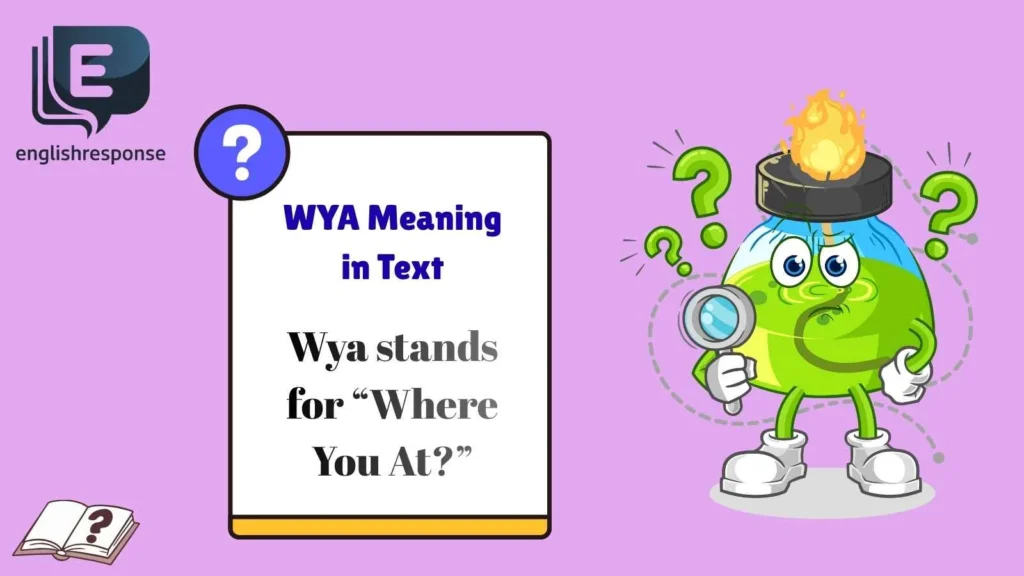
At its core, wya stands for “Where You At?”
But in texting culture, it’s rarely meant literally.
Most of the time, it’s a casual check-in rather than a demand for your exact location. People use it to ask what you’re doing, if you’re free, or simply to start a conversation.
Here’s how it plays out in real life:
- A friend texts “wya” before making weekend plans
- Someone asks “wya” to see if you’re nearby
- A crush sends “wya 👀” to hint they want to talk or meet
It’s short, informal, and context-driven. The meaning shifts depending on who’s asking and when.
Origin and Background of the Term
“Where you at?” has been part of spoken English for decades, especially in casual and regional speech. It became more visible through music, movies, and urban slang long before smartphones existed.
When texting and instant messaging took off, people naturally shortened phrases to save time and effort. “Where you at?” became “wya”, fitting perfectly into fast conversations.
Early adopters included:
- Teenagers and young adults
- Hip-hop and pop culture communities
- Online chat rooms and early SMS users
Over time, it spread everywhere — across cultures, age groups, and platforms. Today, “wya” feels almost universal, especially on WhatsApp, Snapchat, Instagram, and iMessage.
How WYA Is Used in Daily Life
You’ll see “wya” used in many everyday situations. Here are some common ones you’ve probably experienced:
- Planning meetups: “Wya? We’re about to leave.”
- Checking availability: “Hey, wya right now?”
- Casual conversation starter: “Wyaaa, long time!”
- Concern or care: “It’s late, wya? You okay?”
- Flirting: “Wya tonight 😏”
- Urgency: “Wya?? We need you.”
Short. Simple. Efficient. That’s why it stuck.
Emotional or Practical Meaning of WYA
This is where things get interesting.
The emotional weight of “wya” depends entirely on context. Sometimes it’s neutral. Other times, it’s loaded with feeling.
Emotionally, “wya” can mean:
- I miss you
- I want your attention
- I care about your safety
- I want to see you
Practically, it helps people coordinate quickly without long explanations. In a world where attention spans are short, wya gets straight to the point.
That’s why it’s so popular — it blends efficiency with emotion.
Similar or Related Terms
Here are some phrases that are often used instead of “wya,” with subtle differences:
- Where are you? – More direct, slightly more formal
- What are you doing? – Focuses on activity, not location
- You around? – Casual, relaxed tone
- Are you nearby? – Location-specific
- What’s up? – Broader, general greeting
Each has its place, but wya remains the quickest and most informal option.
Common Misunderstandings About WYA
Despite its popularity, “wya” is often misunderstood. Let’s clear things up.
- It’s not always demanding
Most people don’t expect an immediate reply. - It’s not rude by default
Tone comes from relationship and timing, not the word itself. - It’s not only about location
Often, it just means “What’s going on?” - It’s not always flirtatious
Friends use it all the time. - It’s not urgent unless repeated
“Wya???” usually signals urgency — one “wya” doesn’t.
Understanding these nuances makes communication smoother.
Examples of WYA in Sentences
Here are some natural, everyday examples:
- “Hey, wya? We’re grabbing food.”
- “Wya rn? Haven’t heard from you.”
- “Wya tonight 👀”
- “Wya? Class already started.”
- “Just landed. Wya?”
- “Wya these days? Miss talking to you.”
- “Wya? I need advice ASAP.”
- “Wya lol, you disappeared.”
Each one carries a slightly different vibe.
Why Understanding WYA Matters Today
Digital communication shapes how we connect. Small phrases like “wya” help conversations flow faster — but only if we understand them correctly.
Knowing the wya meaning in text helps you:
- Avoid awkward replies
- Read emotional cues better
- Communicate naturally online
- Stay culturally relevant
- Build stronger connections
In professional, social, and personal spaces, language awareness matters more than ever. Texting is modern conversation — and fluency builds confidence.
FAQs:
What does wya mean in simple words?
It means “Where are you?” or “What are you doing right now?” in a casual way.
Is wya positive or negative?
It’s usually neutral or positive. Tone depends on context and relationship.
Where is wya commonly used?
Mostly in text messages and social media, especially among younger users.
Is wya formal or informal?
Very informal. It’s not suitable for professional emails.
Why do people search for wya meaning in text?
Because context changes its meaning, and people want to respond correctly as language evolves with time.
Conclusion:
Language keeps changing, but connection stays at the heart of it all. The next time someone texts you “wya”, you’ll know it’s more than just three letters — it’s an invitation to respond, connect, or show up.
Understanding modern slang like this helps you feel confident, included, and in tune with today’s conversations. Don’t stress the small stuff — just reply naturally, be yourself, and keep the conversation flowing.

Rana Sawalha is a passionate language enthusiast and author at EnglishResponse, dedicated to helping readers improve their English communication skills. With a focus on practical tips, engaging examples, and real-world conversation strategies, Rana Sawalha empowers learners to speak confidently and respond like a pro in any situation.