You’re scrolling through your phone, a message pops up, and it simply says: “wyd?”
No emojis. No context. Just three letters.
Suddenly, your brain starts overthinking.
Are they just asking casually? Are they bored? Is this a subtle invitation to talk more?
Welcome to the modern texting world.
The wyd meaning in text goes far beyond its literal definition. It’s short, casual, and incredibly flexible — which is exactly why people use it so often.
From friendly check-ins to flirty openers, “wyd” can carry different emotional tones depending on who sends it and when.
Understanding these small texting phrases actually matters more than we think. They shape digital conversations, relationships, and even first impressions.
In today’s fast-paced online world, knowing how to read — and respond to — “wyd” can save you from awkward replies or missed connections.
What Does WYD Meaning in Text?
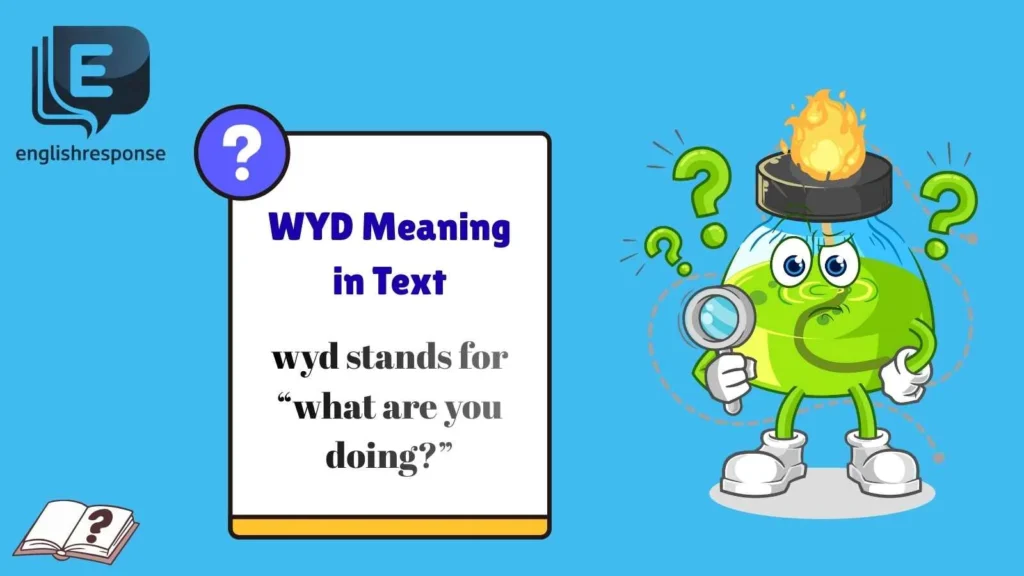
At its core, wyd stands for “what are you doing?”
That’s it. Simple, right?
But in texting, it rarely stays that simple.
Instead of asking for a detailed activity report, people use “wyd” as a conversation starter, a check-in, or even a soft invitation to talk.
Real-life examples:
- A friend texts “wyd” at night — they’re probably bored and want company.
- A crush texts “wyd 👀” — that’s not about chores, trust me.
- Someone texts “wyd rn?” — they’re checking if you’re free right now.
So while the literal meaning is clear, the intent behind it is what really counts.
Origin and Background of the Term
The phrase “what are you doing?” has existed forever. But “wyd” is a product of digital culture.
As texting became faster and more casual, people naturally shortened common phrases. First came “u” instead of “you.” Then “r” instead of “are.” Eventually, full questions became three-letter abbreviations.
“wyd” gained popularity in the early 2010s, especially with:
- SMS texting limits
- Social media DMs
- Platforms like Snapchat, Instagram, and Twitter
It fit perfectly into a culture where speed mattered more than grammar.
Over time, “wyd” evolved from a basic question into a social signal — a way to say, “Hey, I’m thinking about you. Talk to me.”
How WYD Is Used in Daily Life
You’ll see “wyd” everywhere once you notice it. Here’s how people actually use it 👇
- Casual check-in
“wyd?” = Just checking what you’re up to. - Conversation starter
When someone doesn’t know how else to begin. - Boredom signal
Translation: “I have nothing to do, entertain me.” - Flirty opener
Especially late at night or with emojis. - Availability check
“wyd rn?” = Are you free right now? - Reconnecting message
After days of silence, it’s a low-effort restart.
Short, simple, and effective — that’s why it sticks.
Emotional or Practical Meaning of WYD
This is where things get interesting.
Emotionally, “wyd” often means:
- I want attention
- I miss talking to you
- I’m curious about your life
- I want to keep this connection alive
Practically, it’s a low-pressure message. There’s no big question to answer. No emotional commitment required.
In modern digital culture, that matters. People want interaction without feeling overwhelmed. “wyd” offers that perfect balance — casual, open, and non-threatening.
It’s small, but socially powerful.
Similar or Related Terms
Here are some common alternatives you’ll see, with quick differences explained:
- Sup? – Even more casual, often less personal
- What’s up? – Slightly more engaging than “wyd”
- Hbu? – “How about you?” usually follows a reply
- You busy? – Direct and practical
- Whatcha doing? – More playful, less abbreviated
- Wya? – “Where you at?” focuses on location, not activity
Each has its own vibe, but wyd remains the most flexible.
Common Misunderstandings About WYD
Let’s clear up some confusion.
- It’s not always flirting
Context matters. Friends use it too. - It doesn’t require a long reply
A simple answer works. - It’s not rude by default
It’s casual, not careless. - It’s not demanding your time
You can reply later — no pressure. - It’s not meaningless
People usually send it for a reason. - It’s not formal communication
Never use it in professional emails.
Understanding these clears up a lot of awkward moments.
Examples of WYD in Sentences
Here’s how it looks in everyday conversations:
- “Hey, wyd? Haven’t talked all day.”
- “wyd tonight? Movie or sleep?”
- “wyd rn 👀”
- “Bored at home, wyd?”
- “wyd after work?”
- “wyd this late? 😂”
- “wyd tomorrow, wanna hang out?”
- “wyd lol, just checking in.”
Natural. Simple. Human.
Why Understanding WYD Meaning in Text Matters Today
Digital communication is the new normal. Texts often replace phone calls, and short messages carry big meaning.
Misreading something as small as “wyd” can lead to:
- Missed opportunities
- Awkward replies
- Emotional misunderstandings
On the flip side, understanding it helps you:
- Respond confidently
- Read social cues better
- Communicate more naturally online
In a world where connections are often built through screens, small words carry big weight.
FAQs:
What does wyd meaning in text in simple words?
It means “what are you doing?” — usually asked casually to start or continue a conversation.
Is wyd positive or negative?
Mostly neutral to positive. The tone depends on context and timing.
Where is wyd commonly used?
On texting apps, Instagram, Snapchat, WhatsApp, and other social platforms.
Is wyd formal or informal?
Very informal. Never use it in professional or academic settings.
Why do people search for wyd meaning in text?
Because tone isn’t always clear in short messages, and people want to avoid misreading intent as language evolves over time.
Conclusion:
At first glance, “wyd” might look like just another random abbreviation. But in reality, it’s a modern communication tool — simple, flexible, and emotionally loaded depending on context.
Understanding the wyd meaning in text helps you navigate conversations with more confidence and clarity.
It allows you to respond naturally, avoid overthinking, and connect better in a digital world that moves fast. Sometimes, three small letters are just an invitation — not to explain your day, but to be present.

Rana Sawalha is a passionate language enthusiast and author at EnglishResponse, dedicated to helping readers improve their English communication skills. With a focus on practical tips, engaging examples, and real-world conversation strategies, Rana Sawalha empowers learners to speak confidently and respond like a pro in any situation.