You’re texting someone, everything’s flowing smoothly, and suddenly they reply with “wym?”
You pause. You reread the message. And for a split second, you wonder, “Wait… what exactly do they mean?”
If that’s ever happened to you, you’re not alone. Text slang moves fast, and missing the meaning of a short phrase can completely change how a conversation feels. The wym meaning in text is one of those small abbreviations that carries way more weight than it seems.
At its core, “wym” looks simple. But depending on tone, context, and relationship, it can sound curious, confused, playful, or even slightly annoyed. That’s why understanding it matters — especially in modern digital conversations where tone isn’t always obvious.
In this guide, we’ll break down what “wym” really means, where it came from, how people use it today, and why it’s still so popular. By the end, you’ll never second-guess it again — and you’ll know exactly how to respond with confidence.
What Does WYM Mean?
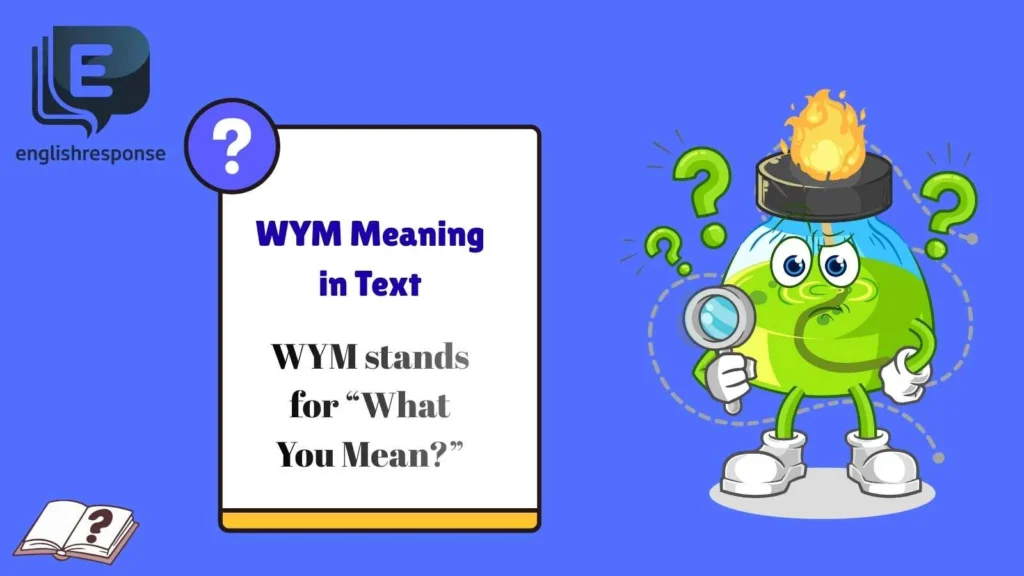
WYM stands for “What You Mean?”
In more polished English, it translates to “What do you mean?”
It’s a casual, shortened way of asking for clarification in text messages, chats, and social media conversations. People use it when something feels unclear, confusing, unexpected, or surprising.
Here’s how it shows up in real life:
- Someone says: “I’m not coming anymore.”
You reply: “wym?” - A friend texts: “That was wild.”
You ask: “wym wild?” - Your crush says something vague.
You respond: “wym 👀”
It’s quick, informal, and straight to the point — perfect for fast-paced digital talk.
Origin and Background of the Term
The rise of “wym” is closely tied to early texting culture and internet chat rooms. Back when character limits mattered and keyboards were small, people naturally shortened phrases to save time.
“What do you mean?” became:
- “what u mean”
- then “wut u mean”
- and eventually “wym”
Social media platforms like Twitter, Snapchat, Instagram, and WhatsApp helped push it into mainstream usage. The shorter the message, the faster the conversation — and abbreviations like “wym” fit perfectly into that rhythm.
Over time, it stopped feeling like slang and started feeling normal, especially among younger users and online communities. Today, it’s less about saving space and more about keeping the tone casual and human.
How WYM Is Used in Daily Life
People use “wym” in many different situations. Context is everything.
Here are some everyday examples:
- Clarification
“I don’t get it.” → “wym?” - Surprise
“I quit my job today.” → “wym 😳” - Playful curiosity
“You’re acting different.” → “wym?” - Light confrontation
“That wasn’t cool.” → “wym by that?” - Flirting
“You already know.” → “wym 😉”
Same three letters. Totally different vibes.
Emotional or Practical Meaning of WYM
Beyond the literal definition, “wym” often carries emotional subtext.
It can signal:
- Curiosity
- Confusion
- Doubt
- Interest
- Subtle defensiveness
In emotional conversations, “wym” can feel vulnerable — like someone genuinely trying to understand you. In other moments, it can feel sharp, especially if emotions are already tense.
That’s why tone, emojis, and timing matter so much. A simple “wym?” can either open communication or unintentionally escalate things.
Understanding this nuance helps you respond more thoughtfully — and avoid misunderstandings that start over something tiny.
Similar or Related Terms
Here are some commonly related expressions and how they differ:
- WDYM – “What do you mean?” (slightly clearer, still casual)
- Huh? – Very informal, can sound confused or dismissive
- Can you explain? – Polite, more formal
- What’s that supposed to mean? – Defensive or confrontational
- Elaborate – Calm, intelligent tone
Each has its own emotional weight, so choosing the right one matters.
Common Misunderstandings About WYM
Let’s clear up some confusion.
- It’s not rude by default
Tone decides that, not the word itself. - It’s not always aggressive
Many people use it playfully or innocently. - It doesn’t mean disbelief every time
Sometimes it’s genuine confusion. - It’s not grammatically “wrong” in texting
Informal doesn’t mean incorrect. - It’s not only for young people
Plenty of adults use it daily.
Examples of WYM in Sentences
Here are natural, everyday uses:
- “You said you’re done — wym?”
- “That was random, wym?”
- “Wait, wym by that?”
- “I’m confused… wym?”
- “You laughing for no reason, wym?”
- “That doesn’t make sense, wym exactly?”
- “Hold on — wym 👀?”
All feel natural. None feel robotic.
Why Understanding WYM Matters Today
Digital communication lacks facial expressions, voice tone, and body language. That’s why small words matter more than ever.
Understanding the wym meaning in text helps you:
- Avoid misreading emotions
- Respond appropriately
- Keep conversations smooth
- Communicate with confidence
In work chats, friendships, dating, and online communities, knowing how language feels is just as important as knowing what it means.
When you understand slang like this, you don’t just text better — you connect better.
FAQs:
What does wym mean in simple words?
It means “What do you mean?” — a casual way to ask for clarification.
Is wym positive or negative?
Neither by default. The tone depends on context, emojis, and the situation.
Where is wym commonly used?
Text messages, social media, online chats, and casual conversations.
Is wym formal or informal?
It’s informal and best used in relaxed, personal communication.
Why do people search for wym meaning in text?
Because slang evolves over time, and meanings can shift with usage and context.
Conclusion:
Language is always changing, and texting has its own rhythm. What looks like a simple abbreviation can carry emotion, intent, and personality.
Understanding the wym meaning in text isn’t just about knowing slang — it’s about communicating clearly in a fast digital world.
Once you know how it works, you stop overthinking and start responding with confidence. And that’s powerful, because clear communication builds better relationships — one message at a time.

Rana Sawalha is a passionate language enthusiast and author at EnglishResponse, dedicated to helping readers improve their English communication skills. With a focus on practical tips, engaging examples, and real-world conversation strategies, Rana Sawalha empowers learners to speak confidently and respond like a pro in any situation.