Have you ever sent a quick “thanks” in a chat and received a short reply like “yw”, then paused for a second wondering what it actually meant? You’re not alone. Texting language evolves fast, and short forms like this can feel confusing, especially when tone is hard to read on a screen.
The yw meaning in text is simple, but the way it’s used can carry different emotions depending on context. Sometimes it feels friendly. Other times, it can sound cold or rushed — even when it’s not meant that way.
In today’s digital world, small text abbreviations play a big role in communication. They save time, shape conversations, and reflect how casual (or formal) a relationship is.
Understanding what “yw” means — and how people interpret it — helps you avoid misunderstandings and communicate more confidently.
What Does YW Mean?
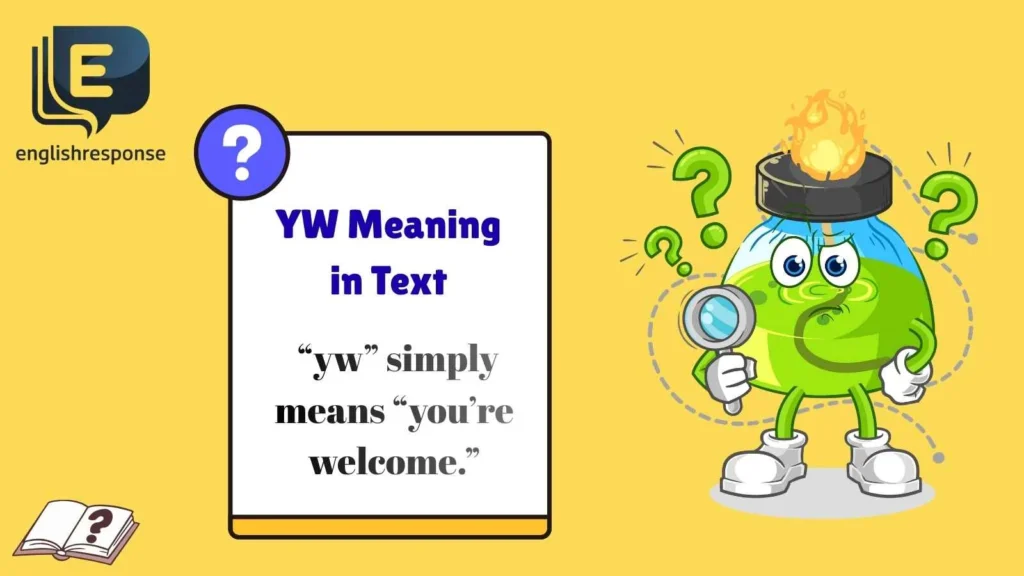
In texting and online chats, “yw” simply means “you’re welcome.”
That’s it — short, simple, and direct.
People usually type “yw” as a fast response after someone says “thanks” or “thank you.” It’s commonly used in casual conversations where speed matters more than formality.
Real-life examples:
- Friend: “Thanks for helping me with the assignment.”
You: “yw 😊” - Coworker: “Appreciate the quick reply!”
You: “yw” - Sibling: “Thanks for picking me up.”
You: “yw bro”
Even though it’s short, the meaning stays polite and neutral. The tone depends on context, emojis, and your relationship with the person.
Origin and Background of the Term
The term “yw” didn’t appear overnight. It grew naturally alongside the rise of SMS texting, early chat rooms, and instant messaging apps.
Back when phones had physical keypads, typing full words took effort. People shortened everything:
- “thanks” became “thx”
- “okay” became “k”
- “you’re welcome” became “yw”
Over time, this shorthand stuck. As platforms like WhatsApp, Facebook Messenger, and Instagram DMs became popular, “yw” turned into a digital habit rather than just a shortcut.
Linguistically, it reflects how language adapts to technology. Humans naturally compress frequently used phrases — especially polite responses — to save time while keeping meaning intact.
It’s not lazy language. It’s efficient communication.
How YW Is Used in Daily Life
You’ll see “yw” everywhere once you know what to look for. Here’s how people commonly use it:
- Casual chats with friends
Fast replies, relaxed tone, no need for formality. - Family conversations
Especially between siblings or cousins. - Online gaming or group chats
Quick acknowledgments without breaking flow. - Social media comments
Short responses to public thank-yous. - Work chats (informal teams)
Often used on Slack or WhatsApp among friendly coworkers. - Customer interactions (rarely)
Some brands use it casually, but it’s less common.
The key thing to remember: context controls perception.
Emotional or Practical Meaning of YW
On the surface, “yw” is polite. But emotionally, it can feel different depending on how it’s used.
Positive side:
- Friendly
- Efficient
- Casual and relaxed
- Signals familiarity
Potential downside:
- Can feel dry or dismissive if no emoji or warmth is added
- Might sound rushed in sensitive conversations
For example:
- “yw 😊” feels warm
- “yw.” (with a period) can feel cold to some people
This is why understanding texting culture matters. The same word can carry different emotional weight depending on how it’s delivered.
Similar or Related Terms
Here are some common alternatives to “yw” and how they differ:
- You’re welcome – Polite and neutral, slightly formal
- No problem – Friendly, modern, reassuring
- Anytime – Warm and helpful
- Sure – Casual but can feel brief
- Np – Very casual, often used among friends
- Glad to help – More professional and friendly
Each option fits a different mood. Choosing the right one shows social awareness, not overthinking.
Common Misunderstandings About YW
Despite its simplicity, “yw” is often misunderstood. Let’s clear things up.
- “YW is rude”
Not true. It’s neutral — tone comes from context. - “YW shows no effort”
It shows efficiency, not disrespect. - “YW is only for teenagers”
Adults use it daily, especially at work. - “YW means someone is annoyed”
Only if combined with cold behavior or context. - “YW shouldn’t be used professionally”
It’s fine in informal professional settings.
Misinterpretation usually comes from reading too much into short texts.
Examples of YW in Sentences
Here are some natural, everyday examples:
- “Thanks for sending the notes!” — “yw!”
- “Appreciate the help today.” — “yw 😊”
- “Thanks for the reminder.” — “yw, anytime.”
- “Thanks for explaining that.” — “yw, glad it helped.”
- “Thanks for waiting.” — “yw!”
- “Thanks for being honest.” — “yw, no worries.”
- “Thanks for the quick reply.” — “yw 👍”
- “Thanks for the recommendation.” — “yw!”
Notice how emojis and extra words add warmth and clarity.
Why Understanding YW Matters Today
Digital communication is now the default, not the exception. Misreading short messages can cause unnecessary tension, especially when tone is missing.
Knowing the yw meaning in text helps you:
- Avoid overthinking replies
- Respond appropriately
- Understand modern texting culture
- Communicate confidently
- Build smoother relationships online
In a world where most conversations happen on screens, clarity is power.
FAQs:
What does yw mean in simple words?
It means “you’re welcome”, usually said after someone thanks you.
Is yw positive or negative?
It’s neutral to positive. The tone depends on context and emojis.
Where is yw commonly used?
In texting, social media, online chats, and informal work messages.
Is yw formal or informal?
It’s informal and best used in casual conversations.
Why do people search for yw meaning in text?
Because short replies can feel confusing, and people want clarity — especially in emotional or important conversations.
Conclusion:
At its core, “yw” is just a modern way of saying you’re welcome. Simple, efficient, and widely accepted. But like many things in digital communication, its impact depends on context, tone, and intention.
Understanding small terms like this helps you communicate better, feel more confident online, and avoid unnecessary misunderstandings. Words matter — even the short ones.
So next time you see “yw” pop up on your screen, don’t overthink it. Sometimes, it’s just a friendly nod saying, “I got you.”

Rana Sawalha is a passionate language enthusiast and author at EnglishResponse, dedicated to helping readers improve their English communication skills. With a focus on practical tips, engaging examples, and real-world conversation strategies, Rana Sawalha empowers learners to speak confidently and respond like a pro in any situation.