Have you ever received a quick “YWA” in a text and paused for a second thinking, Wait… what does that mean? You’re not alone.
In today’s fast-moving digital world, texting shortcuts pop up everywhere. Some are obvious. Others, like YWA, can feel confusing at first. And honestly, understanding these little abbreviations can save you from awkward misunderstandings.
The ywa meaning in text is simple once you know it — but its tone and intention can vary depending on the situation. That’s why it matters. A tiny three-letter reply can carry sarcasm, kindness, humor, or even passive-aggressiveness.
What Does YWA Meaning in Text?
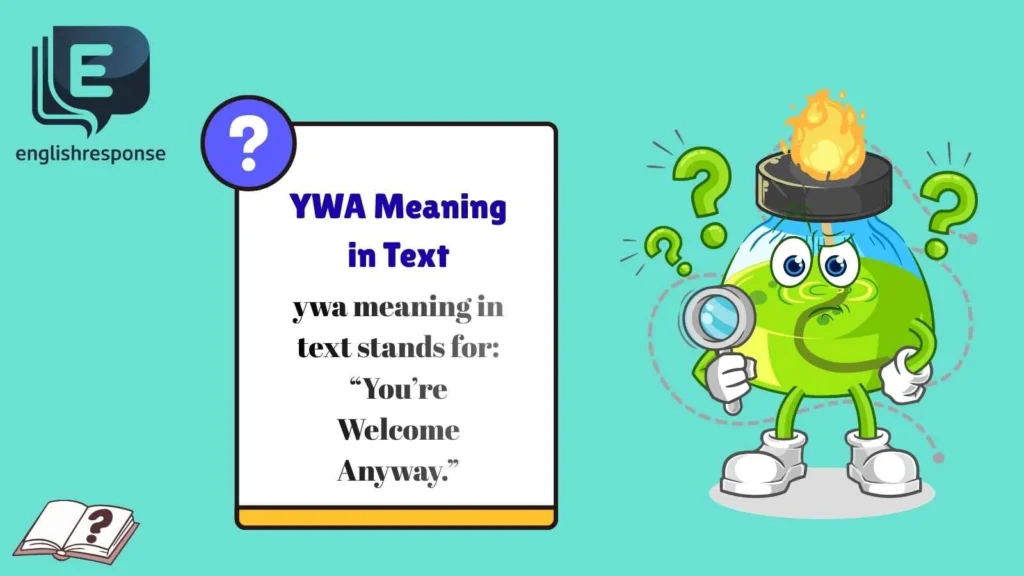
The ywa meaning in text stands for:
“You’re Welcome Anyway.”
At its core, it’s a response someone sends when they’ve done something helpful — but didn’t receive a “thank you.”
It’s often used playfully, but sometimes it can carry a slightly sarcastic tone.
Here’s how it works in real life:
Example 1:
You: “Here’s the homework answer.”
Friend: No response
You: “YWA 😄”
Example 2:
You hold the door open.
They walk in without saying thanks.
You text later: “YWA.”
Example 3 (Playful):
Friend: “I forgot to thank you for helping!”
You: “YWA 😂”
See the difference? Tone matters.
Origin and Background of the Term
Like most texting abbreviations, YWA didn’t come from a formal dictionary. It grew naturally from internet and SMS culture.
Back in the early 2000s, when texting had character limits and typing took longer on keypad phones, people shortened everything:
- “LOL”
- “BRB”
- “OMG”
Over time, new abbreviations formed to express emotions quickly. YWA likely evolved as a shorter, sassier alternative to saying:
“You’re welcome… even though you didn’t say thanks.”
It gained popularity on messaging platforms like WhatsApp, Snapchat, and Twitter/X where short, quick responses dominate.
It’s a modern example of how language adapts to digital communication.
How YWA Is Used in Daily Life

You’ll usually see YWA in casual texting situations. Here are common ways people use it:
1. When Someone Forgets to Say Thank You
You helped. They didn’t acknowledge it.
You reply with a light-hearted “YWA.”
2. Playful Sarcasm Between Friends
Best friends often use it jokingly. It’s rarely serious.
3. After Doing a Favor
You send someone information, advice, or help — and they change the topic.
“YWA 😂”
4. In Family Group Chats
Siblings love using it to tease each other.
5. As a Meme Reply
Sometimes it’s just for humor, not meant seriously.
6. As a Gentle Reminder
Instead of calling someone out directly, YWA keeps it subtle.
The key is context. Same letters, different emotions.
Emotional or Practical Meaning of YWA
Here’s where things get interesting.
YWA isn’t just about politeness. It reflects a deeper social expectation: acknowledgment matters.
When someone says “YWA,” they’re indirectly expressing:
- “I noticed you didn’t thank me.”
- “Recognition feels good.”
- “I was being helpful.”
In modern communication, where messages move fast and attention spans are short, people sometimes forget basic manners. YWA gently brings that back.
It can be playful.
It can be passive-aggressive.
That emotional layer is why understanding it is important.
Similar or Related Terms
Here are other texting terms that are related to YWA:
- YW – “You’re welcome.” (Neutral, polite)
- NP – “No problem.” (Casual acknowledgment)
- NBD – “No big deal.” (Minimizes effort)
- TY – “Thank you.” (Gratitude)
- LOL – Often added to soften sarcasm
Difference:
YW = Polite response to thanks.
YWA = Response when thanks wasn’t given.
Subtle difference. Big impact.
Common Misunderstandings About YWA
Let’s clear up some confusion.
1. It’s Always Rude
Not true. It’s often playful.
2. It Means “You’re Welcome Always”
Nope. That’s incorrect.
3. It’s Formal
Definitely not. It’s strictly informal.
4. It’s Only Sarcastic
Tone depends on context and emojis.
5. Only Teenagers Use It
Adults use it too — especially in casual chats.
6. It’s Angry
Sometimes slightly passive-aggressive, but rarely angry.
Understanding tone prevents unnecessary drama.
Examples of YWA in Sentences
Here are everyday examples you might see:
- “Sent you the file yesterday… YWA 😅”
- “I told you that would happen! YWA.”
- “Fixed your typo in the post. YWA.”
- “Guess who remembered your birthday gift? YWA.”
- “Saved you a seat at the cafe. YWA!”
- “Answered your question in the group chat. YWA 😂”
- “Recommended that movie weeks ago… YWA.”
- “Proofread your essay last night. YWA!”
Notice how tone changes with emojis.
Why Understanding YWA Meaning in Text Matters Today
We live in a digital communication era.
Texting isn’t just messaging — it’s how relationships function. Tiny abbreviations carry emotional signals.
If you misunderstand YWA, you might:
- Think someone’s upset when they’re joking
- Miss playful teasing
- Respond too seriously
Understanding the ywa meaning in text helps you:
- Interpret tone correctly
- Avoid awkward replies
- Communicate smoothly
- Stay culturally updated
Language evolves. Staying informed keeps you socially sharp.
FAQs:
What does ywa meaning in text mean in simple words?
It means “You’re welcome anyway.” It’s usually sent when someone helped but didn’t receive a thank you.
Is ywa positive or negative?
It can be both. Most of the time, it’s playful. Sometimes it carries light sarcasm.
Where is ywa commonly used?
Mostly in casual texting — WhatsApp, Snapchat, Instagram DMs, and friend group chats.
Is ywa formal or informal?
Completely informal. Never use it in professional emails.
Why do people search for ywa meaning in text?
Because it’s not as common as LOL or BRB. People see it in chats and want clarity about its tone and intention.
Conclusion:
So, what’s the final takeaway?
The ywa meaning in text is simple — “You’re welcome anyway.” But like many digital expressions, its tone depends entirely on context.
It can be funny.
It can even be a gentle nudge for appreciation.
In a world where communication moves fast, small words carry big meaning. Understanding them keeps conversations smooth and relationships stronger.
And remember — sometimes’ it’s the smallest expressions that remind us how much acknowledgment truly matters.

Rana Sawalha is a passionate language enthusiast and author at EnglishResponse, dedicated to helping readers improve their English communication skills. With a focus on practical tips, engaging examples, and real-world conversation strategies, Rana Sawalha empowers learners to speak confidently and respond like a pro in any situation.